Photographer Mathieu Pernot Brings his Gaze into Dialogue With That of his Subjects
Through encounters with Roma communities and migrants, he uses montage to highlight the complexity of different perspectives.
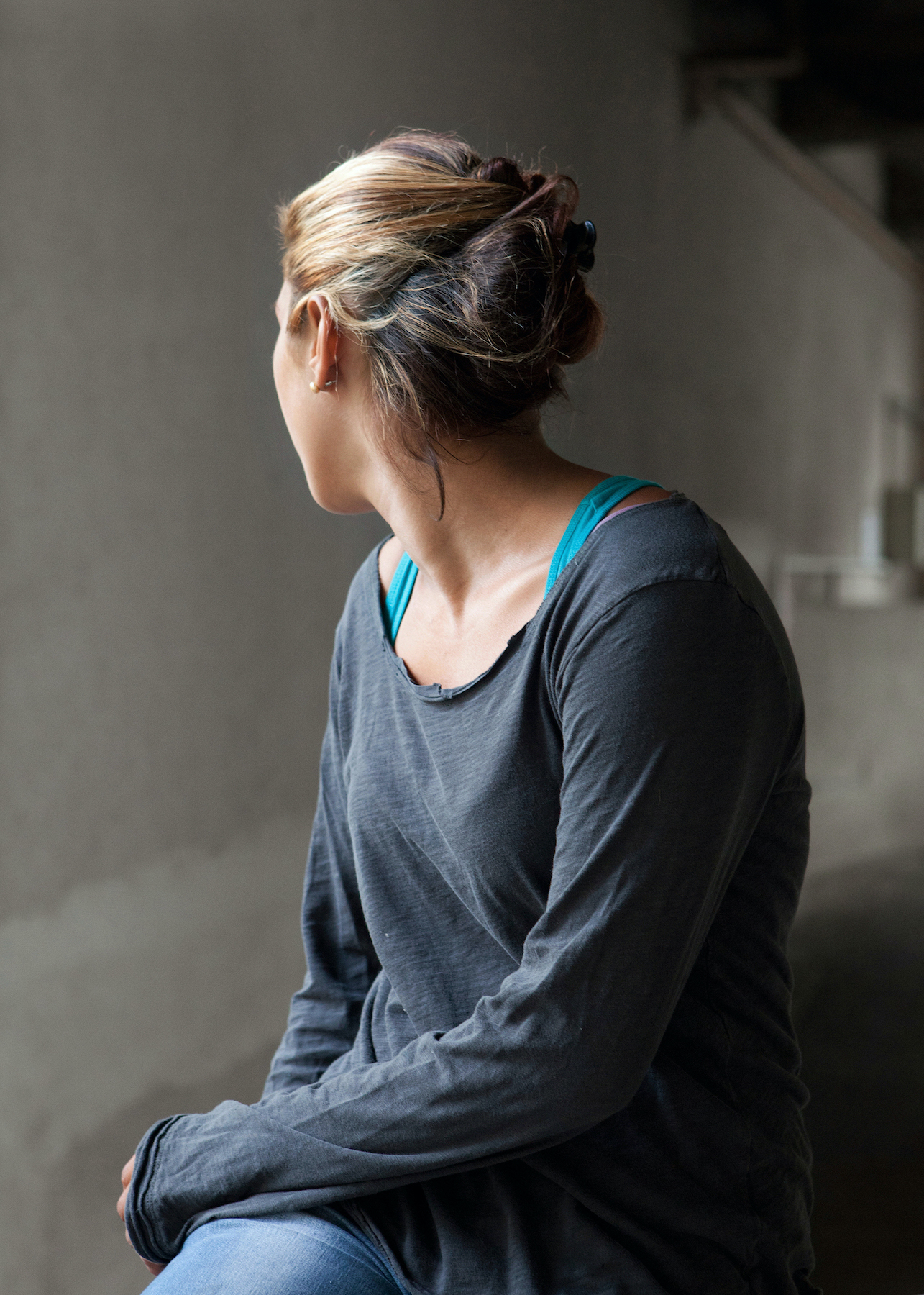
‘Ana’, Paris, 2012 (from ‘The Gorgan Family’) © Mathieu Pernot. After meeting the Gorgan family while studying in Arles, Mathieu Pernot returned to photograph them on numerous occasions, developing an unprecedented collaborative project with them.
For Mathieu Pernot, photography is above all an art of encounter, in which reality has more power than the idea we form of it. His seminal body of work, Les Gorgan (The Gorgan Family), which he has continued to develop throughout his life, is a perfect illustration of this.
While still a student at the École nationale supérieure de la photographie in Arles in the 1990s, Pernot became interested in Roma communities living in southern France and began photographing one particular family. Ten years later, they met again. Something shifted for the photographer. Rather than looking at a community as a whole, he became interested in the individual lives of its members: Ninaï, Giovanni, Mickael and all the others.
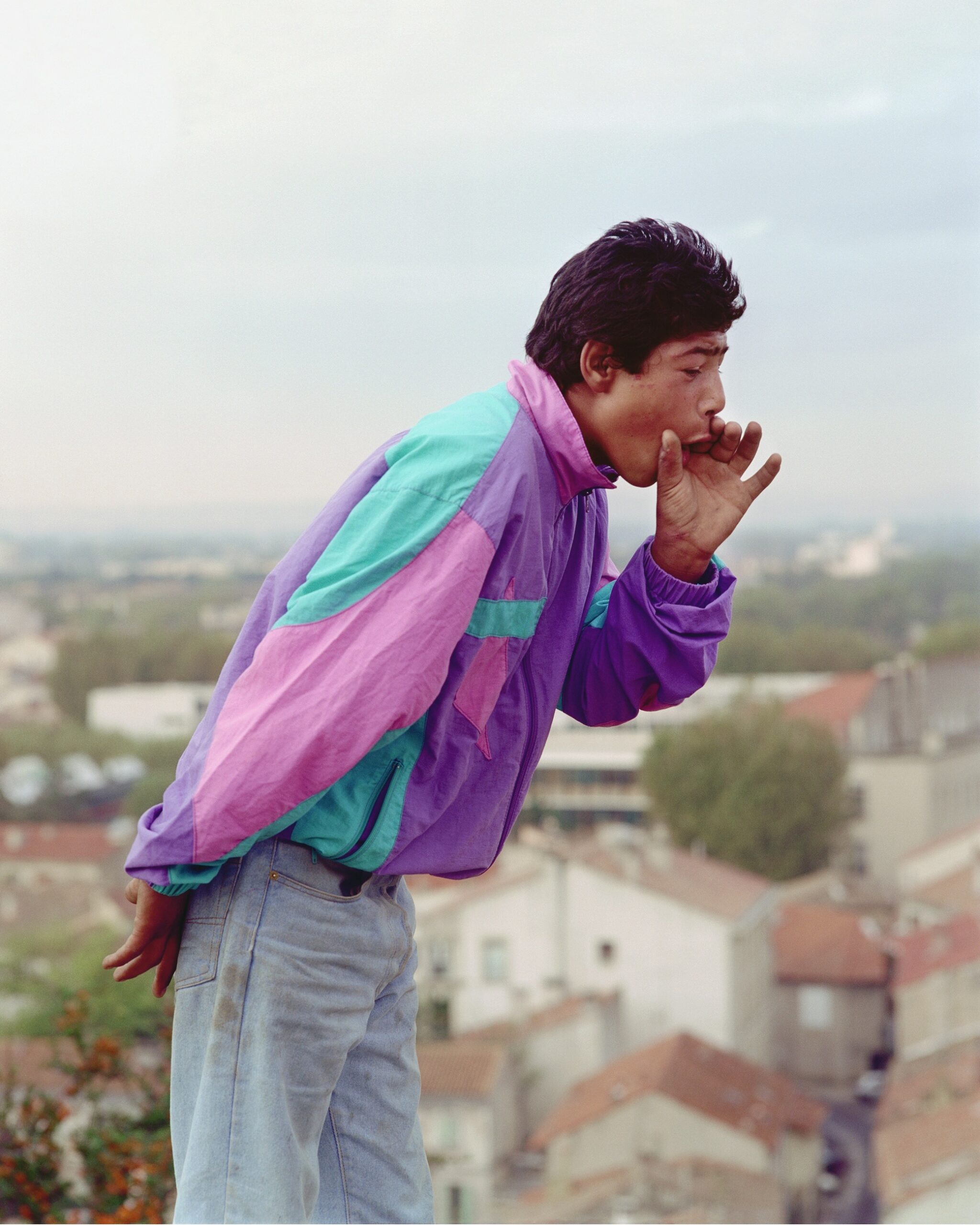
‘Mickael’, Avignon, 2001 © Mathieu Pernot. In the series ‘The Shouters’, the photographer captures relatives of prisoners who gather outside a prison to call out to their loved ones and find out how they are doing.
Over the years, he has forged a friendship with the family while capturing the essence of their daily lives, from posed portraits to intimate scenes shaped by births and deaths. Particularly striking is the Hurleurs (The Shouters) series, which depicts relatives of people in prison calling out to them from outside the walls to find out how they are doing. Alongside Pernot’s photographs of the family are images taken by the Gorgan themselves, presented without any hierarchy between them. Indeed, when referring to the series, they call them ‘our photographs’. Somewhere between a family album and an ethnographic record, the work offers a fleeting glimpse into Roma culture without romanticising it.
‘There is no authority of the gaze for me; they represent themselves too,’ says the photographer. ‘Looking at something does not mean having a single point of view. Depending on where you are and when you are looking, you see different things, and that is where something true emerges.’ This collaborative project, which Pernot describes as the work he is most proud of, culminated in an exhibition at the Rencontres de la Photographie d’Arles in 2017. In a rare occurrence, the people depicted in the photographs were themselves present at the event. It was a moving experience for visitors, changing the way a photograph could be looked at, while also offering the Gorgan a form of recognition through this tribute in their home city.
A Gaze in Motion
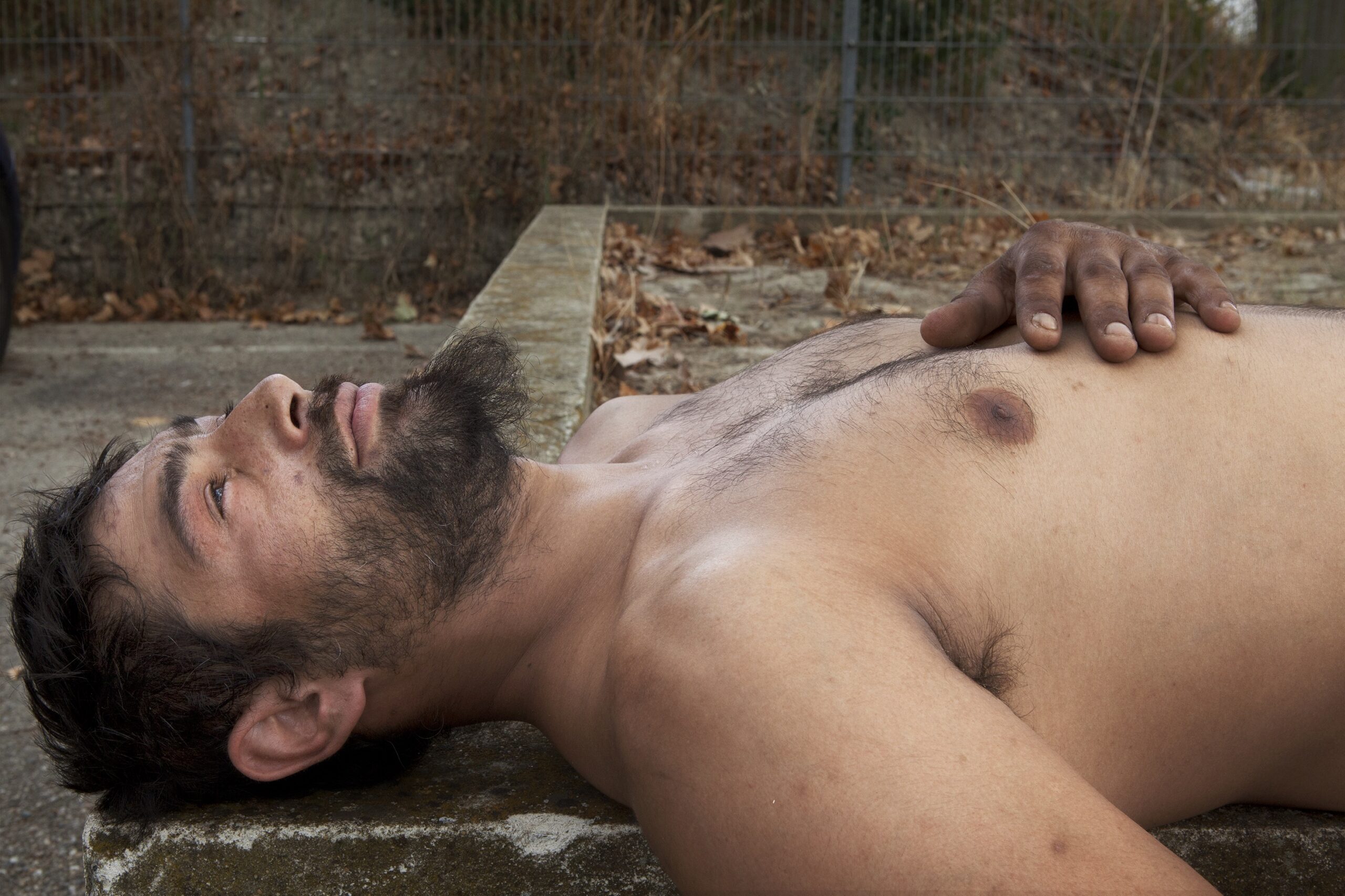
‘Mickael’, Arles, 2017 © Mathieu Pernot. For more than 30 years, the photographer has followed the members of the Gorgan family, watching their children grow up. Here, Mickael, who also appears earlier in the series ‘The Shouters’.
Through montage, Mathieu Pernot succeeds in conveying the complexity of different perspectives. He also varies the formats he uses. In the book Les Gorgan 1995–2015, colour images alternate with black-and-white photographs, while photobooth portraits and a handful of archival images are interspersed throughout.
When I meet him at his Paris studio, he is looking through old albums once belonging to Soviet and Japanese soldiers during the wars of the 20th century, which he collects. His photographic practice is often accompanied by documentary research. ‘I’m interested in the dialogue between images, a gaze in motion that freely brings different things together in order to create meaning,’ he explains.
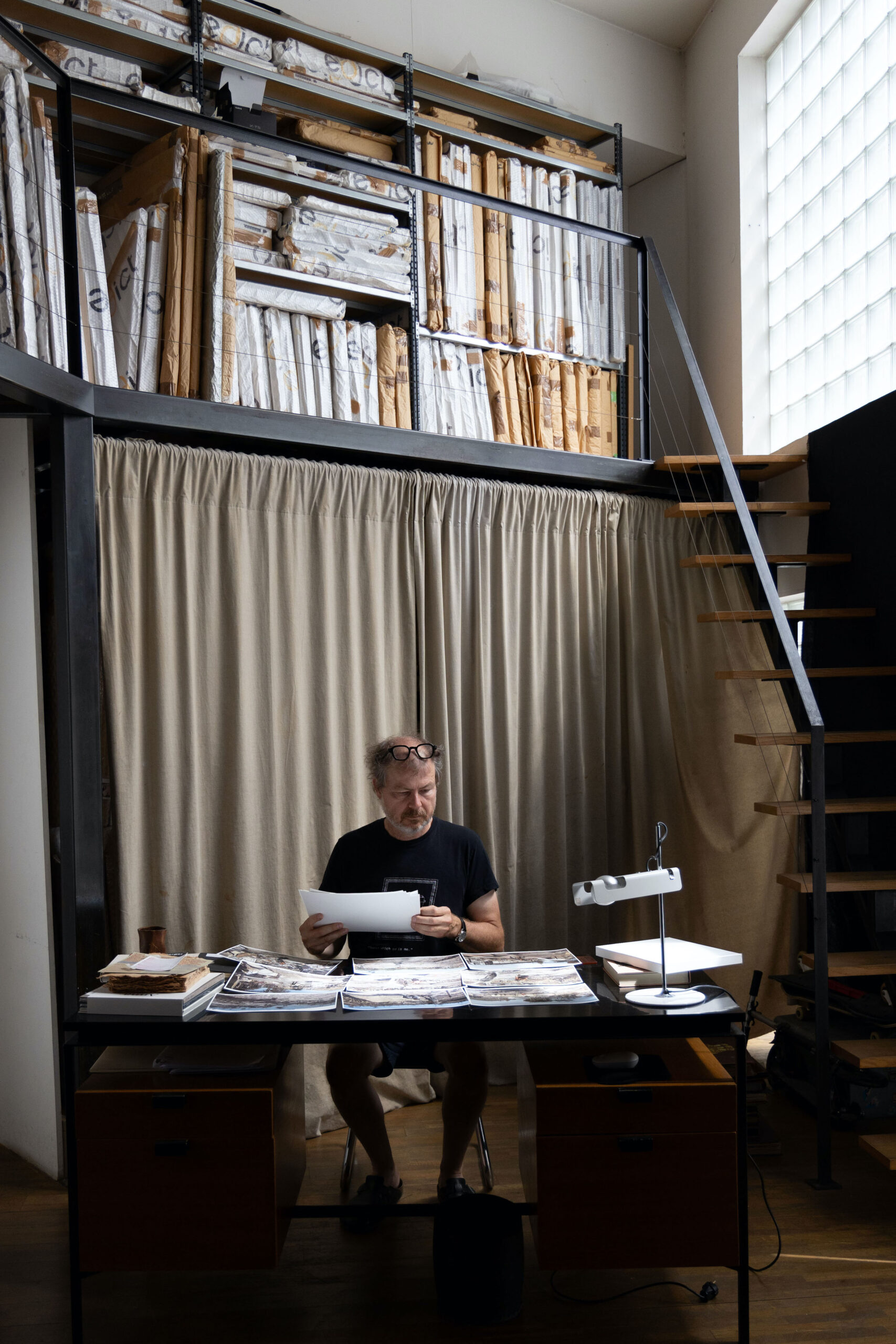
Mathieu Pernot in his Paris studio, July 2026 © Rebecca Zissmann
This approach can also be found in another of his major works, L’Atlas en movement (The Moving Atlas), which addresses migration and draws on Aby Warburg’s Mnemosyne Atlas (1921–1929). Accustomed to working over long periods and at close range with the Gorgan, Pernot turned his attention in the 2010s to the unfolding migration crisis that was tragically intensifying across Europe.
He first photographed people in exile sleeping in sleeping bags on the streets of Paris, before travelling to the ‘Calais Jungle’ in northern France, a camp that has since been dismantled, and then to the island of Lesbos, where entire families were living in camps that had become permanent. It was then that he realised something was missing from these images: the migrants’ own voices.
By listening to their stories, Pernot came to understand how much they had to teach him. One of them was Mohamed Abakar. The Sudanese photographer pointed out to him that Parisian statues are covered with tarpaulins in winter to protect them from the cold. Historical heritage is afforded greater care than people struggling to survive on the streets. Abakar photographed refugees standing beside these wrapped monuments, while Pernot photographed migrants themselves and the tarpaulin-covered statues separately, incorporating Abakar’s images into his own series alongside his photographs of people sleeping in sleeping bags.
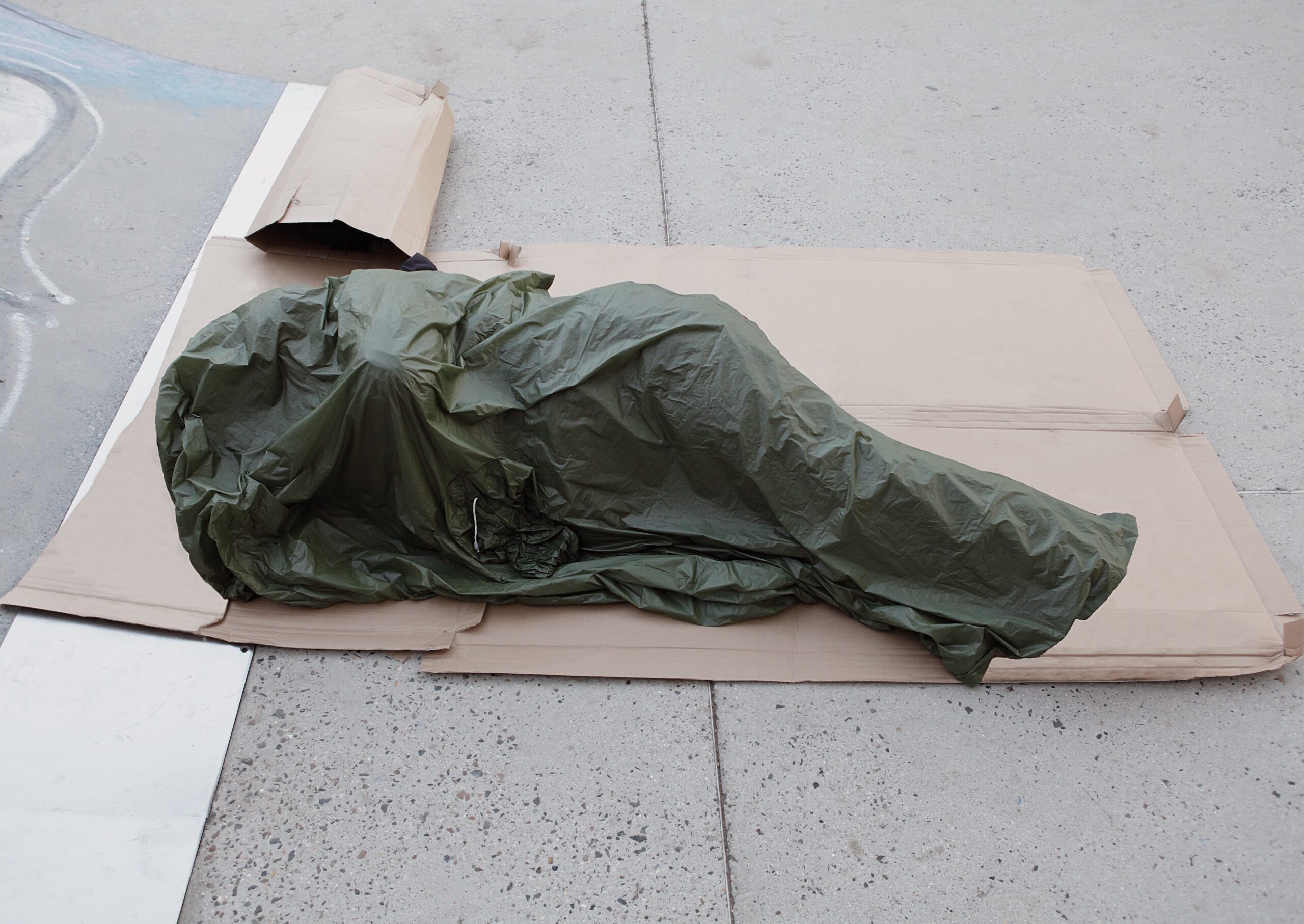
‘Untitled’, Paris, 2009 © Mathieu Pernot.
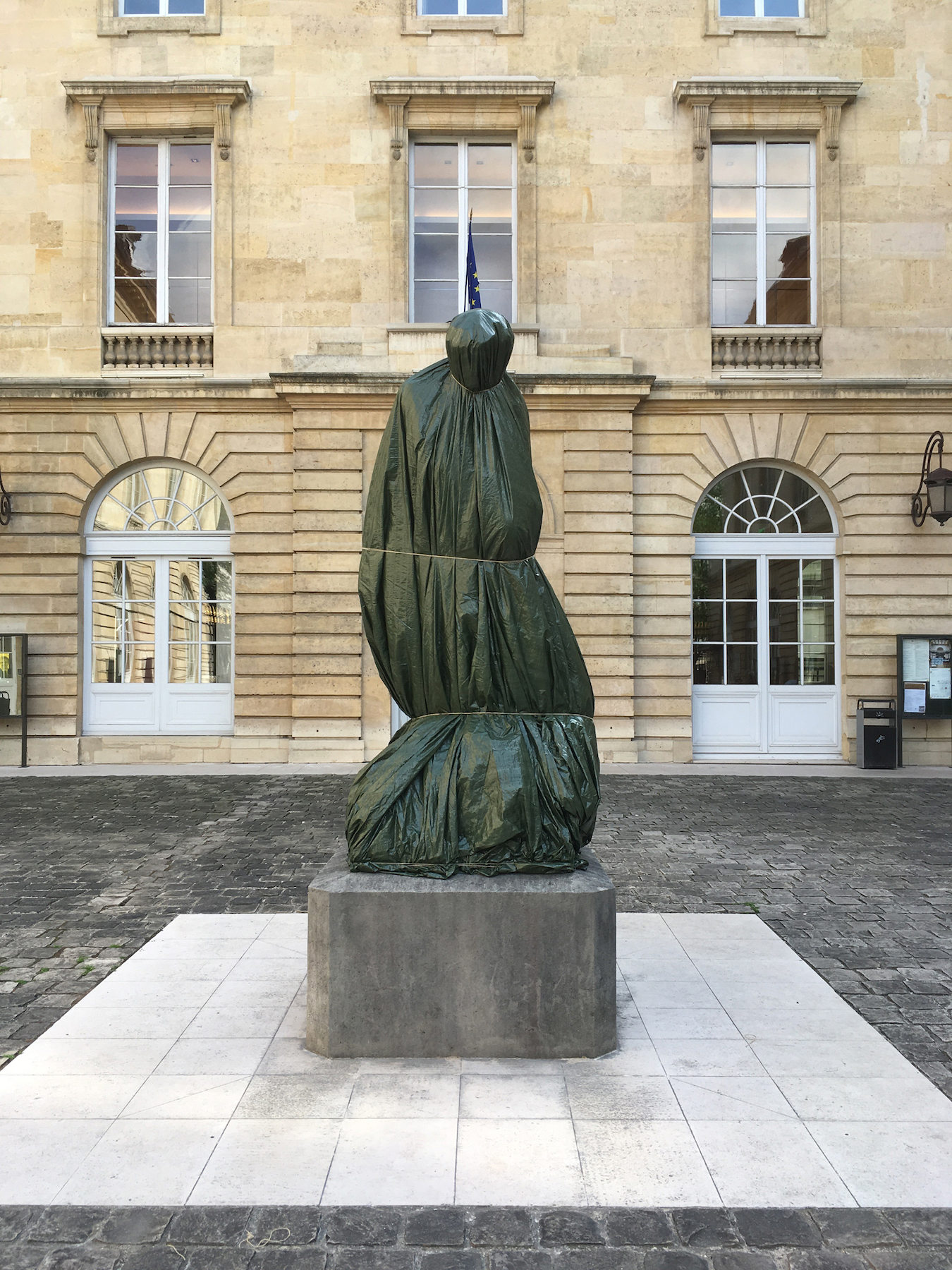
‘Wrapped Statue of Champollion’, Collège de France, Paris, 2018 © Mathieu Pernot. In ‘The Moving Atlas’, the photographer places photographs of migrants in sleeping bags to protect themselves from the cold alongside images of monuments covered with tarpaulins in winter. A juxtaposition loaded with meaning.
Giving Form to the Power of Reality
With The Moving Atlas (2009–2022), Pernot once again developed a project in collaboration with his subjects. This time, however, he began with individual stories to trace a history of knowledge of which migrants are the inheritors and custodians. Was the Greek alphabet itself not born of migration? The photographer includes, for example, celestial maps made by Muhammad Ali Sammuneh, a Syrian astronomer, as well as old anatomical plates annotated in her own language by Maryam Azimi, an Afghan doctor.
He had not imagined that the project would take this form when he began. ‘I don’t have an overall vision. I am drawn in by moments, desires, ideas, and above all by circumstances,’ he explains. ‘Photography is first and foremost about being somewhere, at a particular moment.’
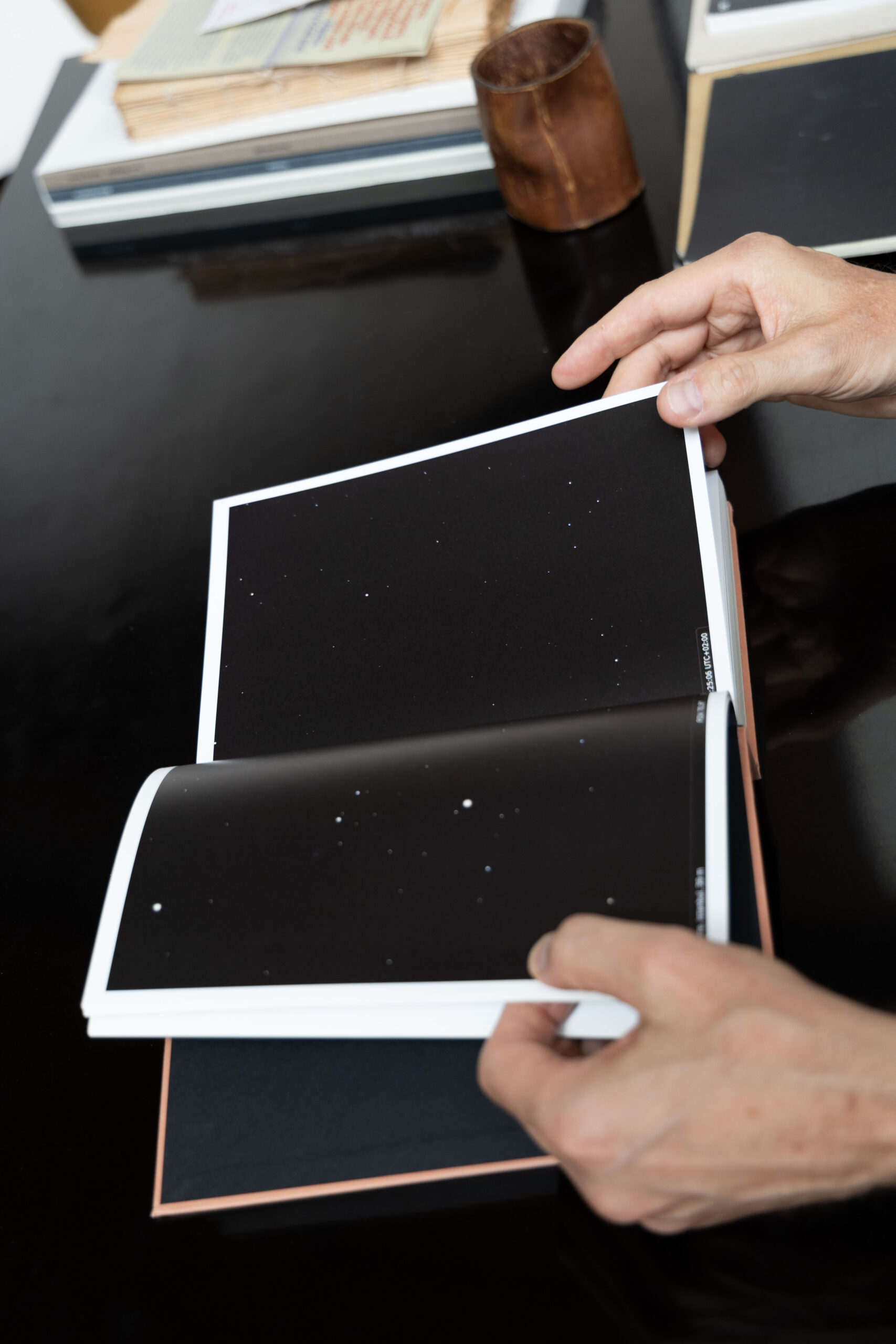
Mathieu Pernot shows two pages from ‘The Moving Atlas’, featuring reproductions of celestial maps showing the sky at different stages of Syrian astronomer Muhammad Ali Sammuneh’s journey into exile. Paris, July 2026 © Rebecca Zissmann
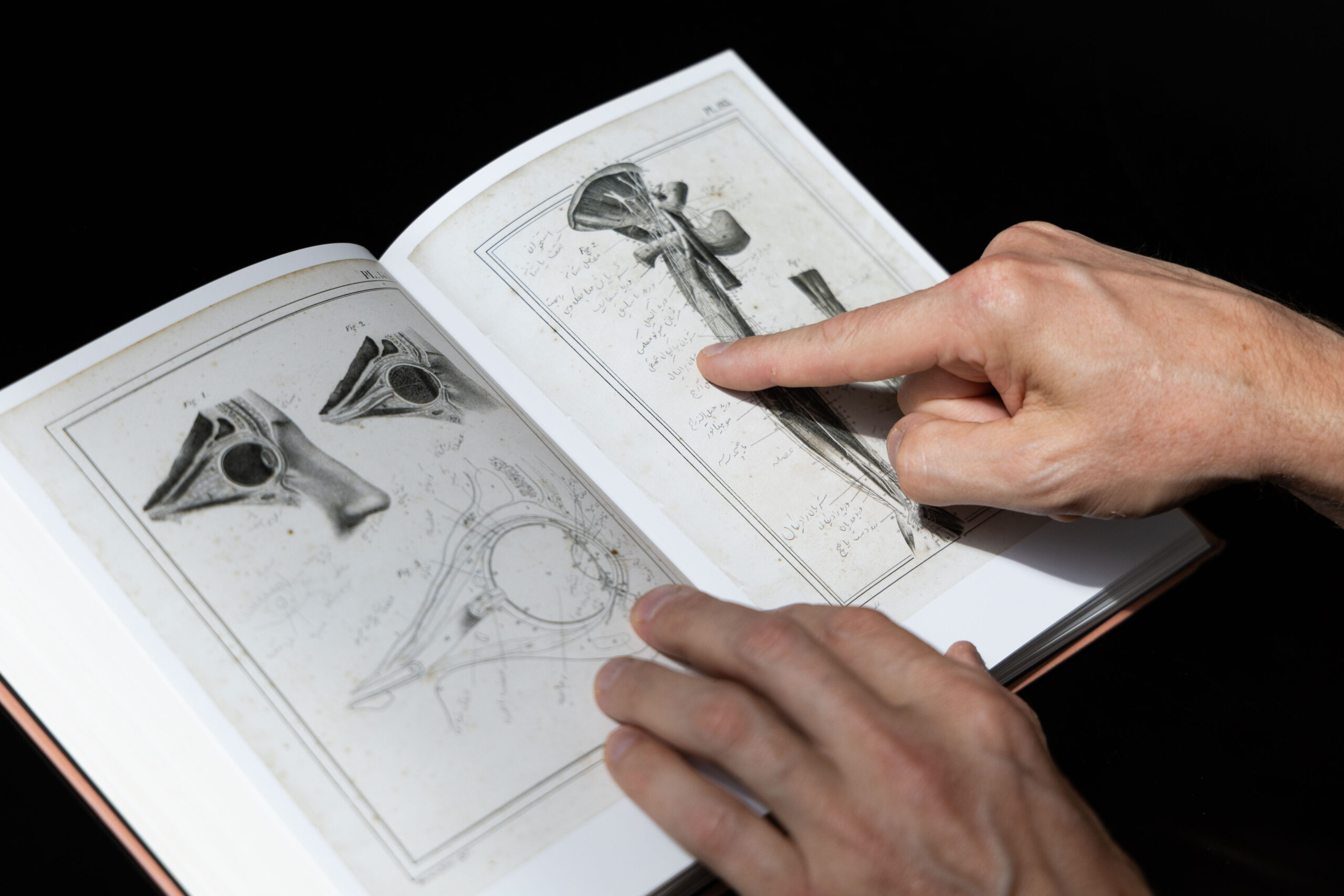
Mathieu Pernot points to annotations in Dari (a Persian dialect spoken in Afghanistan) added by Afghan doctor Maryam Azimi to old anatomical plates. Paris, July 2026 © Rebecca Zissmann
Pernot’s photographs often suggest more than they show. This can be seen in his images of nature after migrants have passed through, or of buildings on the verge of collapse in La ruine de sa demeure (The Ruin of His Dwelling, 2019–2021). For this series, he retraced a journey through the Middle East made decades earlier by his grandfather, who was also a photographer. The ancient ruins and tourist sites photographed by his grandfather are replaced by the modern ruins caused by war and other contemporary upheavals, captured by Pernot himself.
‘I like there to be something about traces and fragility, something that photography can question and capture, knowing that perhaps the next day, that thing will no longer be there,’ he says. Since his first project, when he photographed his boarding school, Pernot has been interested in buildings, from homes to prisons. The absence of human figures does nothing to diminish the power of these images, which can often tell the story of those who once inhabited them more effectively than words.
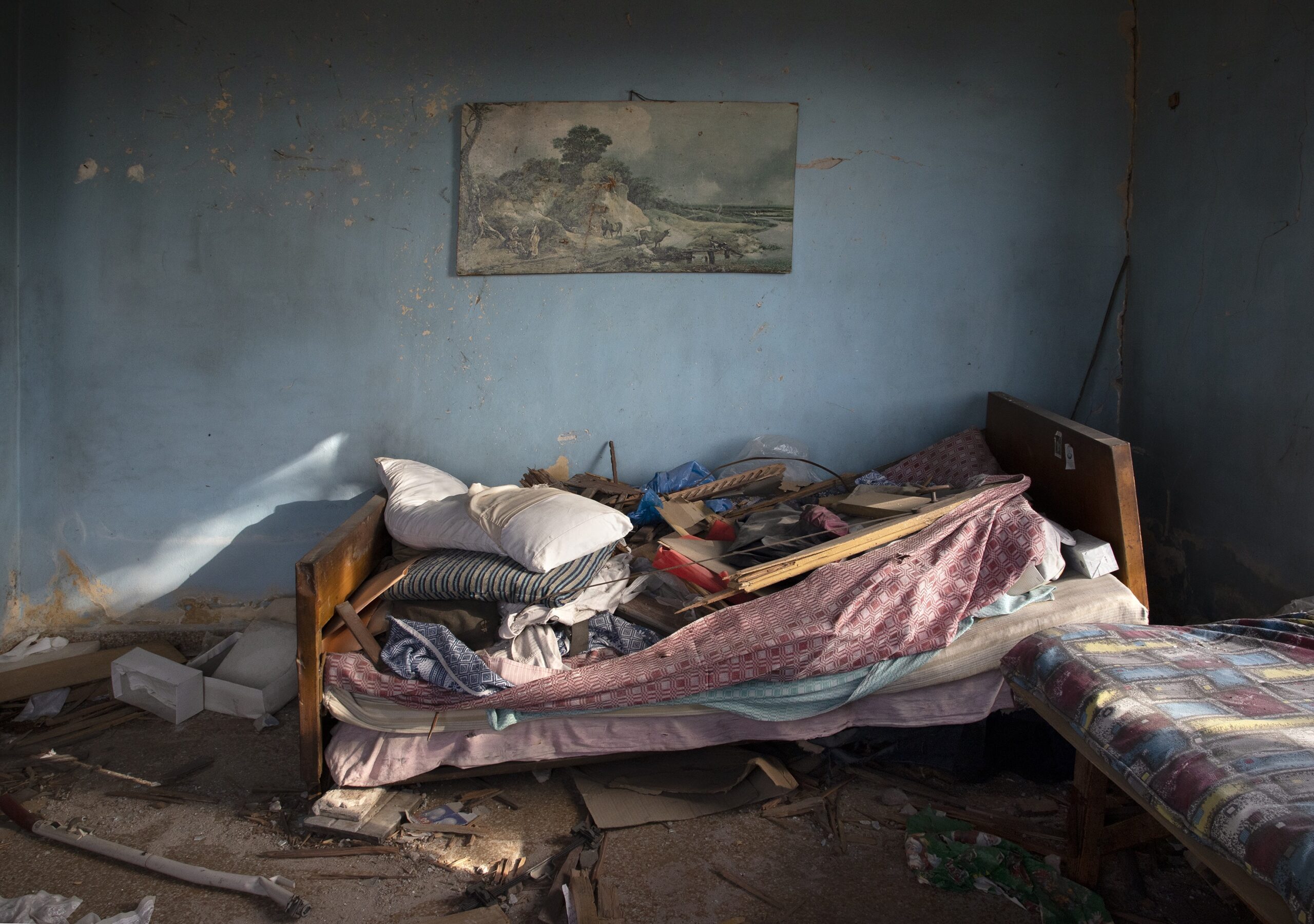
Beirut, Lebanon, 2020 © Mathieu Pernot. In ‘The Ruin of His Dwelling’, the photographer retraces his grandfather’s journey through the Middle East, returning to some of the places his grandfather photographed.
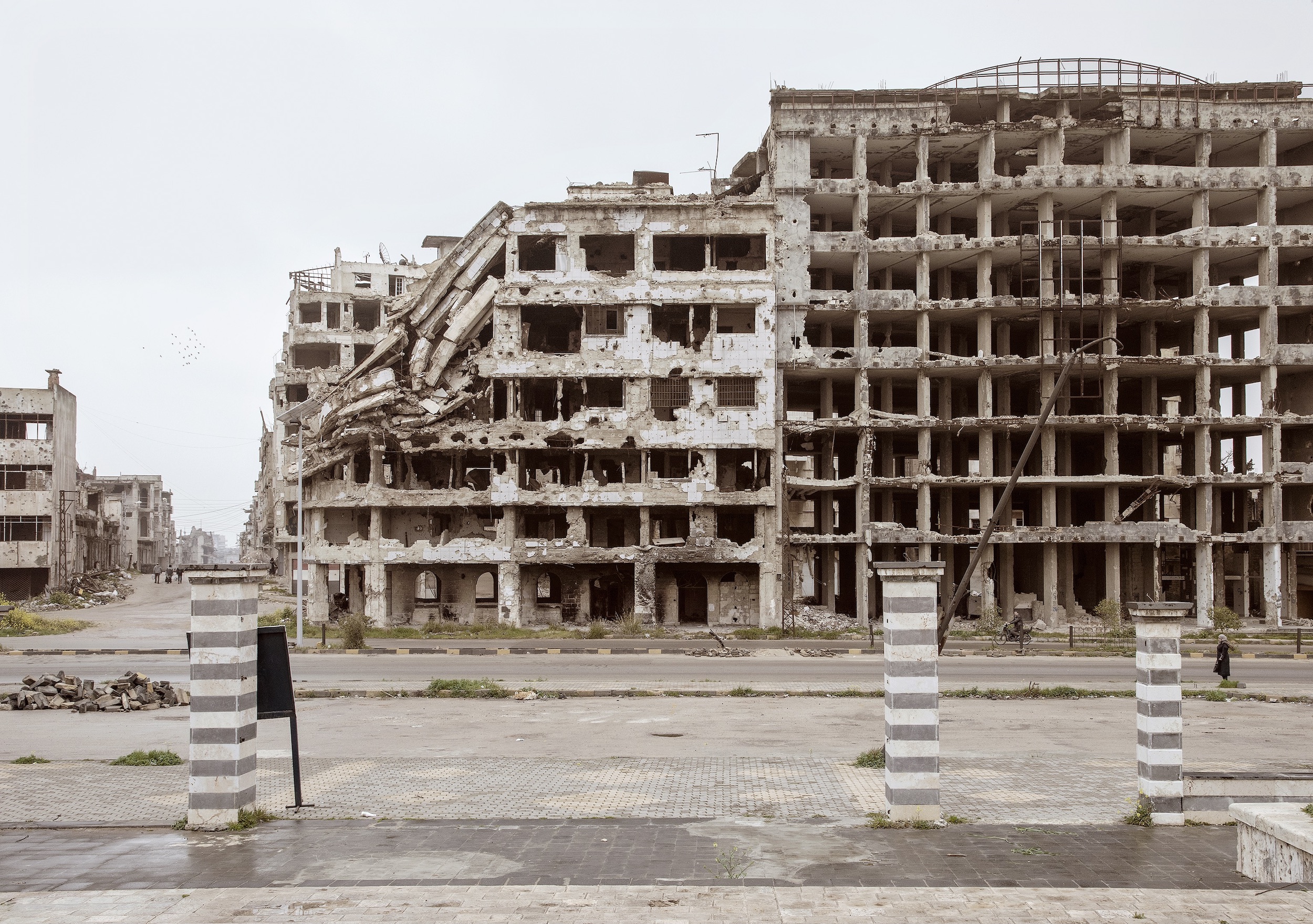
Homs, Syria, 2020 © Mathieu Pernot. By photographing buildings on the verge of collapse, Mathieu Pernot seeks to preserve the memory of places that were once inhabited.
‘For me, the art of the photographer lies in being able to see the power of reality and finding the language, the form, something that will allow an event, a story or a place to be conveyed in a particular way,’ he concludes.
By bringing together different bodies of images, Mathieu Pernot invites us to shift our gaze and approach reality from another angle. Although he maintains that his photographs cannot change reality, they can at least reveal its complexity and, in the space between two images, open up new ways of seeing it.
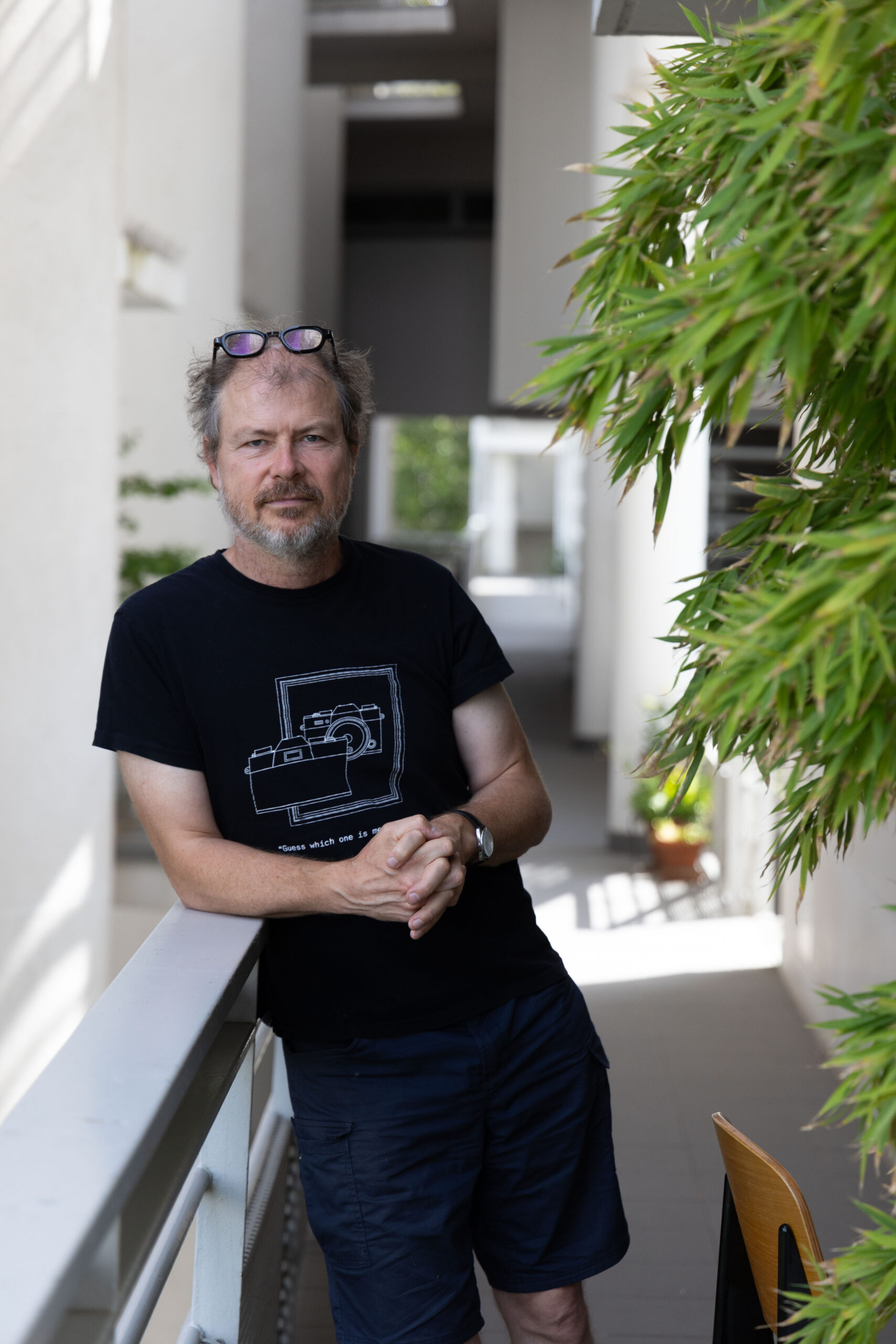
Mathieu Pernot outside his Paris studio, July 2026 © Rebecca Zissmann