Photographer Yuki Ueda on His Journey to Antarctica
No stranger to the planet’s most extreme regions, he was filled with wonder as he photographed a land still unknown to him.
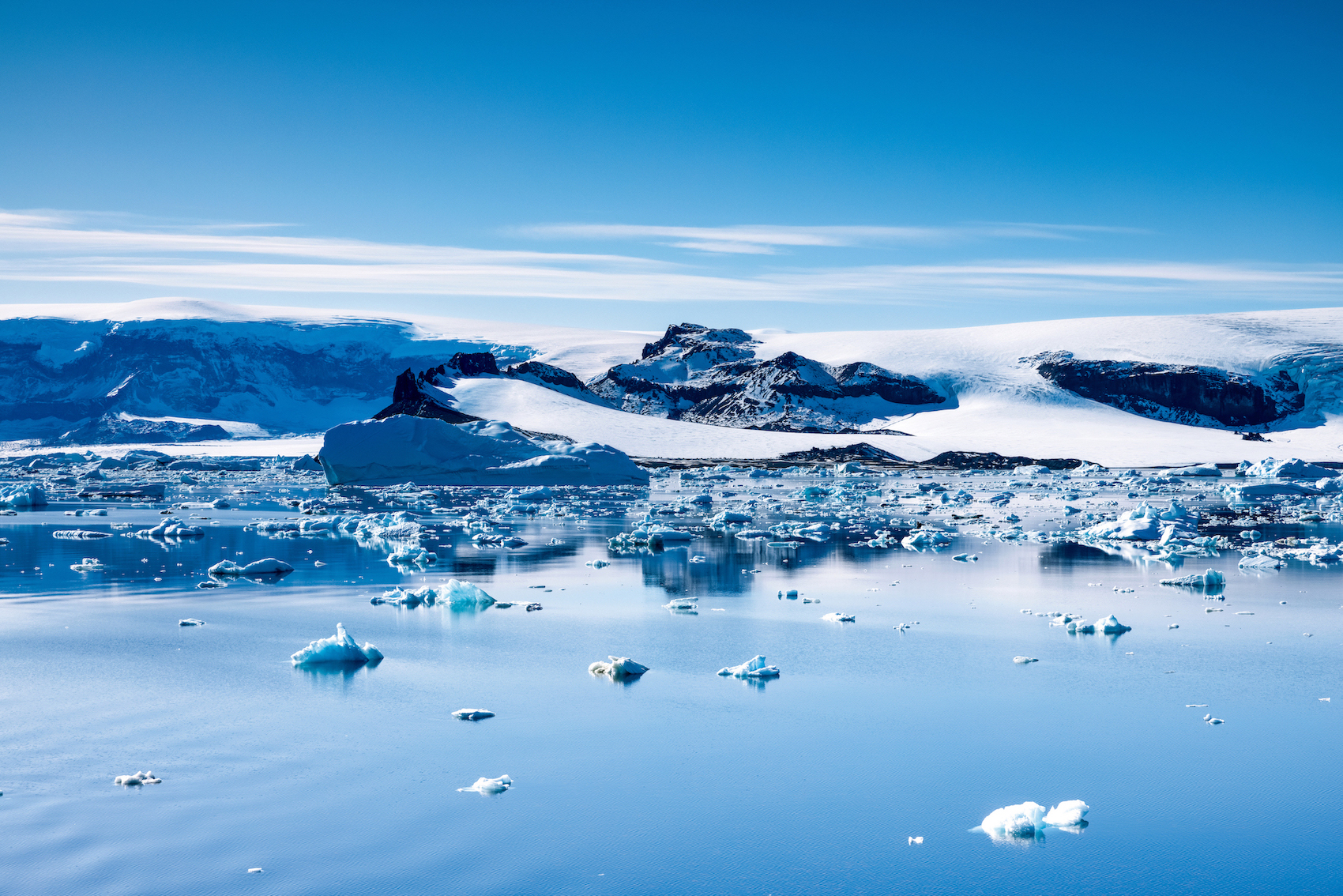
The Antarctic Peninsula viewed from the cruise ship. As Yuki Ueda recalls, ‘everything I saw was Antarctica’: as the ship moved on, the continent revealed one unfamiliar landscape after another. The ice floes drifting on the sea gradually grew in number, eventually giving way to immense icebergs.
A Place Dreamed of Since Childhood
Antarctica was one of those places I had dreamed of visiting since I was a child. When I was invited to travel there on assignment, in 2022, I immediately replied, ‘I’m going,’ without even checking my schedule. I later learnt that I would be joining a cruise around the Antarctic Peninsula, in the western part of the continent, to photograph the journey. It was different from the kind of life-threatening adventures I usually undertake, but opportunities like this do not come along often. A door had suddenly opened onto Antarctica, and I could barely contain my excitement.
As a child, I spent so many hours poring over a world atlas that I wore it to pieces. Alongside the pyramids of Egypt and Mount Everest in the Himalayas, Antarctica was one of the places that filled me with a sense of wonder. What kind of landscape could be found in this land at the very southernmost edge of the world, this ‘pole’ of the ‘South’, quite literally the end of the Earth? Today, Antarctica is a world of snow and ice, but several hundred million years ago it formed part of a vast landmass known as Gondwana, connected to what are now South America, Africa and Australia. Its climate was far milder than it is today, and great green forests stretched across the land.
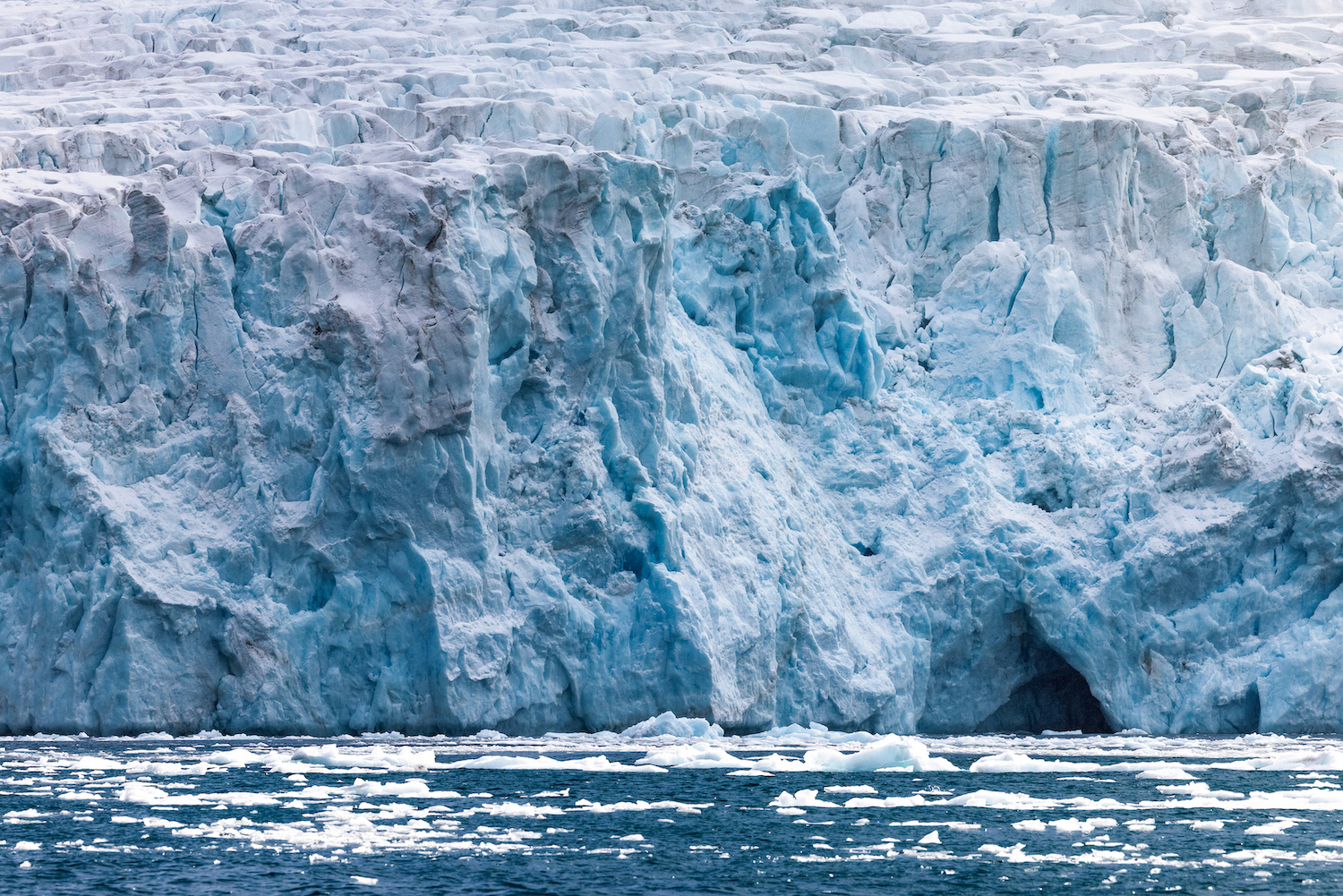
The ice sheet advances little by little towards the sea each day, forming an ice shelf that remains connected to the land while floating on the ocean. Eventually, it breaks away to become an iceberg, drifting out to sea before disappearing. A beautiful landscape shaped by Antarctica’s own timescale.
Alongside what I had learnt as a child, I had also acquired a general knowledge of Antarctica as an adult through my travels and work. I knew, for instance, that Antarctica belongs to no country and is the only place on Earth that belongs to no one. Rather than being governed by national laws, it is subject to the Antarctic Treaty, under which several dozen signatory countries, including Japan, conduct observation and research. The treaty covers a wide range of matters, from measures intended to preserve peace, such as the prohibition of military activity and nuclear testing, to environmental protection. Feeding animals or approaching them too closely is also prohibited: visitors must, for example, remain more than five metres away from penguins and more than 15 metres from seals.
I had this knowledge, and I had seen images of Antarctica, but I still had no idea what the place itself would actually be like. My curiosity about a land whose contours I could barely even imagine continued to grow.
From Ushuaia to Antarctica Aboard a Cruise Ship
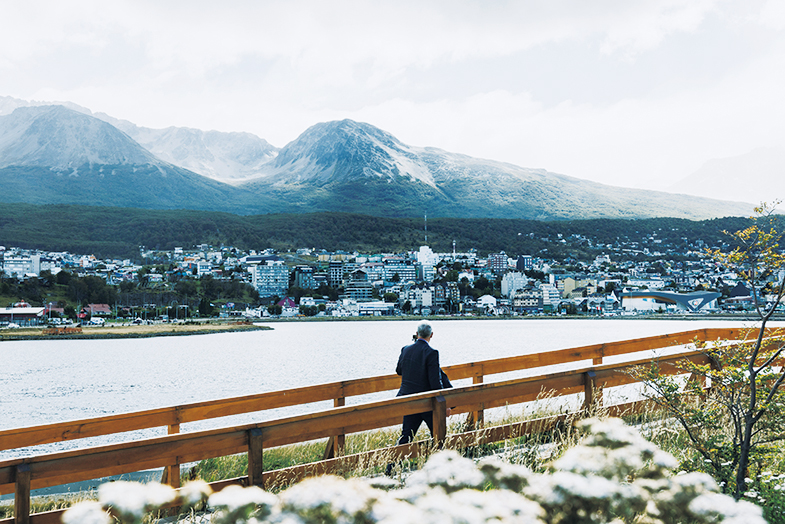
Ushuaia, one of the main departure and arrival points for Antarctic cruises. Behind the town rise the glacier-carved mountains of the Andes.
In March 2023, the time had finally come to set off for Antarctica. I first travelled to Santiago, the capital of Chile and the starting point for my journey through South America. In total, from my departure from Japan to my return home, the trip would last around three weeks. The first two days and the final two days were spent travelling between Japan and South America.
Travelling to Antarctica generally means joining an organised tour, and I was told that cruises departing from South America, such as the one I was taking, were the most common way to go. If, rather than joining a group tour departing from Japan, you travel independently and meet up with the tour once you arrive, as I did, you simply have to arrange your own flights to South America. In the end, ‘going to Antarctica’ does not make booking a flight any more complicated than travelling to Paris or New York. Once you arrive, you simply join the tour. Even travelling independently, I did not find it particularly difficult.
As for the climate, the average temperature at the South Pole can fall as low as -50°C, but around the Antarctic Peninsula, where I was heading, temperatures in March were expected to be around -10°C. Having spent plenty of time in the mountains in winter, I thought I would be fine.
After a stopover in the United States, I arrived in Santiago. I spent the first night there and met the other participants in the tour for the first time. The following day, I flew to Ushuaia, Argentina, where our ship was due to depart. I had already been to Ushuaia 14 or 15 years earlier, while travelling around the world. The city has since surrendered its claim to being the world’s southernmost city to Puerto Williams in Chile, but it was once considered to hold that title. At the time, standing in front of a sign reading ‘Fin del mundo’ (‘the end of the world’) I remember thinking that I really had travelled a long way.
It was then that fellow travellers told me about cruises to Antarctica departing from Ushuaia. Knowing that I could reach Antarctica from there made me hesitate for quite some time. But I still wanted to continue my journey through Africa and Asia, and ultimately I had to give up on the idea because I could not afford it. At the time, I remember the trip costing around ¥400,000. I thought that, for that sort of money, I could always go one day. In the years since, prices have risen dramatically, and I wondered whether they would continue to climb. With those thoughts in mind, finally seeing that day arrive felt particularly poignant.
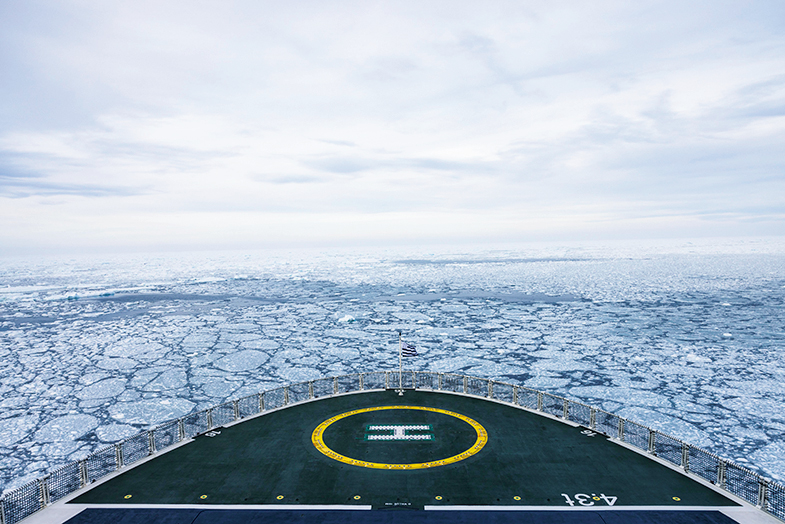
Looking out to sea from the deck. Antarctic-bound ships are designed with environmental considerations in mind; Ueda’s vessel was a hybrid ship powered by electricity and LNG.
When I reached the port of Ushuaia, the ship waiting there looked like a six-storey building floating on the water. It was a luxury cruise ship, but also one of the few ‘icebreakers’ in the world: its capabilities were comparable to those of vessels used for polar research, allowing it to advance through thickly frozen seas by breaking through the ice.
According to the planned itinerary, we were to spend around three days crossing the Drake Passage, reputed to be the world’s widest strait, before sailing around the ice-covered Weddell Sea and landing in the northern part of the Antarctic Peninsula. Around the peninsula lies the South Shetland Islands, an archipelago made up of islands of various sizes. We would visit those islands as well, gradually heading east before travelling around the South Orkney Islands and South Georgia, where large numbers of wild animals live. The journey would eventually end in Montevideo, the capital of Uruguay, where we would disembark.
We would spend the entire trip sleeping aboard the ship. In poor weather, we would remain on board, but Wi-Fi was available and there did not seem to be much we would lack. When conditions were favourable, we could go ashore at landing sites roughly twice a day. The captain had nevertheless warned us that the itinerary was only provisional and could change almost daily depending on the weather.
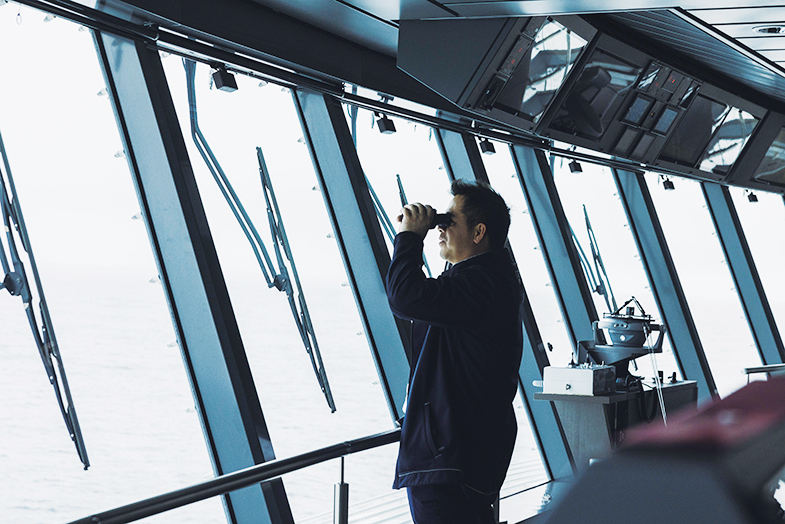
The captain checks the route through binoculars. Captaining an Antarctic cruise can be hazardous, requiring precise judgement based on experience in polar conditions.
The first three days, while crossing the Drake Passage, therefore consisted simply of staying on the ship. But there was no opportunity to let our guard down. The passage is notorious as one of the roughest stretches of ocean in the world. Around the 60th parallel south, the sea is almost perpetually turbulent, earning these latitudes the nickname ‘the Screaming Sixties’ and terrifying generations of sailors and adventurers.
Yet once we entered the passage, the ship was not being tossed about continuously. There were moments when the movement was so violent that it was difficult to remain standing—taking a shower or eating in those conditions was understandably challenging—but perhaps thanks to the ship’s state-of-the-art stabilisers, I was able to enjoy the rare opportunity to physically experience the immense energy generated by the Earth.
One morning, after we had crossed the Drake Passage, the waves began to subside. When I woke up and looked outside, I was suddenly confronted by an apparition. Where I had previously seen nothing but ocean, enormous icebergs now floated on the water. If the ship were to collide with one of them, it would surely split in two and sink like the Titanic. Beneath the still-dark sky of dawn, the icebergs glowed blue. As the ship moved forwards and their silhouettes gradually grew larger, I could feel Antarctica drawing closer.
A First, Deeply Moving Step onto the Antarctic Continent
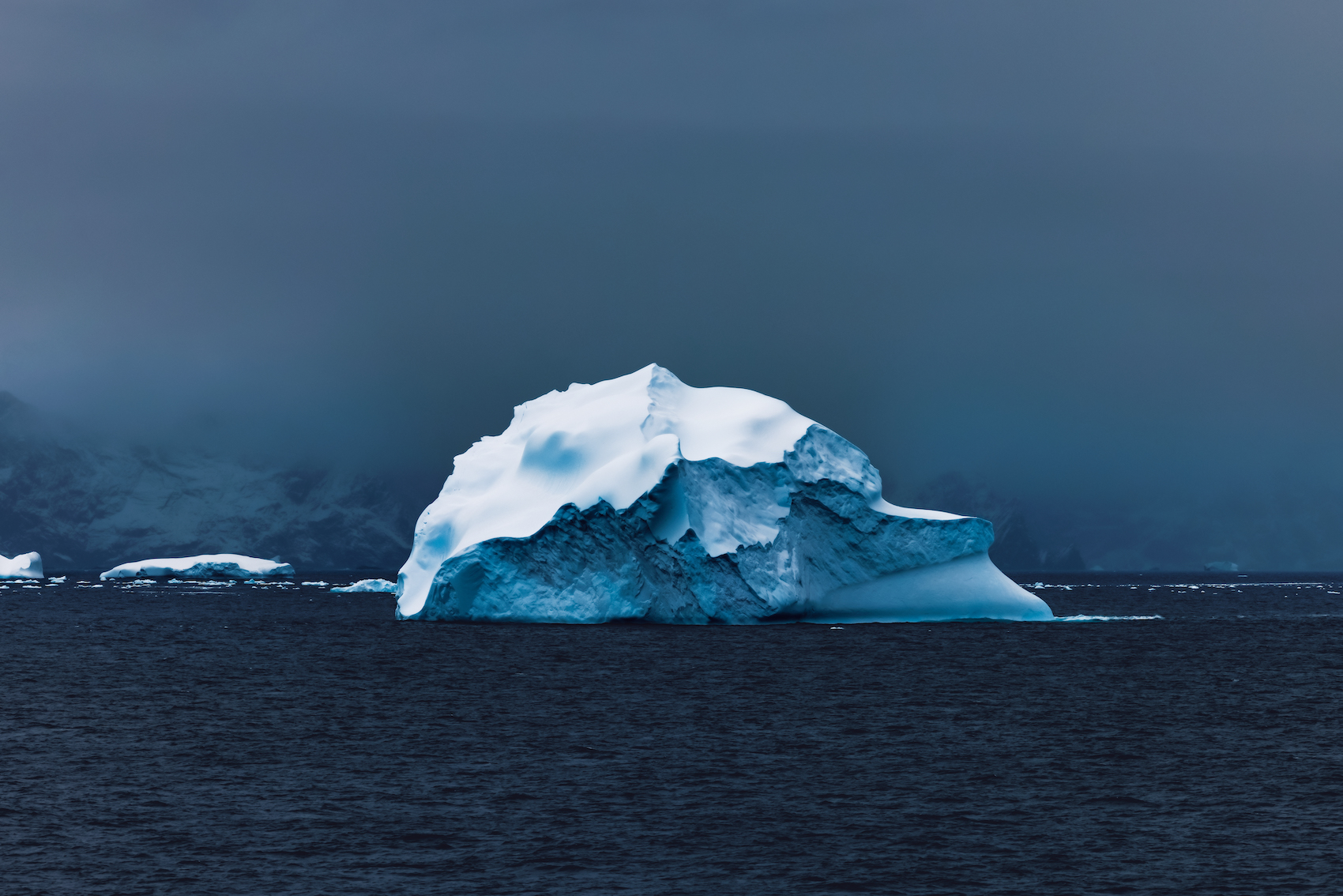
An immense iceberg, several dozen metres across, glows pale blue against the night sea, inspiring both awe and wonder. It is generally estimated that the portion of an iceberg visible above the water accounts for only around 10% of its total volume, with the remaining 90% hidden beneath the surface. These monumental works of art created by nature are never the same.
The ship proceeded cautiously through the vast expanse of ice covering the Weddell Sea, breaking through it as it made its way towards the Antarctic Peninsula. At last, the long-awaited moment had arrived: we were going ashore in Antarctica.
All the passengers were instructed to come out onto the deck and use vacuum cleaners to remove every last trace of dust from their clothes and backpacks. Our boots were also washed with disinfectant. These strict precautions are mandatory in order to prevent seeds and other foreign species from being brought into Antarctica. Having witnessed environmental changes in various parts of the world, including the melting of Himalayan glaciers, I was glad to see such thorough measures being taken to protect this exceptional natural environment.
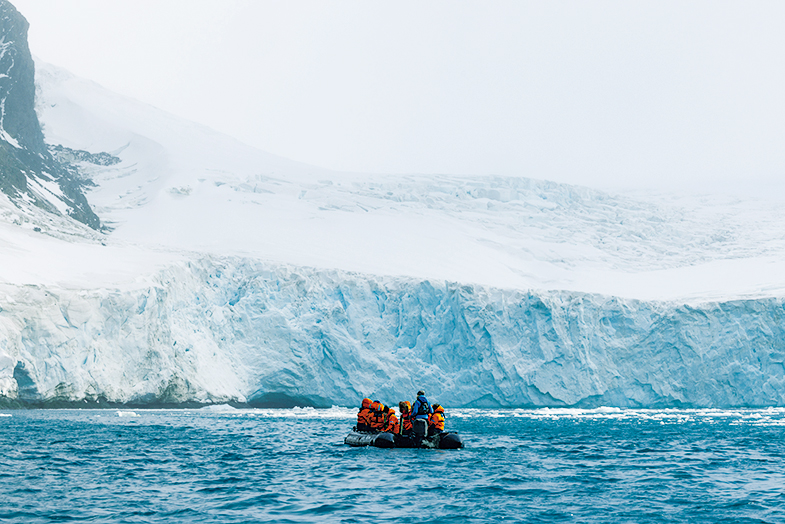
Travelling by Zodiac towards the landing site. Leaving the cruise ship and approaching close to the shore offers a far more powerful perspective on the Antarctic landscape, viewed almost at sea level.
We then left the cruise ship and boarded a Zodiac, a small inflatable motorboat, which took us to the landing site. There were probably a little over 200 passengers on board, but no more than 100 people are permitted to land in Antarctica at any one time. We were therefore divided into several groups and boarded the boats one after another.
Ahead of us stretched a deep-blue sea and enormous icebergs. Beyond them, we could see the sheer, thick edge of the ice covering the continent. Penguins and fur seals were living there, free to move about as they pleased. There was no landscape like it anywhere else in the world.
The Zodiac brought us to a beach covered in dark gravel. Antarctica is so strongly associated with a world of ice that seeing solid ground beneath my feet made me realise all over again that this was, in fact, a continent—a landmass with actual earth beneath it.
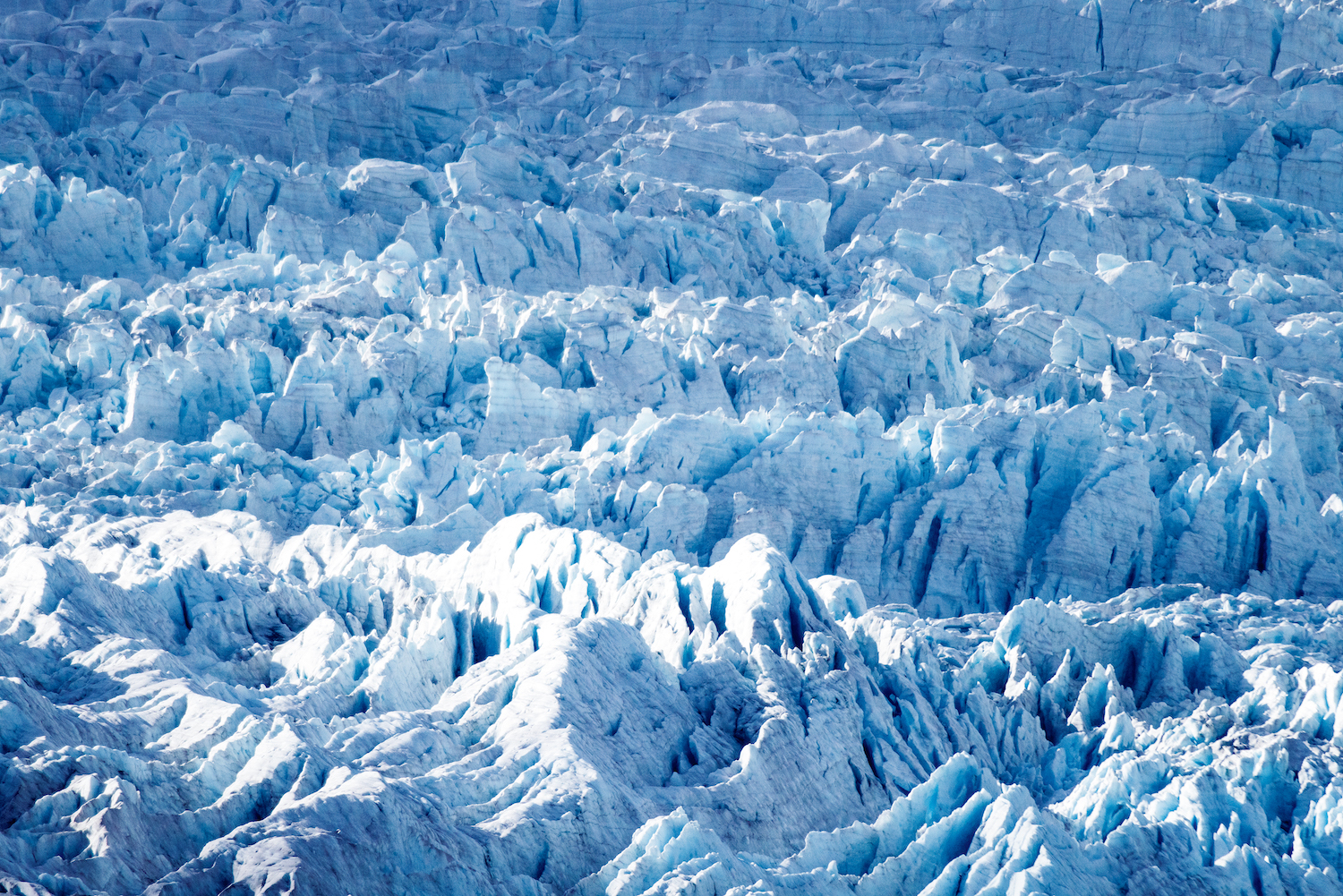
From the cruise ship, Yuki Ueda photographs the slope of an ice shelf. Multiple layers are visible in the sharply exposed cross-section, pushed outwards by the immense pressure of the ice. Compressed over vast periods of time until almost all the air within them has been expelled, the layers reflect the blue wavelengths of light, giving the ice a beautiful, almost otherworldly hue.
As I prepared to step ashore, I felt nervous. Had the explorer Roald Amundsen, the first man to reach the South Pole more than a century ago, felt something similar? Tens of thousands of people may have visited Antarctica by now, but for me, this was still unexplored territory.
Whenever I set foot somewhere I have never been before, I feel something special, perhaps because of the sense that a childhood dream is finally being fulfilled. That day, the weather was calm and there was no wind, making the landing almost surprisingly uneventful. Yet for me, that first step was a giant one.
A World Far Removed from Humans, Governed by Another Sense of Time
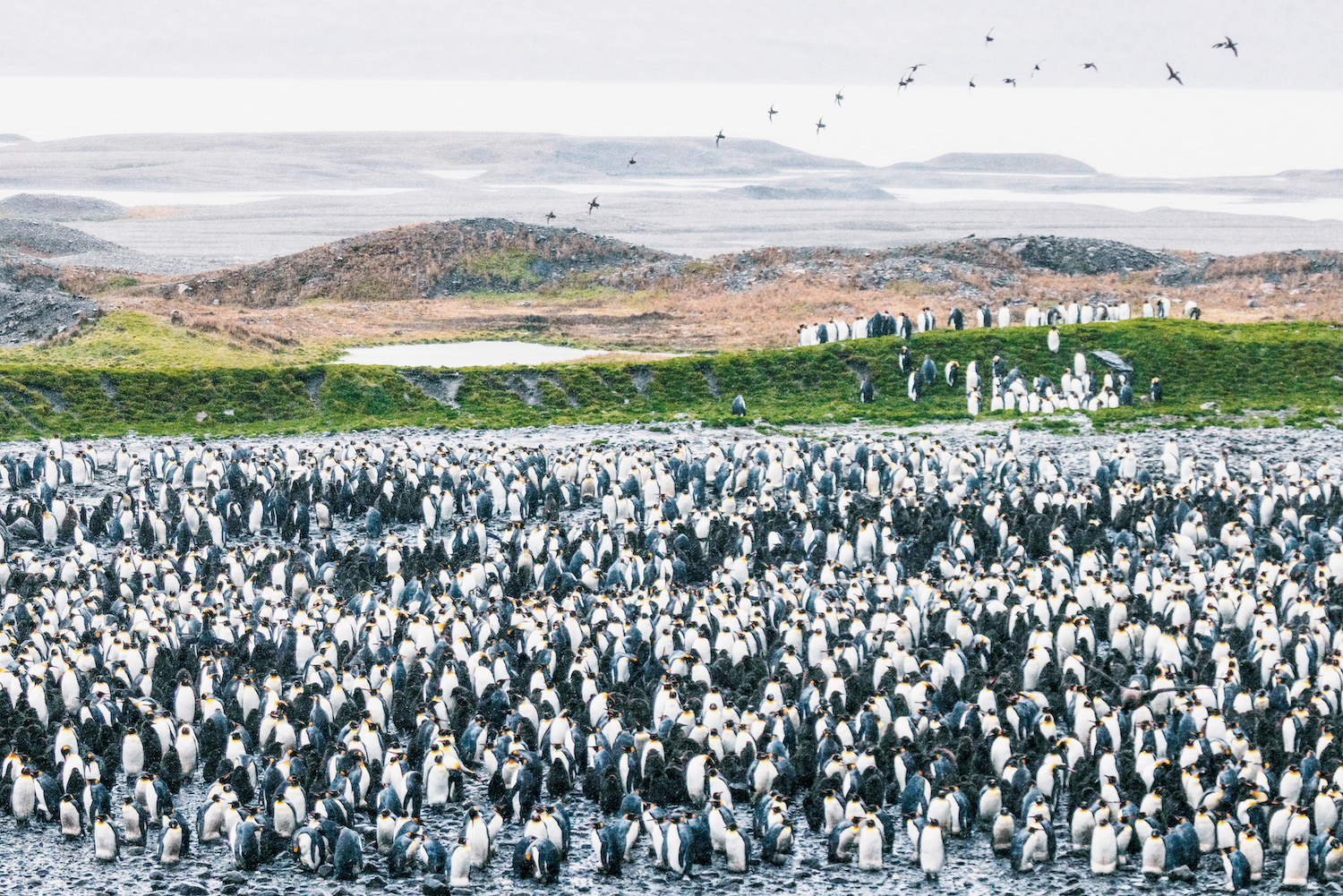
Tens of thousands of penguins fill the land in a simply breathtaking spectacle. Yuki Ueda’s ship also visited South Georgia, home to one of the world’s largest king penguin colonies. Several other species of penguin live on the island, along with elephant seals and albatrosses.
The beach where we landed was home to a penguin colony, or rookery. As far as the eye could see, countless penguins waddled along the shore. Perhaps because they had so few natural predators to fear, they seemed to have no sense of caution whatsoever. Rather than fleeing from us, they approached us with curiosity. It was almost amusing: instead of the penguins retreating from the humans, it was we who had to keep our distance from the penguins so as not to violate the rules of the Antarctic Treaty.
Alongside the penguins, fur seals and enormous southern elephant seals, some more than six metres long, were basking contentedly in the sun. Despite being one of the most extreme environments on Earth, Antarctica presented a landscape that could only be described as paradise.
But this ‘paradise’ does not mean a world without hardship or danger. Penguins are attacked by seals and orcas, while some animals starve to death when food is scarce. It is a harsh environment in which the law of the strongest prevails. The animals are not living in peaceful surroundings, flourishing in comfort and security. Yet they were undeniably living—in their own world.
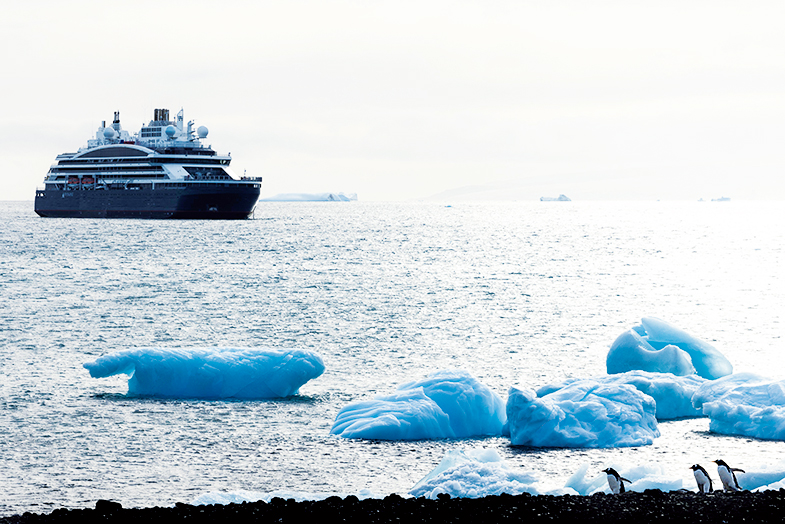
Gentoo penguins run along the beach as blue ice floats offshore. In the distance, the cruise ship seems to belong to another world.
It is difficult to explain, but this place was clearly different from a ‘safari’, where large numbers of tourists come to observe animals. This was a world belonging solely to the animals, and it reminded me of something obvious that we too easily forget: the Earth does not belong only to human beings.
Perhaps the best way to describe it is as a place where landscapes exist that can be seen nowhere else. I have always taken photographs with the desire to convey the unknown landscapes hidden within this world, in the hope that seeing them will enrich the hearts and minds of those who look at them. Antarctica was full of precisely these ‘landscapes that exist nowhere else’. It made me feel that the creatures living there inhabit a world governed by a completely different sense of time from the one in which we, as humans, live.
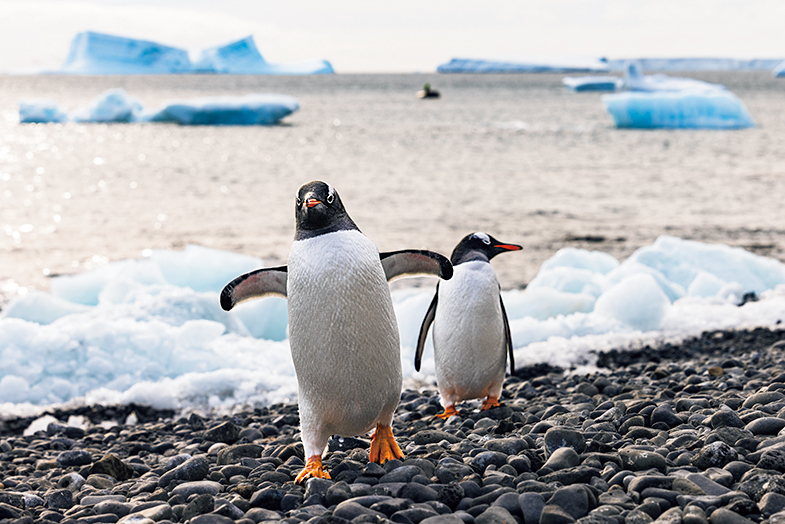
Gentoo penguins approach without any fear of humans. At the same time, the numerous animal remains visible along the shore testify to the harshness of nature.
The photographer Michio Hoshino once wrote in one of his books that he sometimes found himself thinking about the animals he had encountered in Alaska. He wondered what the whale he had seen that day might be doing now, or whether the penguin he had met was still somewhere, looking at the moon. After returning home, he would often find himself thinking back to those encounters.
There are animals that make you think of them in that way, and the knowledge that such another world exists can be a source of comfort, or perhaps simply enrich your inner life. That is why I came away with such a strong feeling that we must protect their world without disrupting it.
The ice sheet covering Antarctica is a beautiful, pale blue-white. Standing before landscapes that have taken millions, even tens of millions of years to form, I felt a profound respect for things that exist on a timescale beyond anything we can comprehend in our own lives. And, however commonplace the word may be, I was deeply moved. For me, the fact that Antarctica is a one-of-a-kind place capable of enriching our minds and senses is what makes it a ‘paradise’.
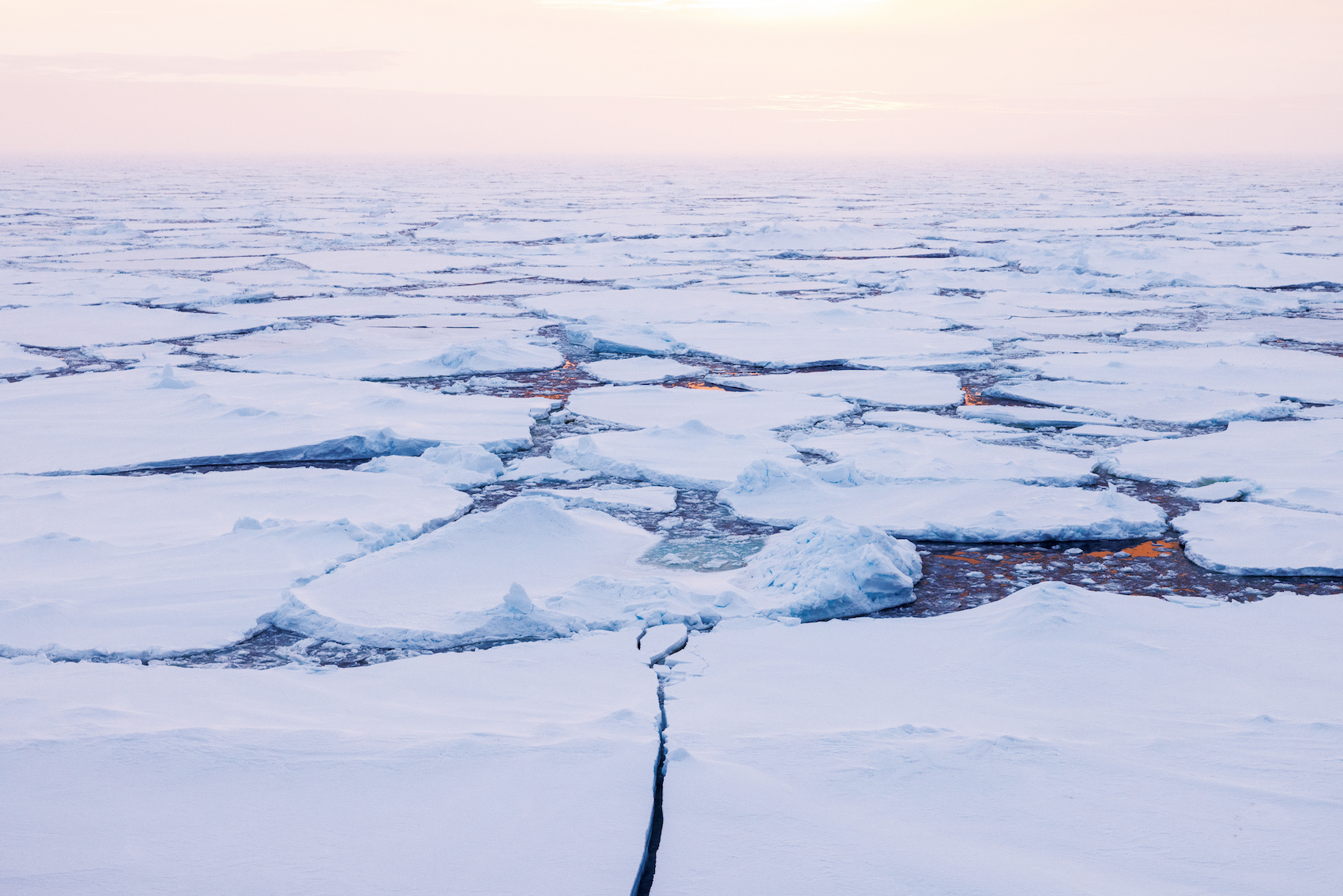
Sea ice, formed when seawater freezes, stretches towards the horizon as far as the eye can see. Bathed in the glow of the setting sun, this frozen expanse seems like a path towards paradise. Some of the ice floes measured more than 10 metres across, but Yuki Ueda’s ice-capable ship carefully broke through them as it made its way along the route.
As the captain had warned us before departure, the itinerary changed several times. We were unable to land on the South Shetland Islands because of bad weather, but we were nevertheless able to make around five landings in total, on the Antarctic Peninsula and South Georgia.
There were also various activities available during the journey, including canoeing and even plunging into the freezing sea. One day, I chose to go trekking on the Antarctic Peninsula. Wearing crampons, I spent several hours climbing an unnamed hill. It was not particularly high, but as I climbed step by step, feeling the earth beneath my feet, I began to truly appreciate that I was travelling through Antarctica.
March is apparently the time of year when there is the least snow. In some places, reddish-brown rocks were exposed beneath our feet. When I discovered moss growing on one of them, I found myself returning to the imagination of my childhood, wondering, ‘Could this be a remnant of Gondwana, hundreds of millions of years ago?’ I began thinking about ancient forests, letting my imagination wander.
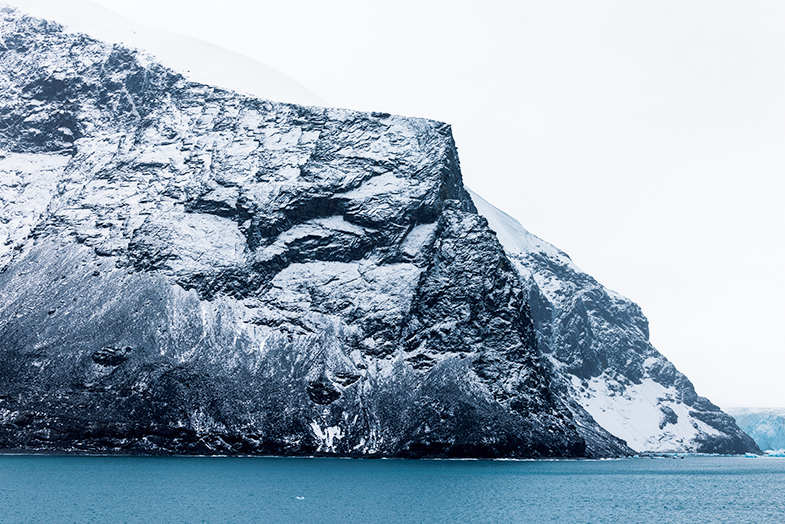
Yuki Ueda travelled through Antarctica in March, during the transition from late summer to autumn. In the northern part of the Antarctic Peninsula, large areas of dark rock were exposed beneath the snow and ice.
When I reached the top of the hill, a vast white landscape stretched into the distance. Beyond the horizon, I could see range after range of enormous mountains. Looking out over that seemingly endless landscape, I once again realised that I had merely reached the threshold of Antarctica.
This was the Antarctic Peninsula, a small corner of the continent. Beyond it lay a landmass twice the size of Australia. As I imagined what landscapes might exist further inland, I felt an irresistible desire to return.
Next time, no matter how difficult it may be, I want to spend several days walking through the frozen wilderness, travelling further inland and experiencing the harshness and beauty of the Antarctic continent more deeply. I want to dive beneath the ice-covered sea, too. And I want to photograph animals as they struggle with all their strength to survive.
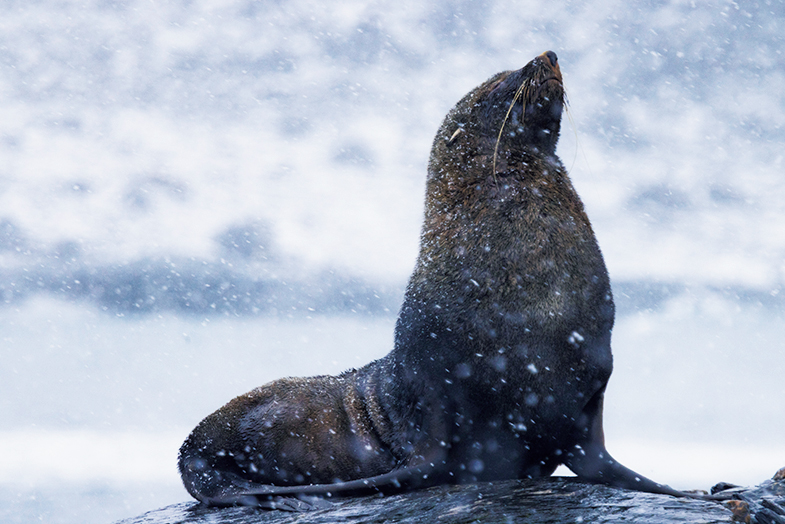
An Antarctic fur seal in the South Orkney Islands. Once driven close to extinction by intensive hunting, the species has since recovered in number.
This journey was not an adventure I had undertaken entirely of my own accord, but the Antarctica I encountered was already beautiful enough even from the surface. On clear days, the white ice sheet was so dazzling that it was impossible to keep my eyes open without sunglasses. Each time I planted my feet on the ground, I was reminded that this was a continent. The penguin rookery, where droppings were simply left as part of the natural environment, was surprisingly pungent.
Experiencing all of this through my five senses made me feel that, for the first time, I was beginning to grasp the true contours of Antarctica.
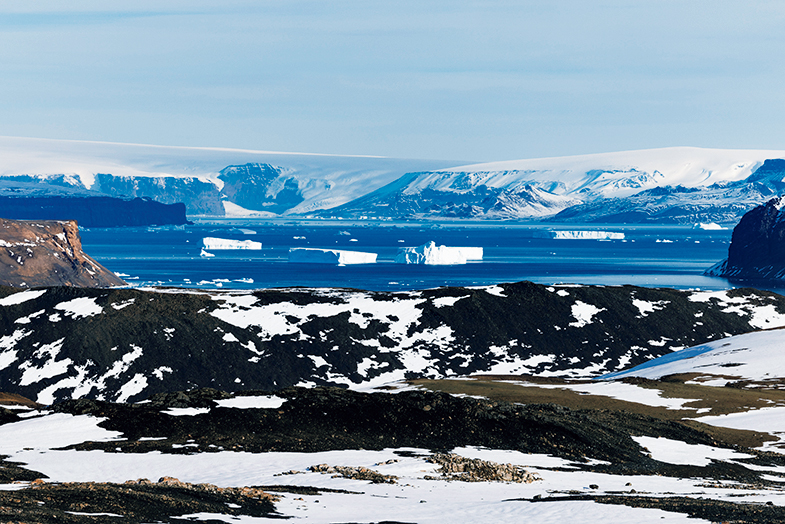
Looking out over the Southern Ocean from the Antarctic Peninsula, where Yuki Ueda came ashore. The table icebergs scattered across the sea can measure several dozen metres across.
This journey inspired me to set out for Antarctica once again at the end of this year. This time, my goal is to climb the Vinson Massif, the highest mountain on the continent, rising to 4,892 metres. What kind of landscape can be seen from the highest point in Antarctica?
On this mountain, where temperatures can fall below -30°C, I want to experience Antarctic nature firsthand, document it carefully and share what I see with as many people as possible. If I can deliver photographs that move those who see them, that would be more than enough for me.
Antarctica: The Most Distant and the Most Accessible of the Polar Regions
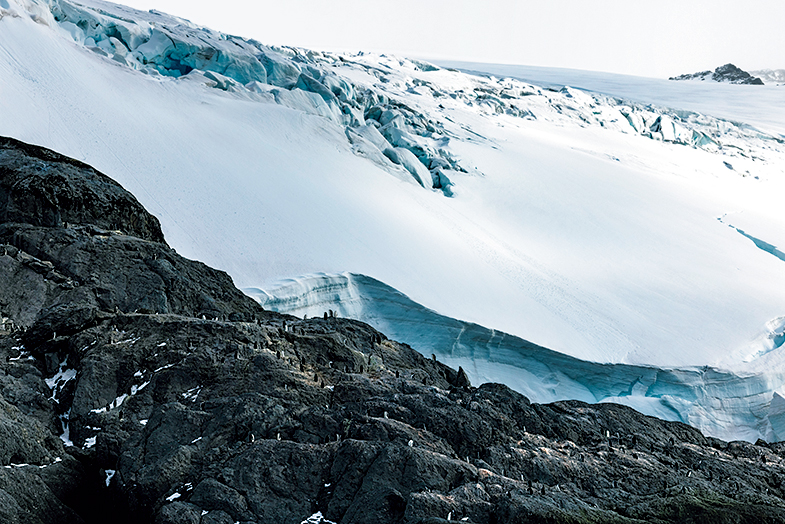
During the cruise, penguin colonies could often be seen from the ship. Before winter arrived, the penguins would leave the land and return to the sea.
Since returning home, I have often been asked, ‘What was Antarctica like?’ But the only answer I can give is: ‘It was Antarctica.’ Everything I saw there was so completely unique.
There was no single iconic landmark, like Kyoto’s Kinkaku-ji, that served as the obvious focal point of the journey. Precisely because there was nothing of the sort, I was able to travel while savouring each landscape I encountered, thinking to myself each time: ‘So this is Antarctica.’
When I tell people about the places I have travelled to around the world, they often say, ‘If you have been to so many places, there can’t be many places left for you to visit.’ But that is not true at all. I will probably return to Antarctica many more times, and although I have already visited 85 countries, there are still more than 100 countries I have never been to.
There are still so many things I want to see and so many landscapes I want to share. And I am sure that, for many other people too, there are countless unknown landscapes around the planet that they dream of visiting one day. I believe that both this world and human curiosity hold infinite possibilities.
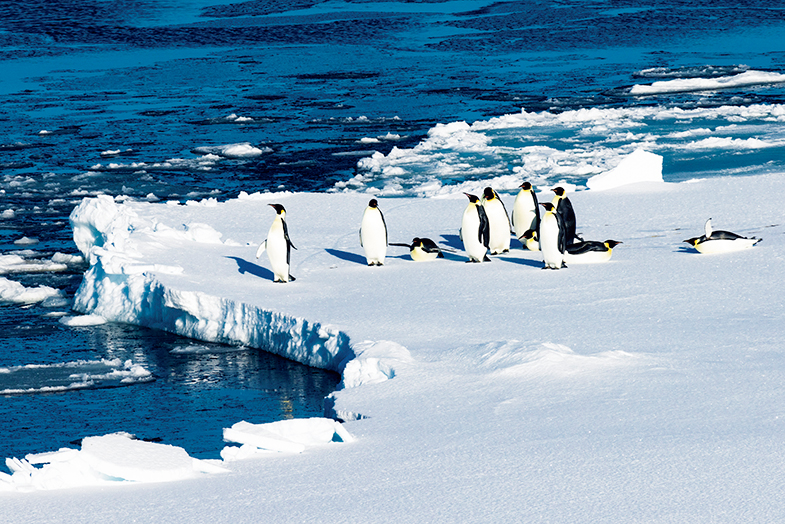
Emperor penguins spotted on the ice. Their characteristic way of sliding along on their bellies, known as ‘tobogganing’, is one of the quintessential sights of Antarctica.
Thinking back, most of the people taking part in the Antarctic cruise were retired couples or families. Given that it was a luxury cruise and therefore came at a considerable cost, this was understandable. Yet everyone seemed to be enjoying the journey with an intense sense of curiosity.
Specialists, including biologists and geologists, were also travelling on board. They gave lectures during the voyage and answered passengers’ questions when we went ashore. In that sense, it was a journey that also seemed more than capable of satisfying the participants’ intellectual curiosity.
It may sound rather blunt to say that anyone can go to Antarctica as long as they can afford it. But discovering that there is a place this remote and emotionally stirring that can be visited even by older people or those who are not adventurers was significant for me.
Take Everest, for example. Even if you have the money, an ordinary person cannot simply decide to climb it. Antarctica, by contrast, is surprisingly easy to reach if you join an organised tour.
It is easy to assume that places like this no longer exist, but they do. Antarctica is not the only place on Earth that still holds landscapes unknown to most people. There are countless others. And in that fact, I find something resembling hope.
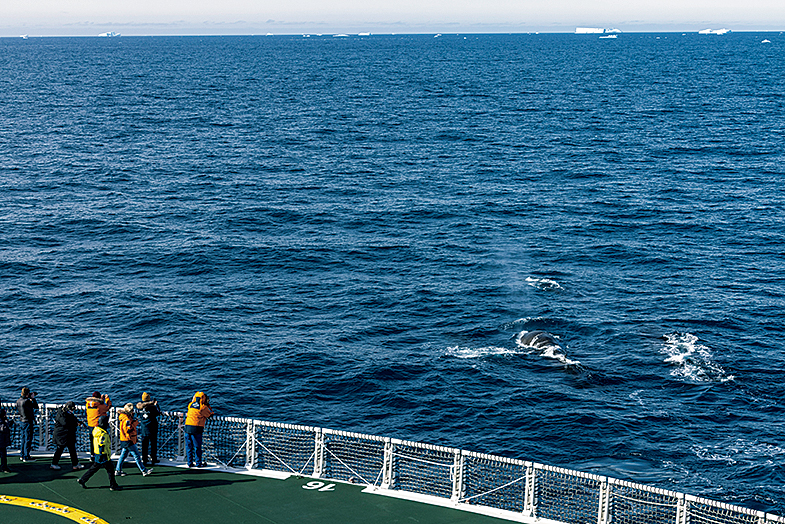
From the cruise ship, Yuki Ueda would occasionally spot dolphins and whales swimming offshore. Each sighting of wildlife was announced over the ship’s public-address system.
There is nothing I would value more than enabling people to travel to and experience for themselves the unknown landscapes that I want to share with them.
For many people, Antarctica may be the most geographically distant of the polar regions, but also the most accessible. Perhaps that is what Antarctica ultimately is: the most distant, yet the closest, of the world’s polar frontiers.