Daido Moriyama’s Fascination with the World’s Oldest Photograph
As photography marks its bicentenary, an exhibition in Paris sheds light on Moriyama’s enduring engagement with the medium’s origins.
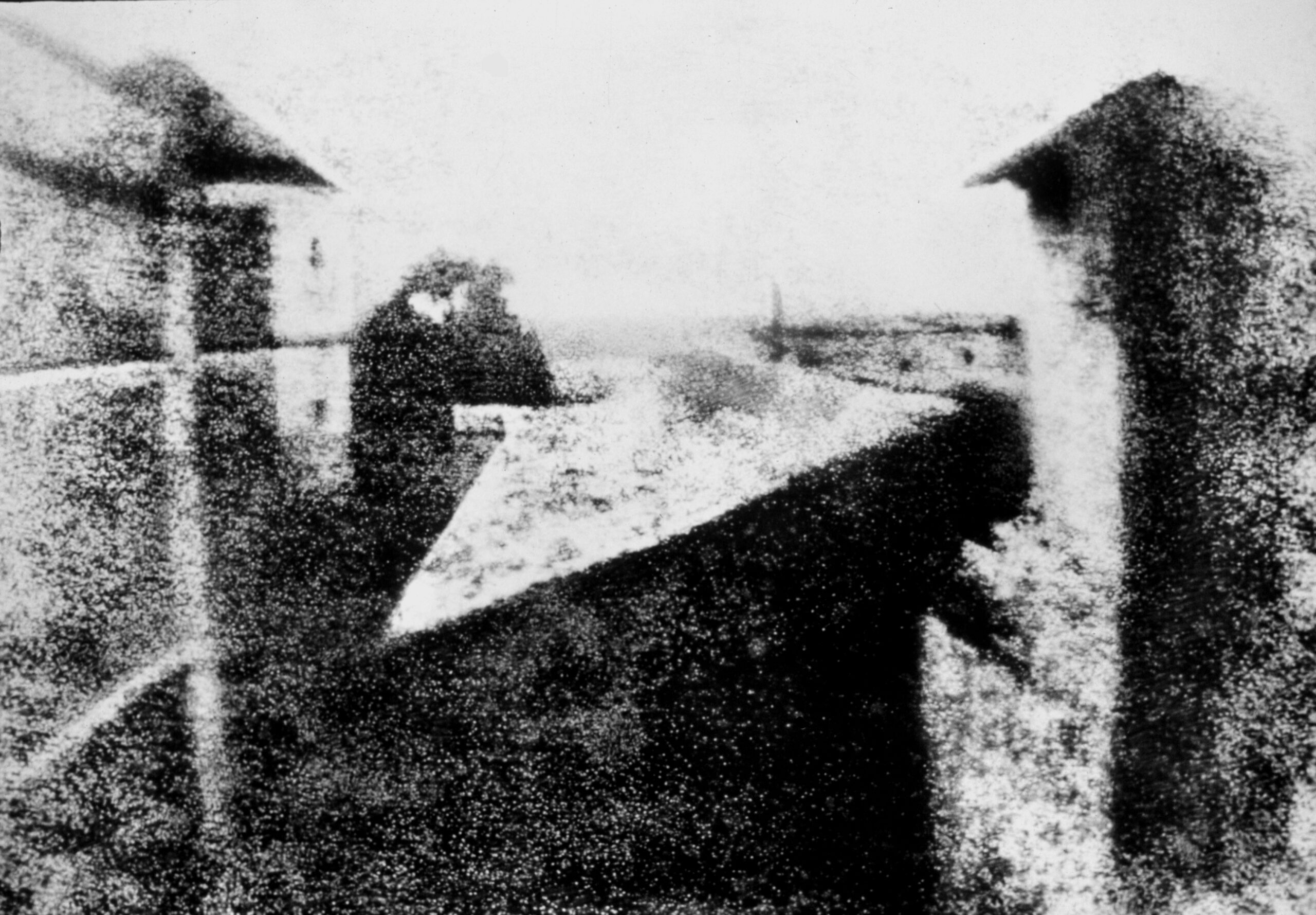
‘View from the Window at Le Gras’, the oldest surviving photograph, made by French inventor Nicéphore Niépce in 1826 or 1827. © Public domain
At first glance, the view of a courtyard seen through the window of a farmhouse appears unremarkable. Yet ‘View from the Window at Le Gras’, made by French inventor Nicéphore Niépce in 1826 or 1827 at his home in Saint-Loup-de-Varennes, Burgundy, is nothing short of a miracle. It is the oldest surviving photograph known to us. The result of an experiment that was still closer to scientific invention than artistic creation, the image has fascinated Daido Moriyama ever since he discovered it in a magazine in the mid-1970s.
As the medium celebrates its bicentenary this year, who better than Moriyama to trace photography’s evolution by returning to its very beginnings? Until 4 October, the Fondation Henri Cartier-Bresson in Paris is presenting Love Letters to Photography, an exhibition that reveals a lesser-known side of Daido Moriyama: that of an artist who has continually questioned, examined and paid tribute to his medium.
A ‘sublime point of reference’ woven into his daily practice
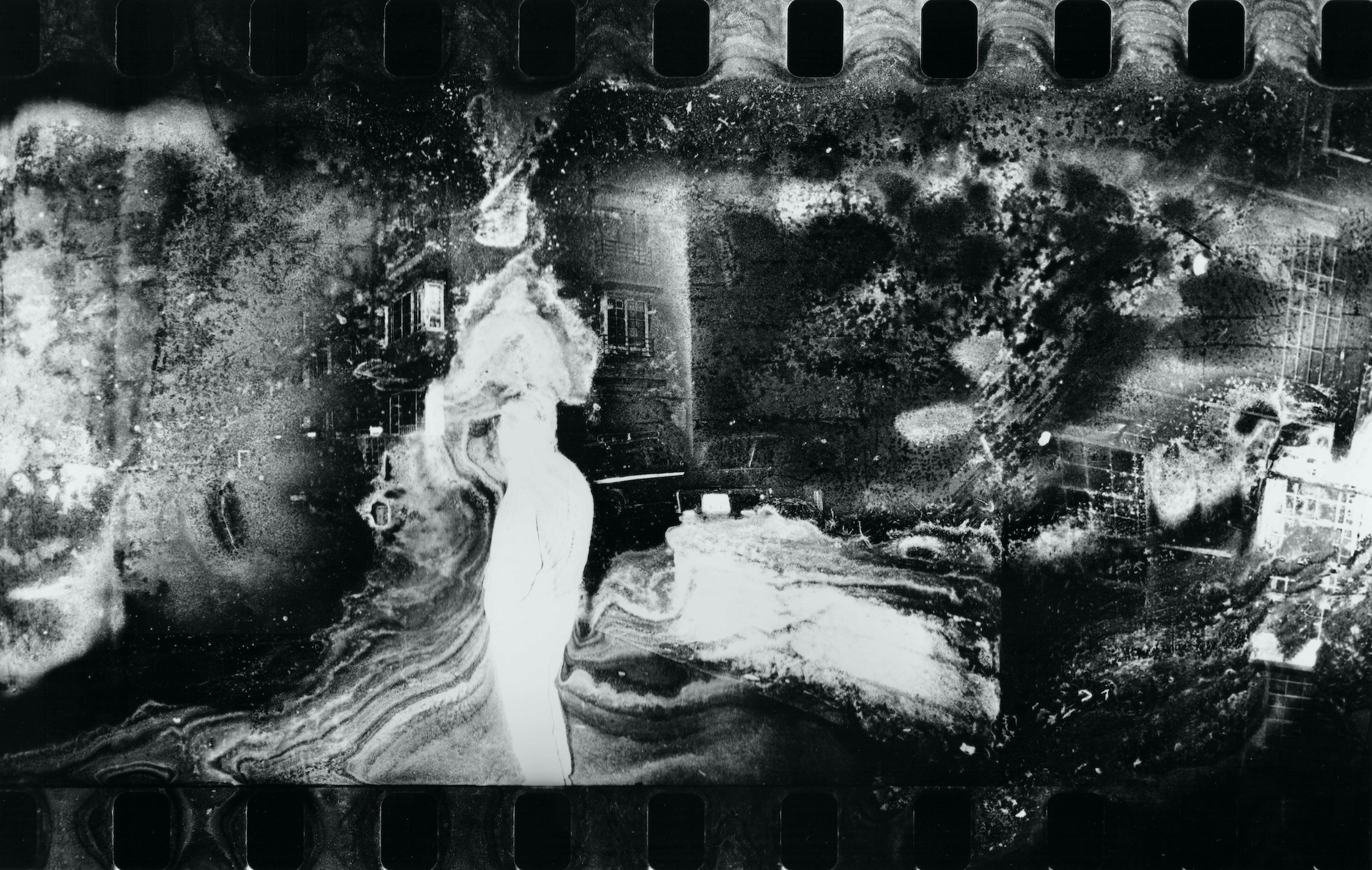
Daido Moriyama broke free from the conventions of ‘good photography’, going so far as to burn his negatives and publish them as they were. Daido Moriyama, Tokyo, Japan, 1969, in ‘Shashin yo sayonara [Farewell, Photography]’, 1972. © Daido Moriyama Photo Foundation
Daido Moriyama is known for having said ‘goodbye to photography’ with his book Shashin yo sayonara [Farewell, Photography] (1972), in which he dismantled the conventions surrounding what was supposed to constitute a ‘good photograph’, going so far as to burn his negatives and publish them as they were. His blurred, dark, grainy images, often devoid of an identifiable subject, represented a radical break with photographic tradition. Yet much the same could be said of ‘View from the Window at Le Gras’, which he discovered around the same period in a magazine.
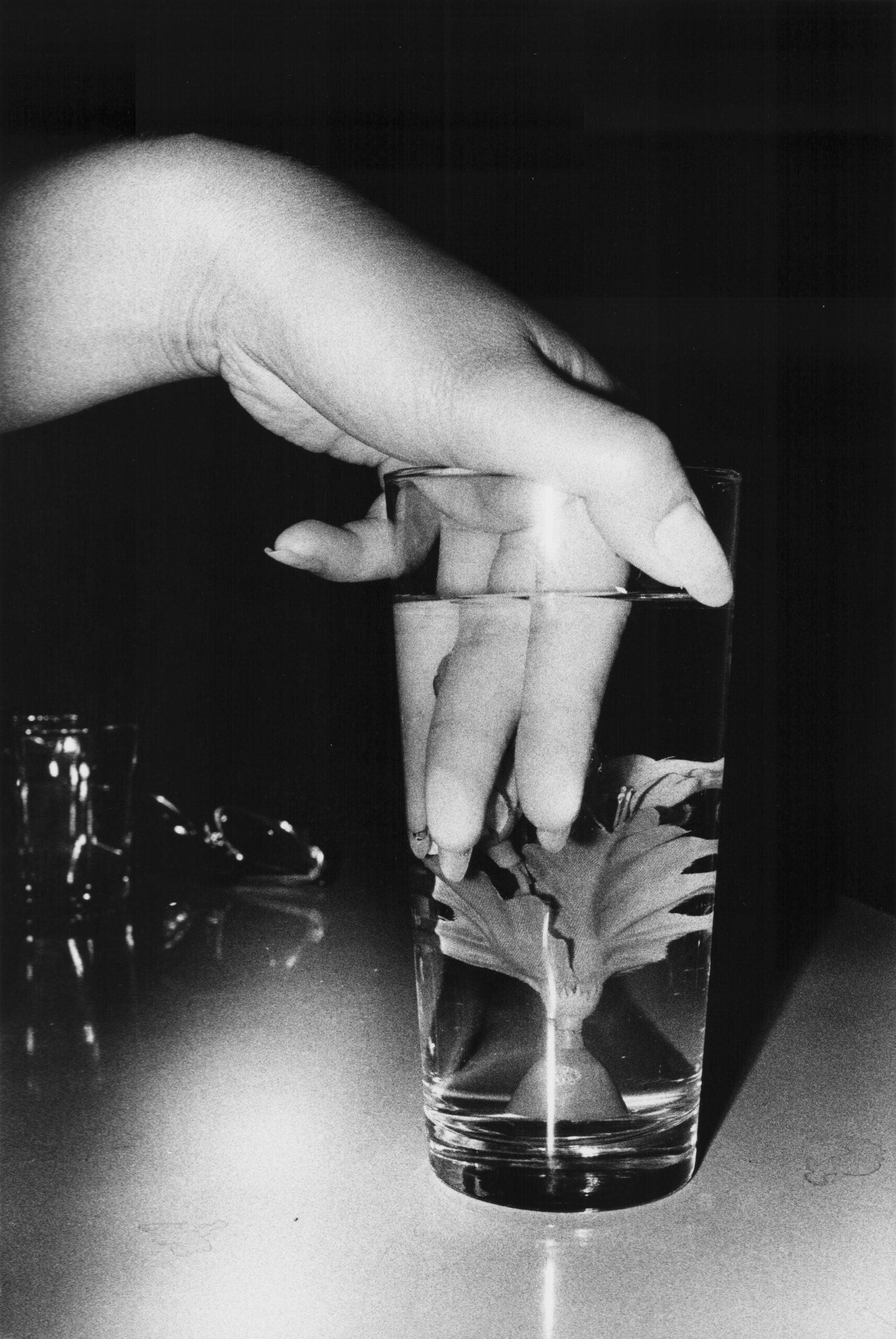
In ‘St. Lou e no tegami [Letter to St. Lou]’ (1990), Daido Moriyama pays tribute to Nicéphore Niépce, whose ‘View from the Window at Le Gras’ has remained etched in his memory. © Daido Moriyama Photo Foundation
He subsequently began exploring the possibilities of his medium, experimenting in particular with printing, which has remained fundamental to his practice. In this, there is a striking parallel with Nicéphore Niépce, who devoted himself to reproducing and disseminating photographs.
In the 1980s, Daido Moriyama photographed the view from the window of his own Tokyo flat, and in 1990 published St. Lou e no tegami [Letter to St. Lou], a series of black-and-white photographs of landscapes and abstract scenes that appear, at first, to have little connection with ‘View from the Window at Le Gras’. Yet the original photograph remained firmly in the photographer’s mind. He dedicated the book to Nicéphore Niépce, in the spirit of a love letter.
He then placed a reproduction of ‘View from the Window at Le Gras’ above his bed, in an 80 × 100 cm frame, treating it almost like an icon. A reproduction of this photograph is now on display at the Fondation Henri Cartier-Bresson.
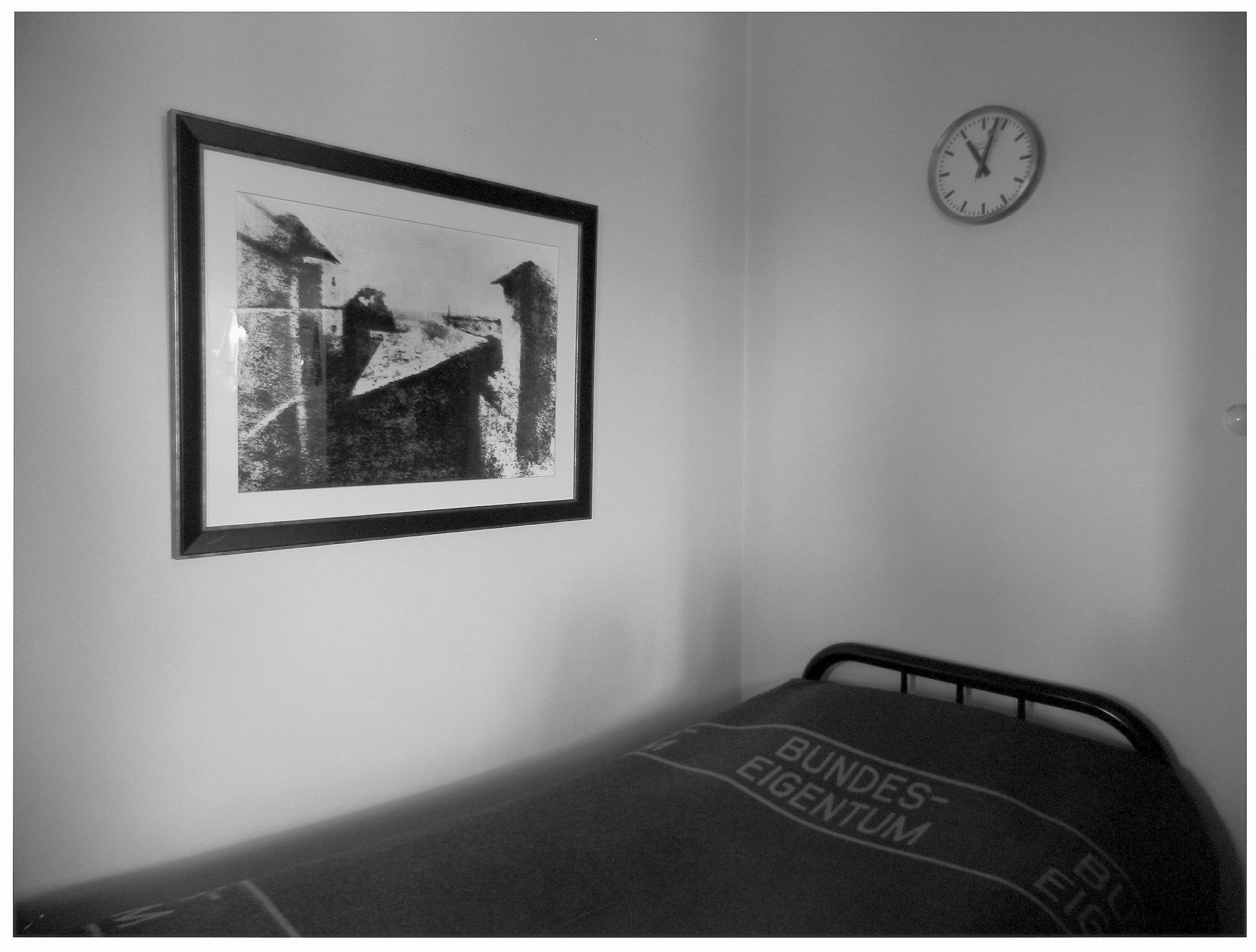
View of Daido Moriyama’s bedroom. Above his bed hangs a reproduction of ‘View from the Window at Le Gras’, which he photographed daily to test his camera settings. Daido Moriyama, Ikebukuro, Tokyo, Japan, 2011, in ‘Jikkenshitsu kara no nagame / View from the Laboratory’, 2013. © Daido Moriyama Photo Foundation
‘It is an absolute obsession for him,’ explains Dimitri Beck, Director of Photography at the Polka gallery in Paris and Editor-in-Chief of its eponymous magazine, who knows Daido Moriyama well, having published and exhibited his work on numerous occasions, including during an extensive programme in 2012–2013.
‘He would look at it before going to sleep and again when he woke up, and he used it to test whether his camera was working properly before heading out to photograph in the streets. Like a sublime point of reference, he explored it and photographed it before applying it to his own photography.’
‘Returning to the starting point to follow his own path’
Daido Moriyama made hundreds of photographs of his reproduction of ‘View from the Window at Le Gras’, capturing it at different times of day and in changing tones: from the pastel blue of the sky on a clear morning, reflected in the glass of the frame, to the red artificial light of early evening. The exhibition brings together 35 of these images, almost as if reconstructing a day spent in the company of ‘View from the Window at Le Gras’, as seen through Moriyama’s eyes.
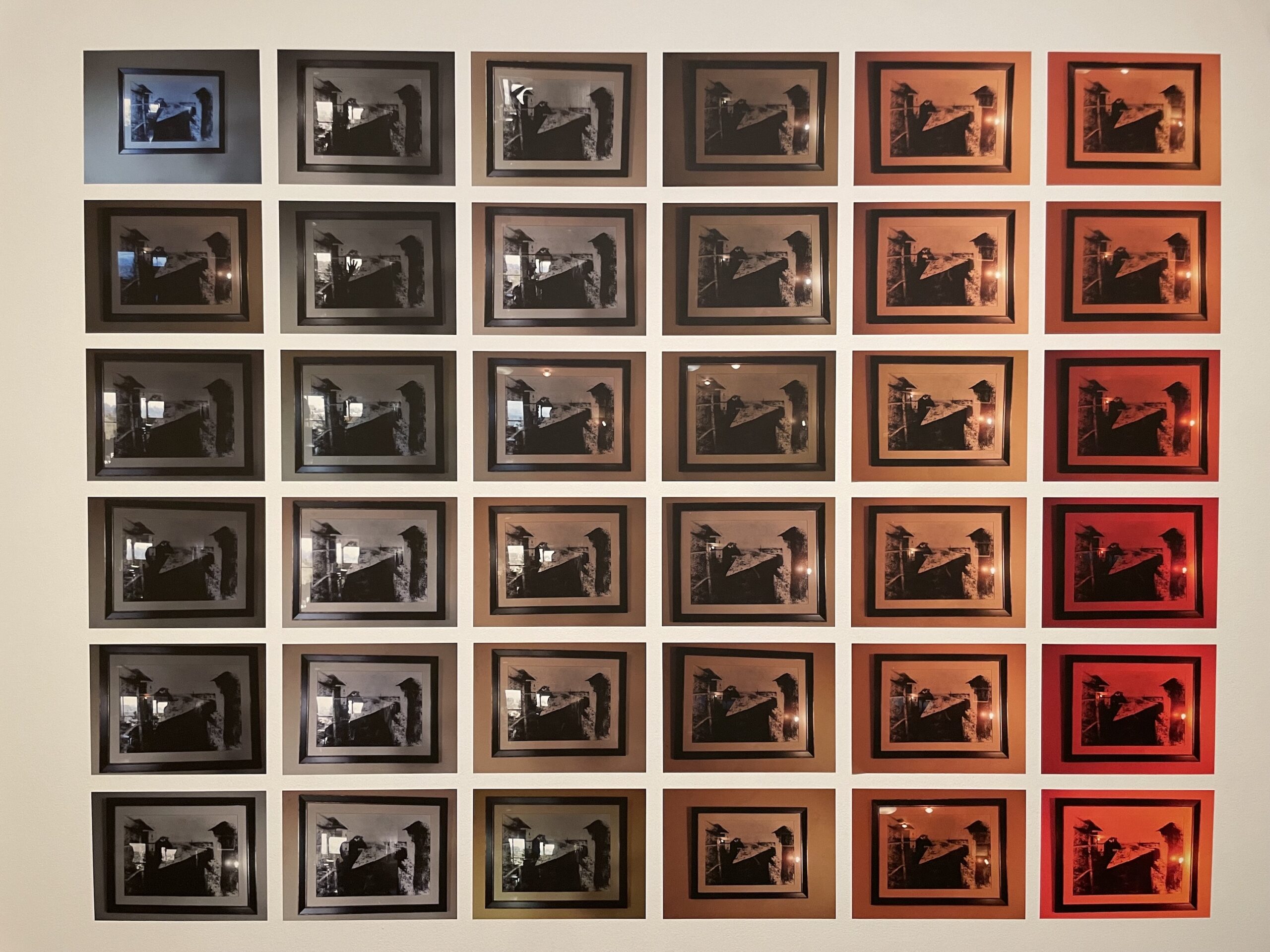
Installation view of 35 photographs of the reproduction of ‘View from the Window at Le Gras’ that Daido Moriyama had displayed in his bedroom. View of the exhibition ‘Love Letters to Photography’ at the Fondation Henri Cartier-Bresson in Paris, July 2026. © Rebecca Zissmann
The photographer would wait many more years before seeing the original in person. In 2008, SKYWARD, Japan Airlines’ magazine, commissioned him to produce a series of photographs, giving him complete freedom to choose the location. Daido Moriyama chose to travel to Saint-Loup-de-Varennes on a pilgrimage.
In View from the Laboratory, published in 2013, he unveiled photographs from this journey to the place where photography began. One image in particular stands out: his reinterpretation of ‘View from the Window at Le Gras’, made from the very window where Nicéphore Niépce had stood nearly two centuries earlier. The image echoes the original’s intense black-and-white contrast and mysterious composition, with two open window panes framing a lush, seemingly timeless tree.
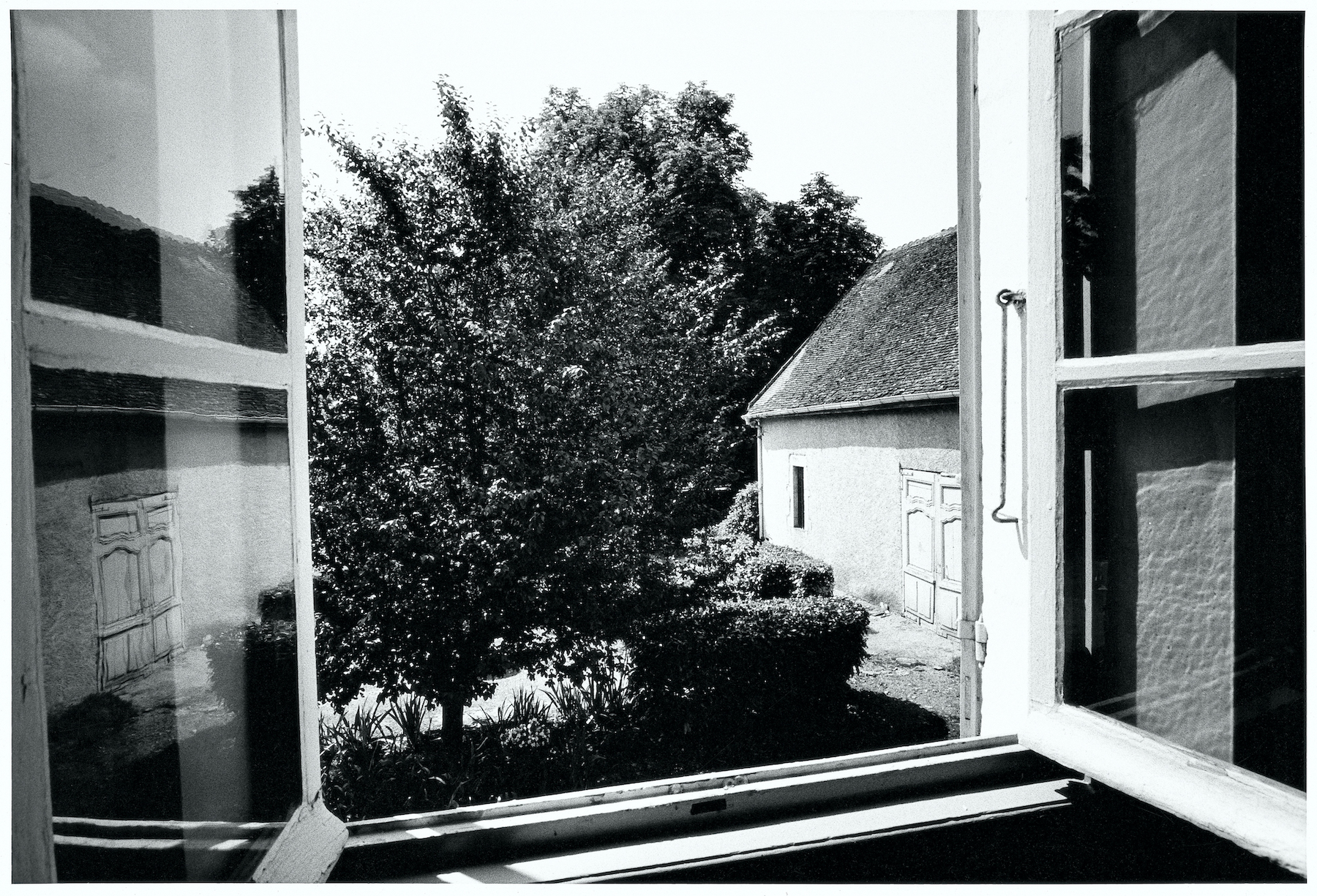
During his pilgrimage to Saint-Loup-de-Varennes, Daido Moriyama photographed his own version of ‘View from the Window at Le Gras’, from the spot where Nicéphore Niépce had stood nearly two centuries earlier. Daido Moriyama, Saint-Loup-de-Varennes, France, 2008, in ‘Jikkenshitsu kara no nagame / View from the Laboratory’, 2013. © Daido Moriyama Photo Foundation
‘In Japanese culture, there is a respect for those who came before, for those who made the first gestures and serve as points of reference, allowing others—their disciples—gradually to become masters in their own right,’ continues Dimitri Beck. ‘You have to know how to free yourself from them, and that is what makes Daido Moriyama’s tribute to ‘View from the Window at Le Gras’ so remarkable. For him, it is not simply a matter of reproducing something, but of returning to the starting point and then following his own path. Ultimately, we are never as free to be ourselves as when we know who the masters are and what they have given us.’
A constant reference to photography within Daido Moriyama’s work
Love Letters to Photography presents copies of SKYWARD in which Daido Moriyama’s photographs are accompanied by texts written by the artist himself, who has always reflected deeply on his practice. Here, he articulates precisely what his work owes to ‘View from the Window at Le Gras’.
‘Rather than looking at this photograph, it is perhaps better to say that one should feel it, or be receptive to it. And when I am receptive to this image, I can instantly travel back through time and space, experiencing the strange illusion of standing there, in the dazzling light of July 1827, and in this way live through a singular moment of happiness. […] My simplest theory of photography can be summed up in a few words: ‘Photography is memory.’ Today, by sharing the same windowsill with Niépce in that house in Saint-Loup, I feel that I have been able to leave, somewhere in a corner of my existence as a photographer, a kind of testimony. This testimony is none other than the sky beneath which, camera in hand, I stood at the heart of the light pouring down upon Saint-Loup-de-Varennes at the beginning of summer, this sacred place.’
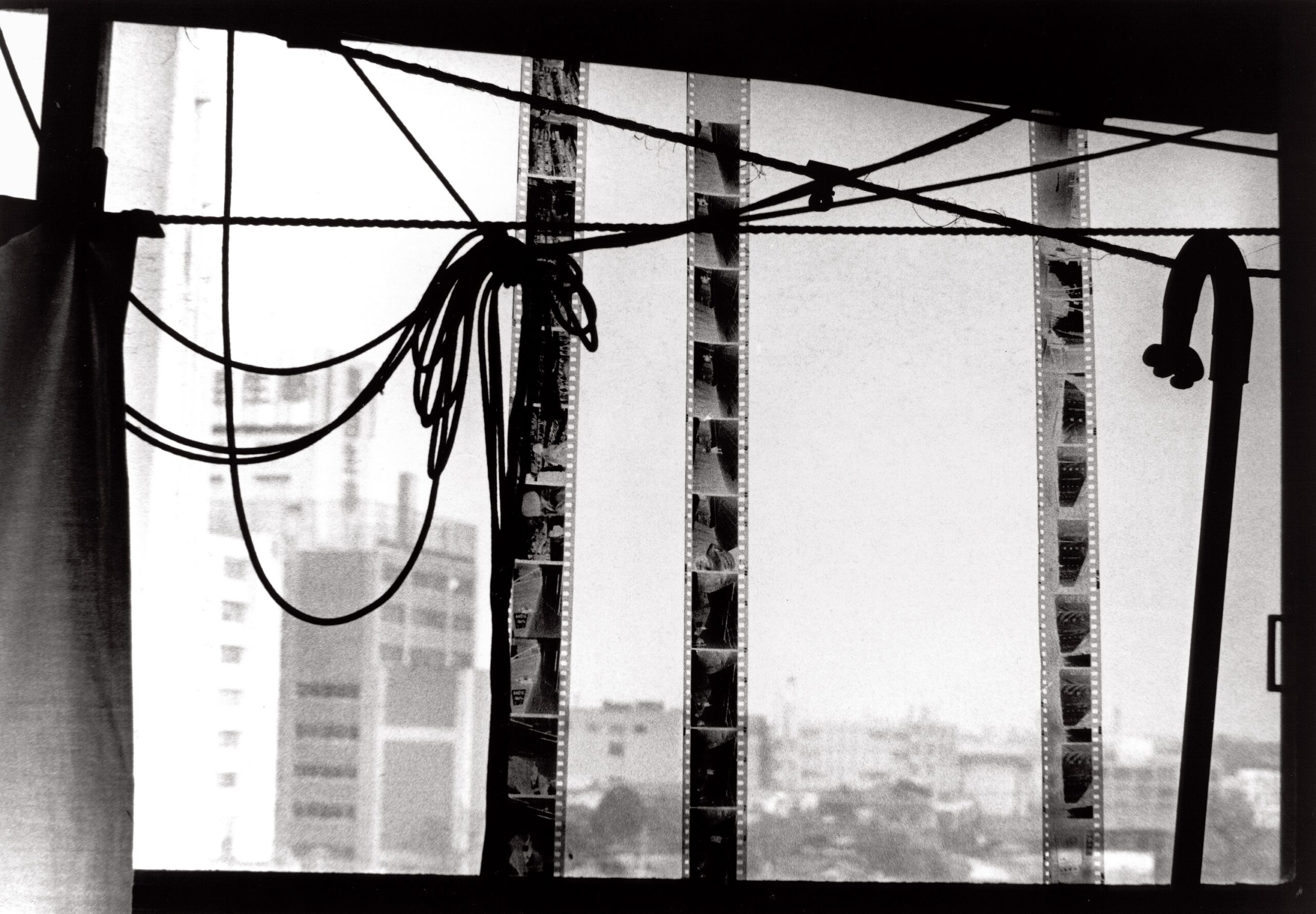
Daido Moriyama often references photography itself within his images, in an act of metaphtography. Here, he photographs negatives hanging from a window. Daido Moriyama, Shibuya, Tokyo, Japan, 1964–1968, in ‘Nippon gekijo shashin-cho [Japanese Theatre – Photographic Album]’, 1968. © Daido Moriyama Photo Foundation
The exhibition Love Letters to Photography is accompanied by a book of the same name, which, for the first time, translates 22 of Daido Moriyama’s texts on photography into French. As visitors move through the exhibition, they gain a deeper understanding of the practice of a photographer who has frequently turned his own medium into a subject within his images, in a form of meta-photography.
This lesser-known facet of Moriyama’s work allows viewers to look beyond the image of the street photographer for which he is best known, and to appreciate the extraordinary place Daido Moriyama has carved out for himself in the history of photography.
In 2027, ‘View from the Window at Le Gras’ returns to the place where it was born
‘He himself belongs in the category of masters,’ concludes Dimitri Beck. ‘Daido Moriyama has forged his own path with rigour and an almost obsessive determination. His writings convey the many intellectual exchanges he has had around photography, a subject he takes extremely seriously. It is not simply a distraction for him, but a way of being in the world, one upon which he casts a profound gaze. He is unquestionably one of the great photographers of the 20th century.’
Following his journey to Saint-Loup-de-Varennes, Daido Moriyama travelled to Austin, Texas, in 2015, where the original plate of ‘View from the Window at Le Gras’ is preserved. Once again, he documented his journey in the manner of a travel diary, bringing to a climax a pilgrimage that had begun years earlier.
For those who would like to visit the birthplace of photography themselves, ‘View from the Window at Le Gras’ is about to return to its place of origin. From late April to late June 2027, it will be exhibited in France for the first time at the museum dedicated to Nicéphore Niépce in Chalon-sur-Saône, Burgundy.
It will be an opportunity to see the oldest surviving photograph with one’s own eyes, before travelling just a few kilometres away and, following in Daido Moriyama’s footsteps, attempting to capture the view from the famous window at Le Gras for oneself.