Yamamoto Masao, a Collector of Images
The nature-loving photographer is unveiling ‘Saru’, a new book dedicated to his photographs of Japanese macaques.
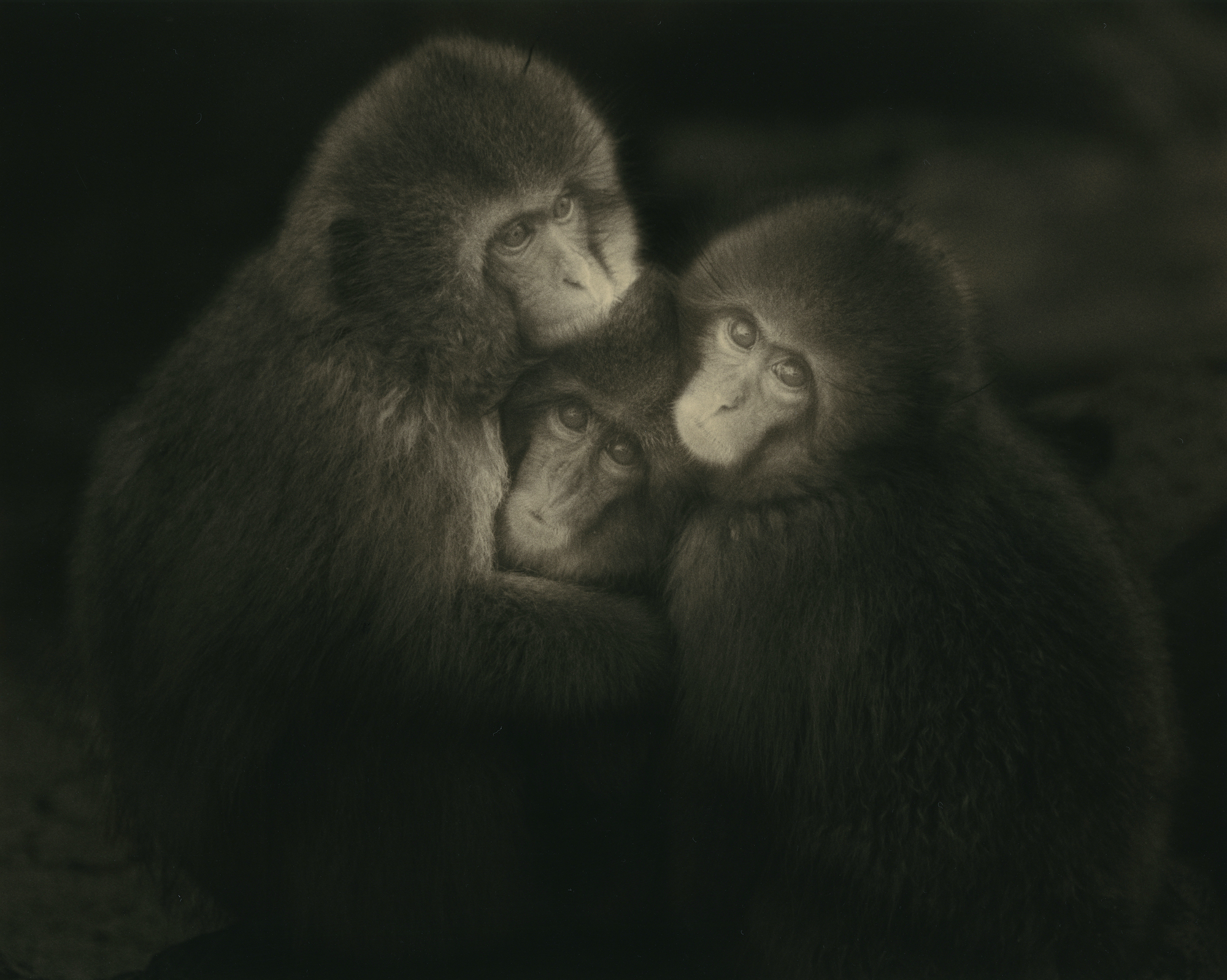
A trio of monkeys posing as if for a family portrait. From ‘Saru’, published by Textuel © Yamamoto Masao.
Ethereal and timeless, Yamamoto Masao’s photographs seem to exist outside of any particular era. Familiar yet mysterious, they appear as though they have been taken from old family albums. The natural world, which he has tirelessly captured throughout his career, reveals itself in all its beauty and permanence. Printed in small formats, often in black and white, with paper sometimes aged or altered through toning processes, his photographs form a collection of precious fragments of beauty. For Yamamoto Masao, a former amateur entomologist, the camera has taken the place of the butterfly net.
Over the past twenty years, the photographer has repeatedly turned his lens towards the Japanese macaques that inhabit Jigokudani Monkey Park in Nagano Prefecture. These works have resulted this year in the publication of Saru by Textuel, as well as exhibitions at the Paris gallery Camera Obscura (until 1 August 2026) and at the L’été photographique de Lectoure festival, as part of the programme ‘Au ras du réel’ (‘Up Close with Reality’, extended until 13 December 2026). Already well known and appreciated in France, where Saru marks his fifth book published in the country, Yamamoto Masao made a notable return this summer, meeting with audiences in both Paris and Lectoure. His pared-back aesthetic, in which silence, empty space and the delicacy of subtle tones sometimes recall the sensibility of traditional Japanese arts, appears to have found a particularly strong resonance internationally.
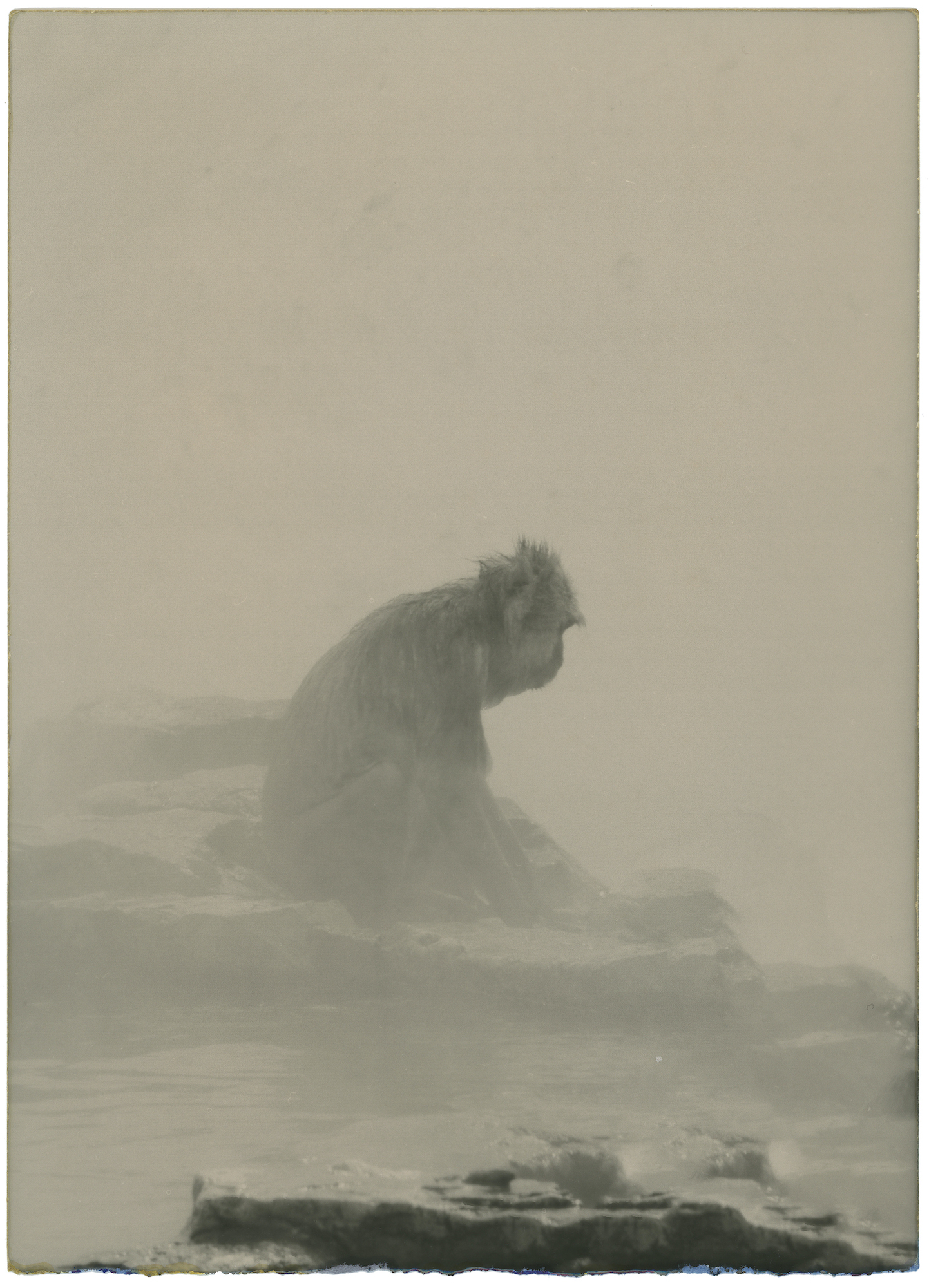
A pensive monkey by the water’s edge. From ‘Saru’, published by Textuel © Yamamoto Masao.
Famous around the world for their fondness for hot springs, Japanese macaques reveal another side of their personalities through Yamamoto Masao’s gaze. Some of their gestures and behaviours are strikingly human. There is, for instance, a trio of monkeys embracing one another, posing as if for a family portrait in a studio. Elsewhere, a lone macaque leans over the water, seemingly lost in thought. Distant relatives, they reflect our own vulnerabilities back to us. ‘Have human beings not become something even more irrational than animals themselves, almost impossible to control? Animals do not kill one another needlessly,’ the photographer sighs.
Painting with light
After initially studying painting, Yamamoto Masao began his career as a photographer in the late 1980s with the project A Box of Ku (A Box of Emptiness), which would later evolve into Nakazora (Between Sky and Earth). In his early exhibitions, hundreds of small photographs were placed inside a box, allowing visitors to freely select images themselves. Each person could create their own combinations and discover unexpected connections between photographs. Yamamoto eventually abandoned these installations in order to encourage viewers to focus on each individual image. In his subsequent project Kawa=Flow, he explored the passage of time as a central theme.
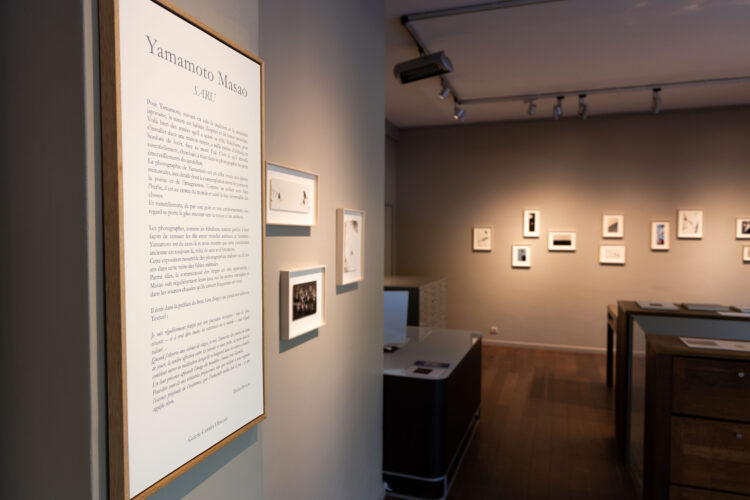
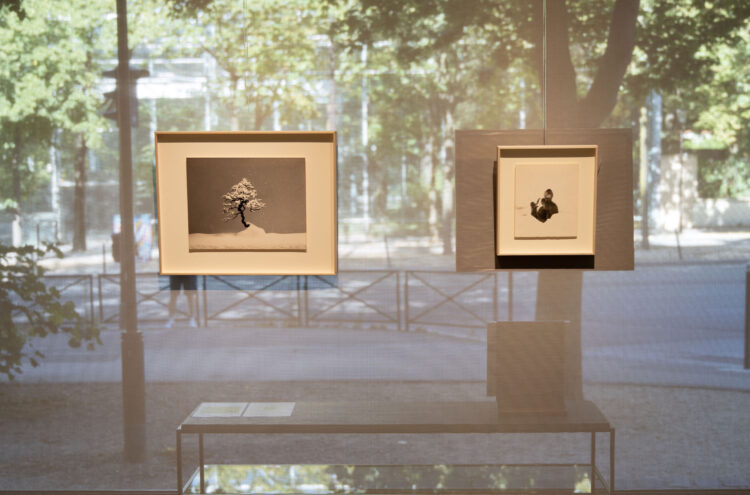
Views of the exhibition ‘SARU’ at Camera Obscura Gallery in Paris, on view until 1 August 2026. Yamamoto Masao held a public talk with visitors on 4 July.
Some of Yamamoto’s images appear as though they have been drawn with ink, almost like calligraphy. One example is a photograph of a small monkey playing with a snowball, its softly blurred fur appearing almost dissolved. During the development process, Yamamoto intervenes directly on his photographs, using various techniques to alter the prints and artificially create the impression of ageing. In order to better express the emotions he felt when witnessing a scene, he may choose to darken the background or, conversely, leave it brighter. ‘It is as if I were painting with light,’ he says.
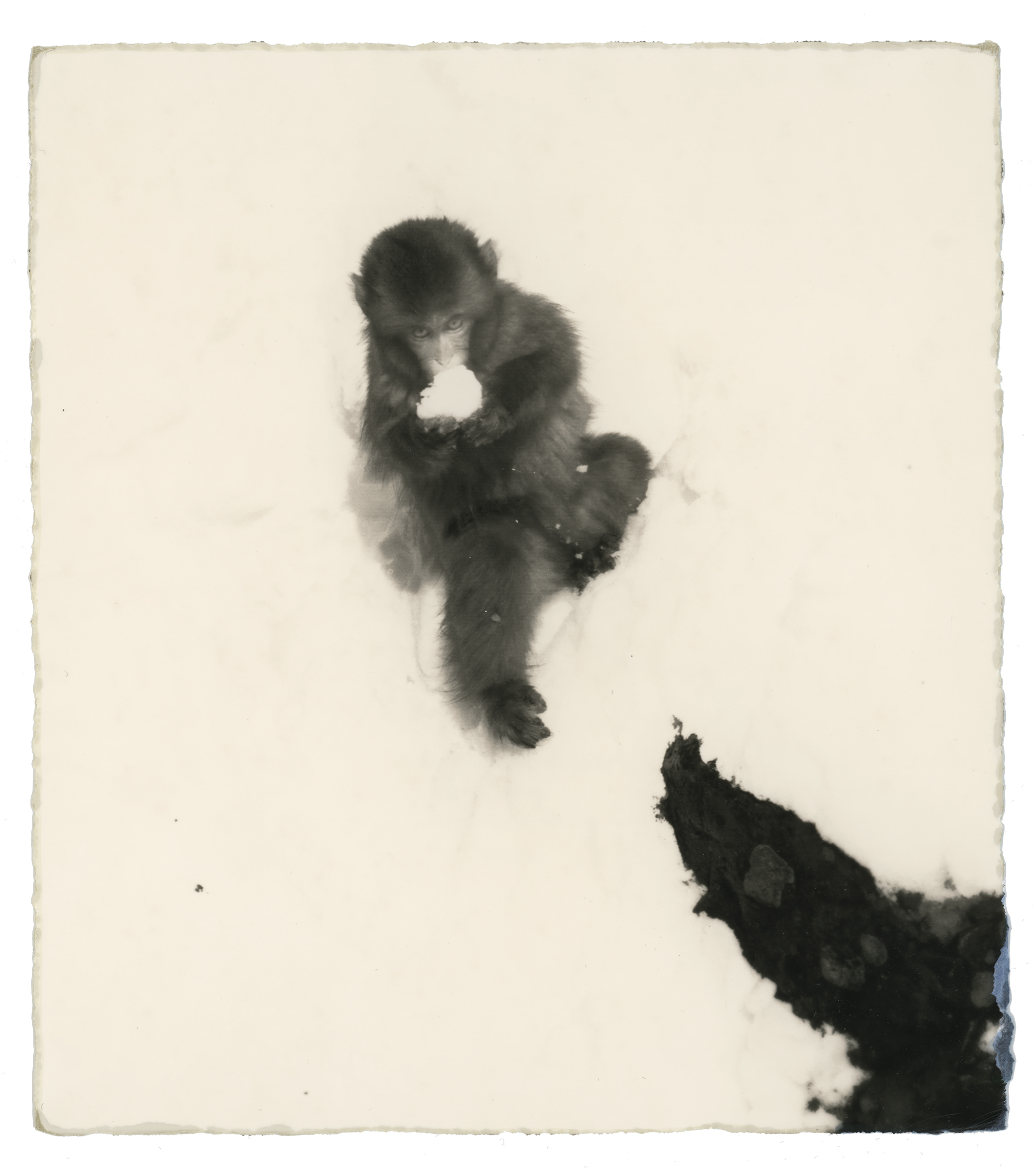
A small monkey whose fur appears almost as if painted. From ‘Saru’, published by Textuel © Yamamoto Masao.
A photography freed from preconceived intentions
Human figures rarely appear in Yamamoto Masao’s photographs. He works instinctively, without premeditation, following his own wandering paths. ‘When you have a specific goal in mind, you become trapped by it and risk overlooking other interesting scenes,’ he explains. ‘With an objective, human beings become extremely rational, and I am not sure that this rationality is necessarily a good thing.’
Rather than relying on a predetermined intention, the photographer trusts his own sensitivity when pressing the shutter. ‘It is not about faithfully reproducing reality, but rather capturing the sensations of the moment: the atmosphere, and the different emotions I feel within myself.’
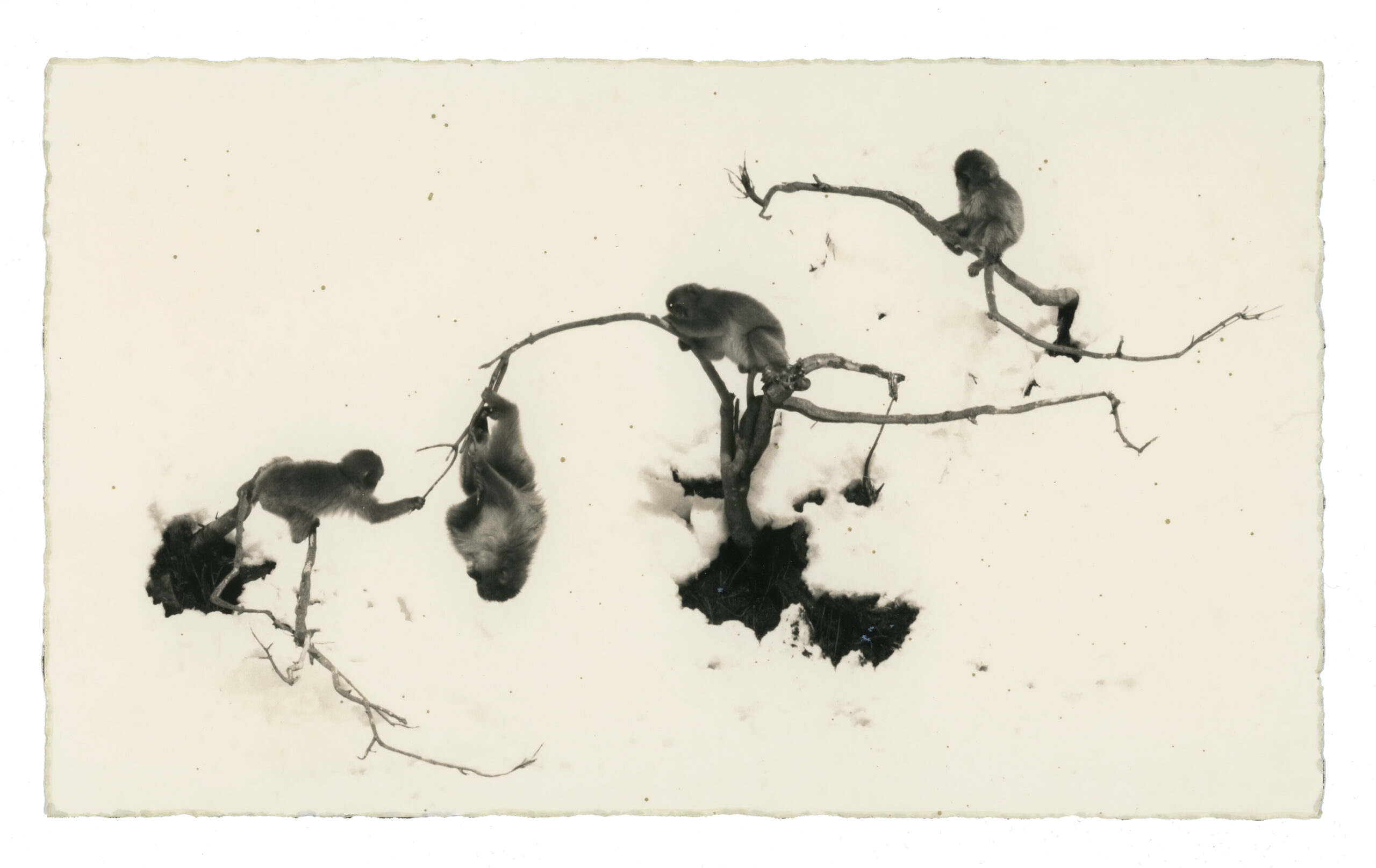
Yamamoto Masao captures monkeys in motion in a striking scene reminiscent of the ‘Chōjū-giga’, the celebrated 12th-century painted scroll known for its animal figures with distinctly human characteristics © Yamamoto Masao.
This intuition allows him to capture extraordinary scenes, such as an image of a group of monkeys caught in motion, featured across a four-page fold-out spread in Saru. Their playful, almost comical poses include one monkey hanging upside down from a branch. The composition evokes the Chōjū-giga, a 12th-century Japanese painted scroll depicting frogs and a hare engaged in human-like activities.
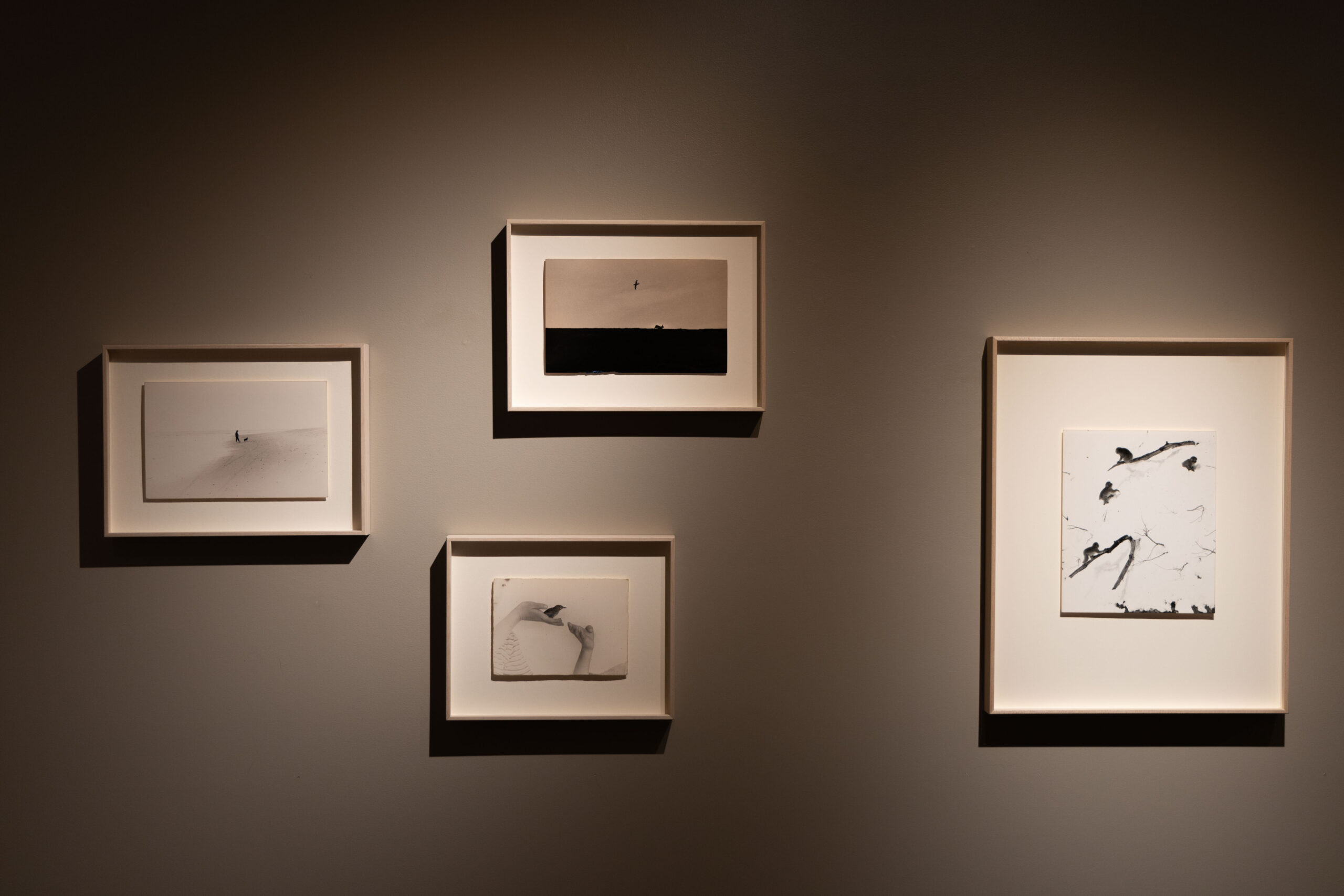
View of the exhibition ‘SARU’ at Camera Obscura Gallery in Paris.
Didier Brousse, director of Camera Obscura gallery, which has exhibited Yamamoto Masao’s work since 2006, immediately recognised the originality of his vision. ‘His photographs lead us towards childhood, memories, and the mystery of photography itself,’ he explains. ‘He is drawn to the small things in nature and in life, to anonymous little events that belong to everyone.’
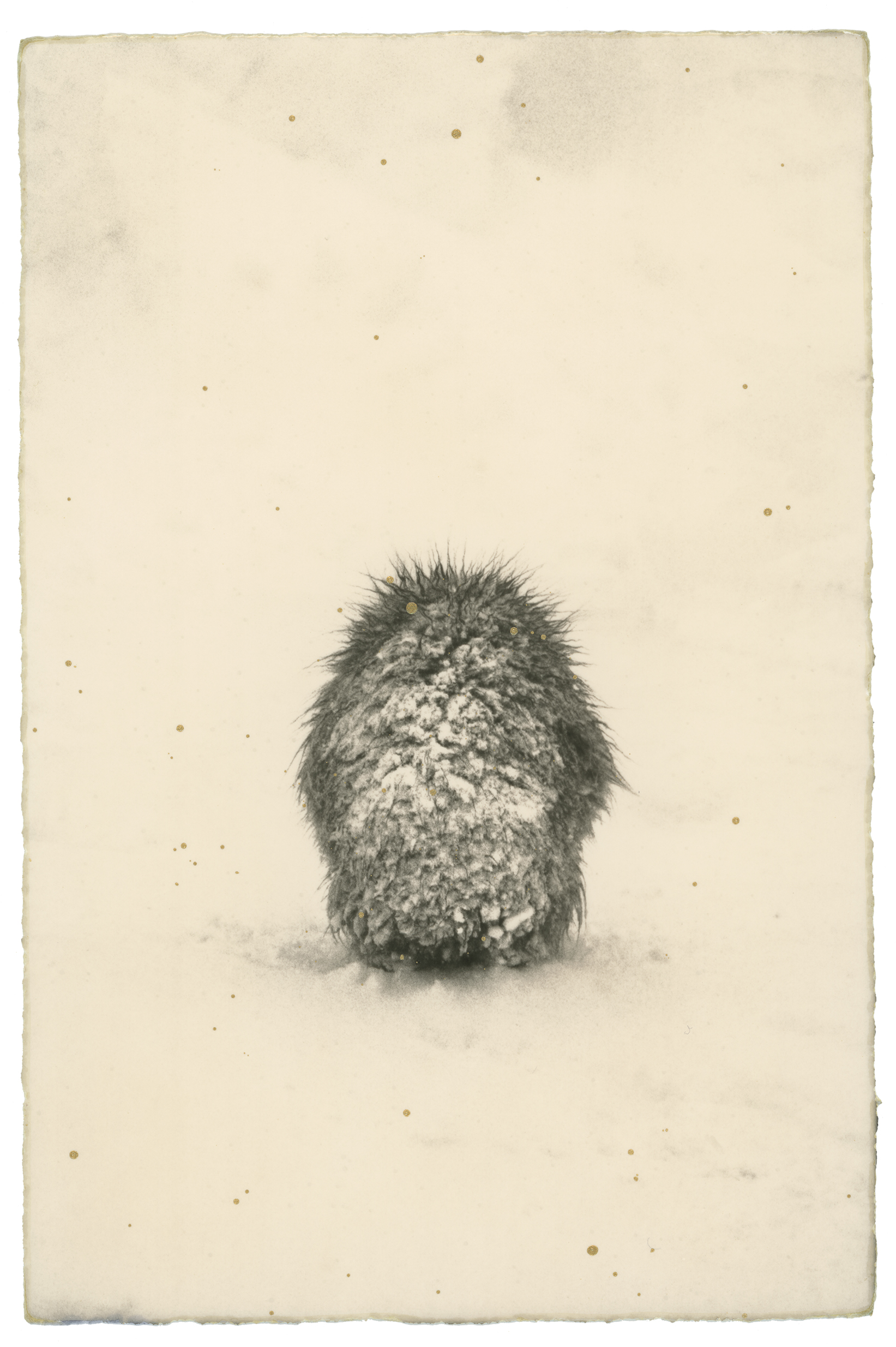
Yamamoto Masao evokes the invisible by adding tiny golden dots to his photographs. From ‘Saru’, published by Textuel © Yamamoto Masao.
At times, Yamamoto Masao scatters tiny drops of gold paint onto his photographs to evoke the invisible. When asked what makes a photograph truly moving, he speaks precisely of the power of the imperceptible. ‘I am drawn to works in which something remains difficult to perceive. If they are understood too easily, they are also consumed too quickly, without encouraging us to look further. Strong images leave behind a lingering sensation, something intriguing.’ One example is his photograph of a sphere floating in the sky. At first glance, it appears to be a veiled moon. In reality, it is a star photographed in daylight using a telescope. Stars continue to shine during the day; it is only the brightness of the sun that prevents us from seeing them. Yamamoto Masao’s photographs work in the same way: they guide our gaze towards realities that often remain beyond our awareness.
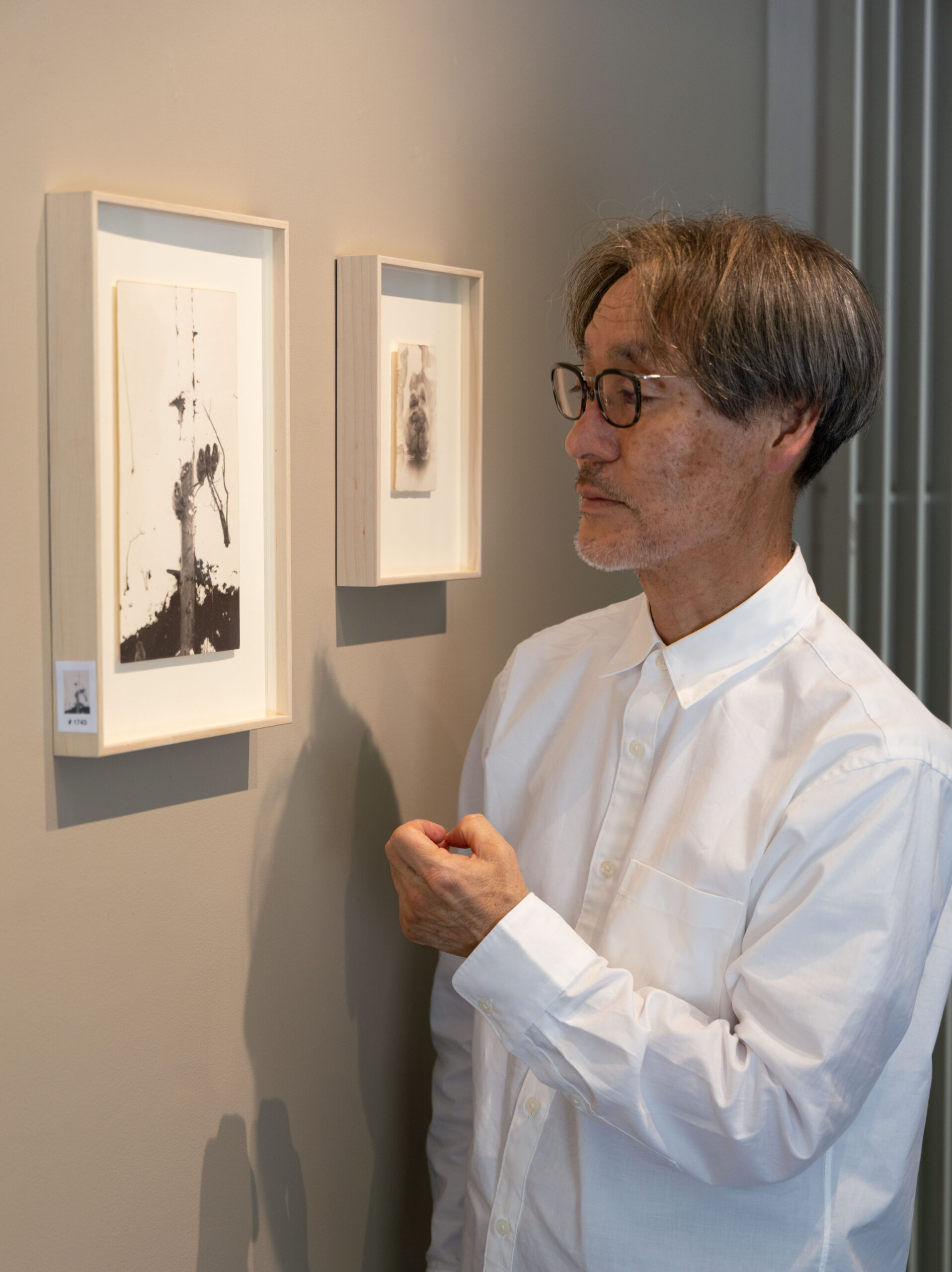
Yamamoto Masao at Camera Obscura Gallery on 4 July 2026.
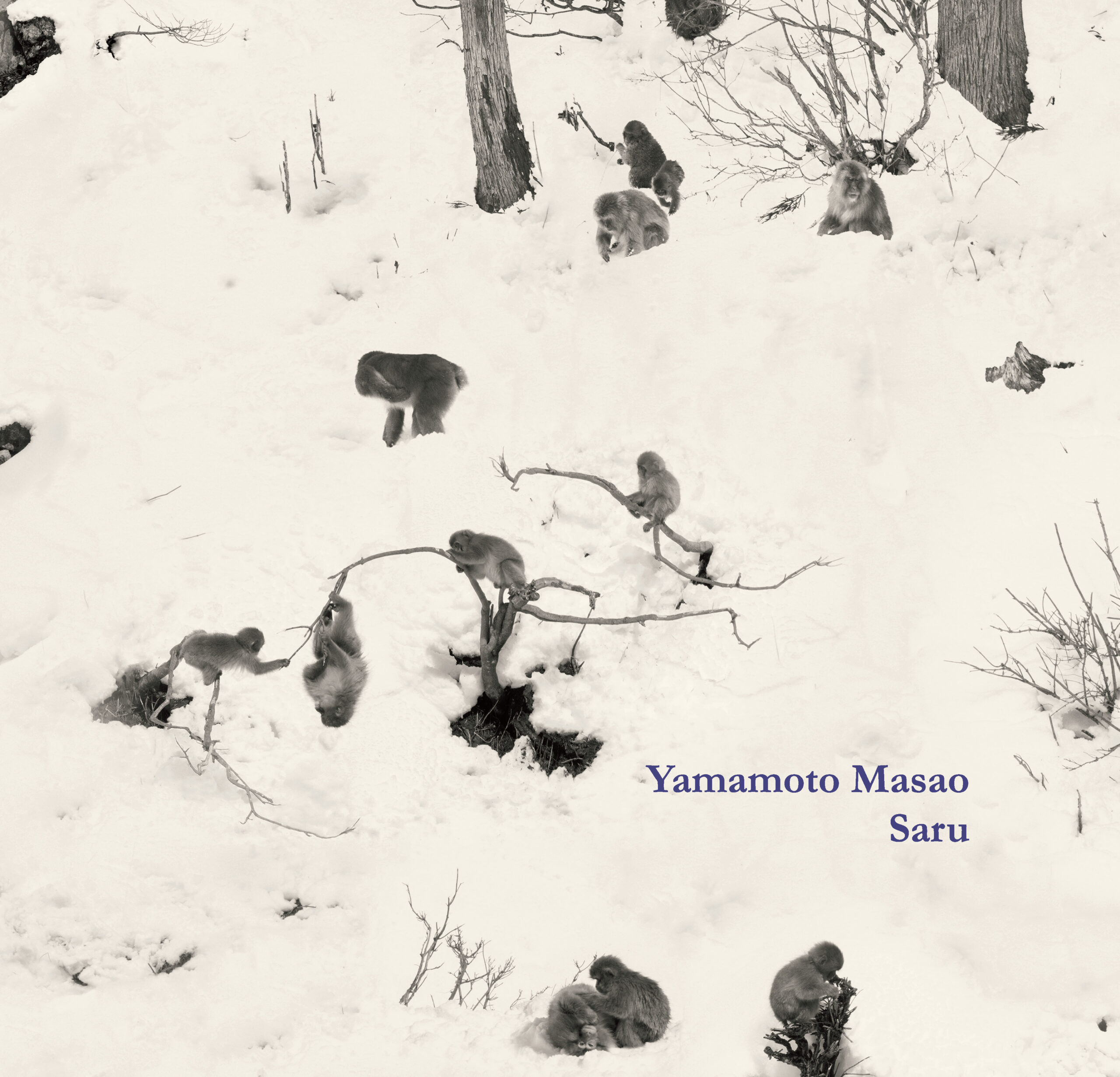
‘Saru’, a photography book by Yamamoto Masao, published by Textuel.