Mamoru Hosoda on ‘Creating Works That Capture the Spirit of the Times’
The acclaimed animation director reflects on his career on the occasion of an exhibition tracing the origins of his creative journey.
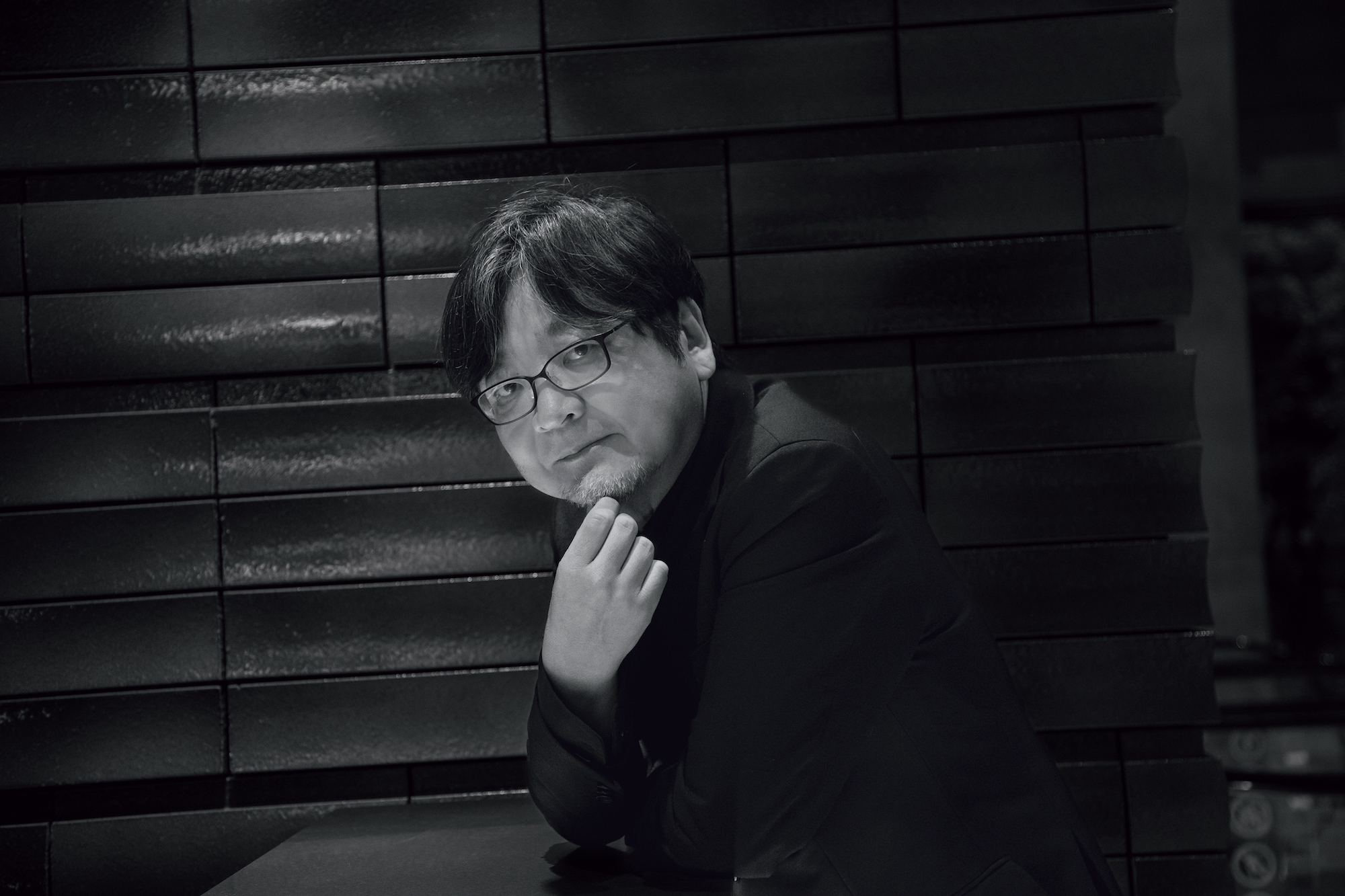
Born in 1967 in Toyama Prefecture, Mamoru Hosoda joined the company now known as Toei Animation in 1991. He made his directorial debut in 1999 with ‘Digimon Adventure’, before going independent in 2005. His best-known works include ‘The Girl Who Leapt Through Time’, ‘Summer Wars’ and ‘Wolf Children’.
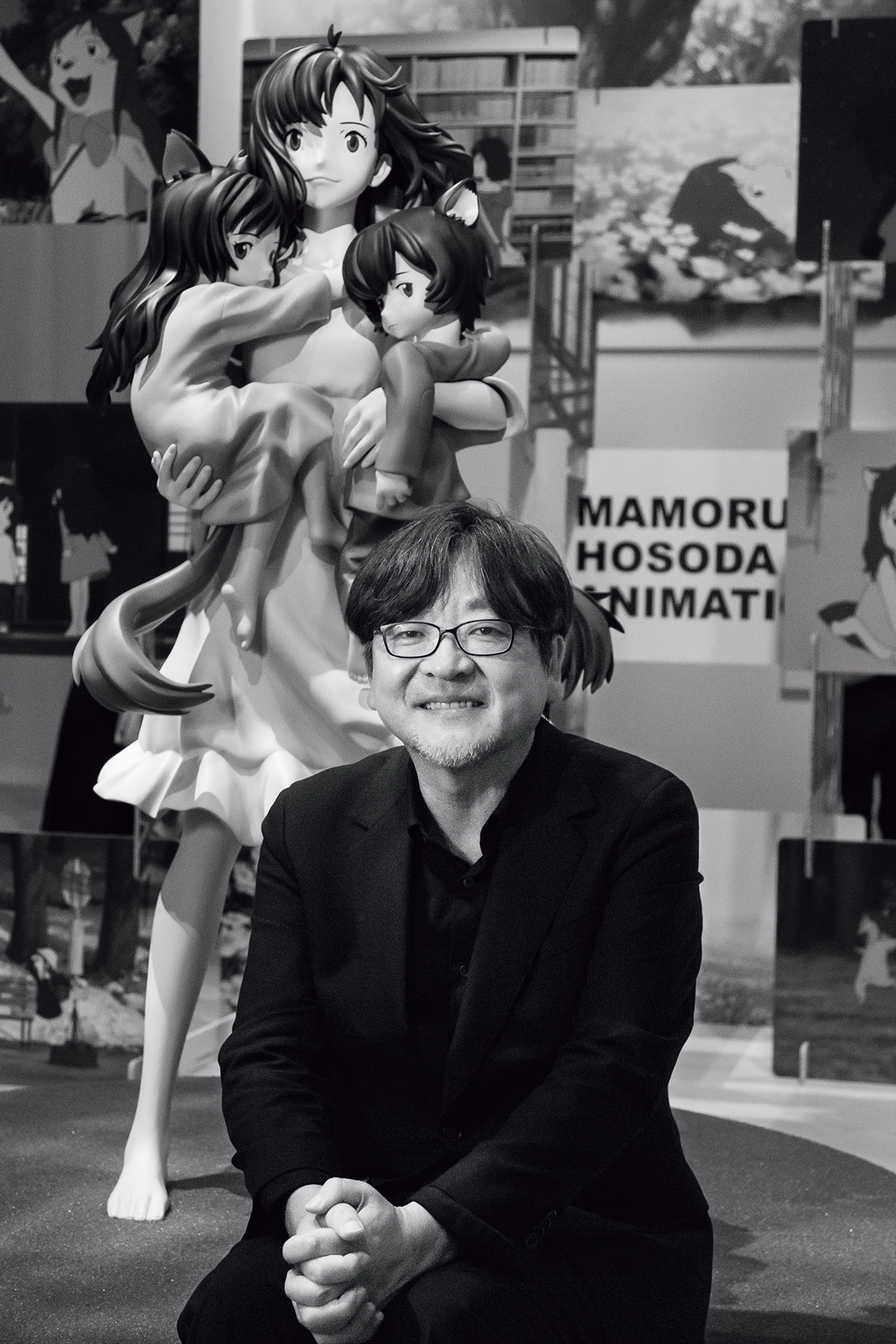
To mark the 20th anniversary of The Girl Who Leapt Through Time, Mamoru Hosoda’s first animated feature as an independent filmmaker, an exhibition titled The Creative Origins of Mamoru Hosoda looks back at the beginnings of his career. More than 300 items are on display, including original drawings from his first three films. ‘There’s even an 8mm film I made when I was in my third year of middle school,’ the director says with a laugh. ‘It’s very much the kind of work that comes from chūnibyō, that adolescent sense of grandeur, and I have to admit I’m a little embarrassed by it now.’
Hosoda had already directed a number of films before The Girl Who Leapt Through Time, including Digimon Adventure. But these productions were made as part of his work at Toei Animation. With The Girl Who Leapt Through Time, for the first time, the impetus for a film came from a project of his own.
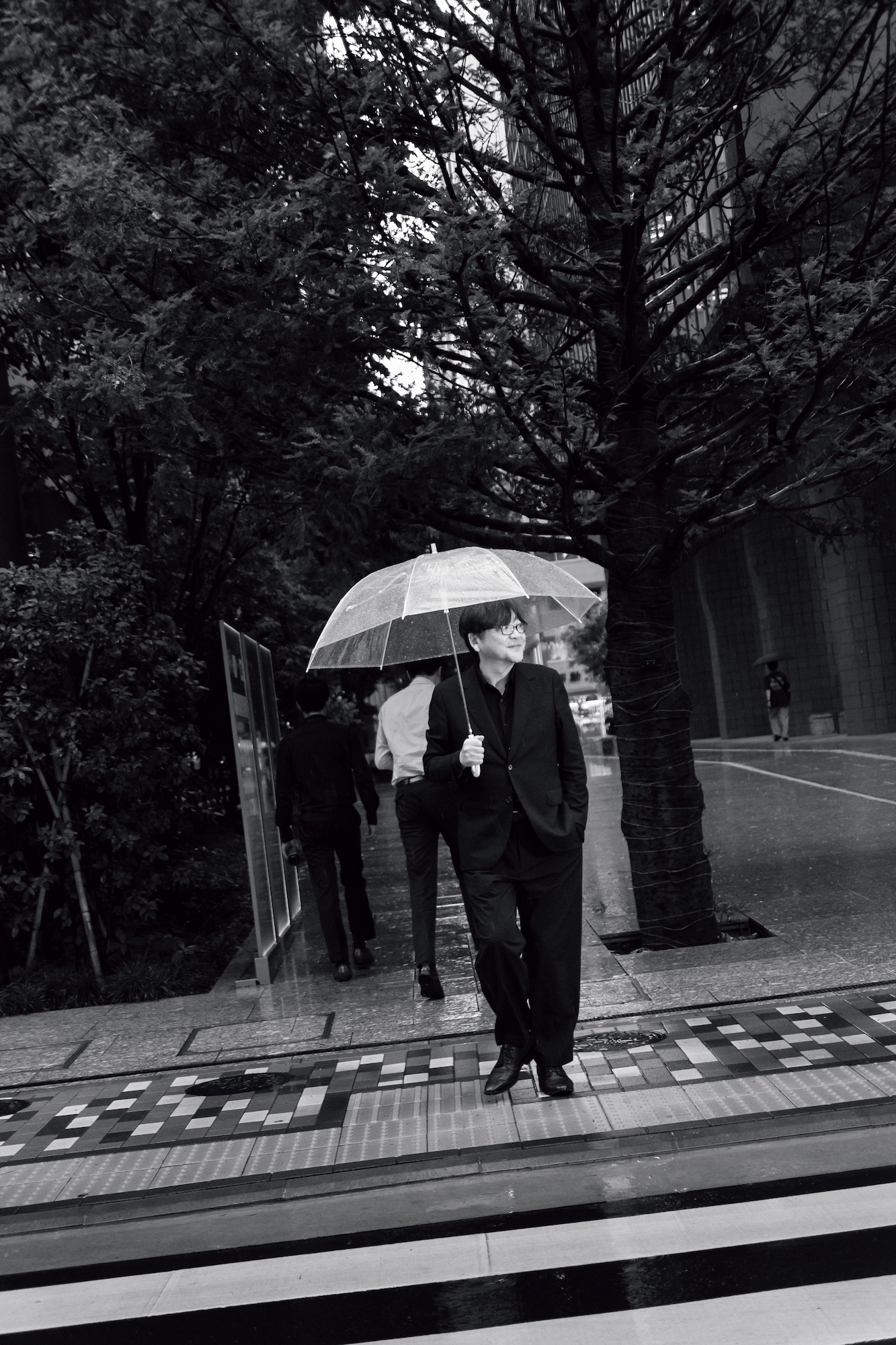
‘It was the first time I had developed a project myself. I presented it to Masao Maruyama at Madhouse, and he told me, ‘This is really good.’ That’s how the film came to be made. But when it was released, it was showing in only six cinemas. For budgetary reasons, we had only printed 14 copies of the film. It was by no means a production on a scale that would allow us to recoup the costs. I thought it would be my last film. In the end, those prints travelled around Japan and the film had a one-year theatrical run. It was thanks to that success that I was able to make Summer Wars.’
For Hosoda, The Girl Who Leapt Through Time is very much a point of origin. The film is based on Yasutaka Tsutsui’s novel, which had previously been adapted for the screen in 1983 by Nobuhiko Obayashi, starring Tomoyo Harada, and became a major hit. The story has since been adapted for the screen several times. For his debut as an independent director, Hosoda was therefore taking on a work that was already widely known.
Looking further back in search of what might constitute his ‘origins’, he points to an episode of the animated series Ojamajo Doremi, which he directed in 2002. Titled ‘Doremi and the Witch Who Gave Up Being a Witch’, the episode delicately portrays the difference in the scale of time experienced by humans and witches, and is regarded as one of the most popular episodes in the series.
Creating works that support young people and offer a glimpse of the future
‘For that episode, I asked Tomoyo Harada to voice the character Mirai Sakura. At the time, some people said to me, ‘Casting Tomoyo Harada in a story about time… weren’t you already trying to make The Girl Who Leapt Through Time?’ I wasn’t consciously thinking about it, but when they put it that way, I realised they might have been right. It was certainly one of the things that led me to conceive The Girl Who Leapt Through Time.’
With Summer Wars, Hosoda created an original story for the first time. Three years later, with Wolf Children, he also took on the challenge of writing the screenplay. From his first three films onwards, he established a working method that would become one of his defining traits: developing his own stories and writing the screenplays himself.
‘The starting point for my films isn’t an existing original work, but an idea, a project. When developing a project, you have to find a reason to make it, as well as its meaning and value. That’s why I’m constantly thinking about the era we live in, what people feel in their everyday lives, what they have on their minds as they go through life… I then try to translate those ‘feelings of the times’ into a story or screenplay so that we can all share them. Perhaps that is what makes my work distinctive.’
Capturing the ‘feelings of the times’ and weaving them into his films: this approach has remained consistent throughout Hosoda’s work since The Girl Who Leapt Through Time.
‘The Girl Who Leapt Through Time is set in the present day. When I was making it, society was going through a rather bleak period, and I was trying to understand what the future and hope could mean in such a time. Then one day, I saw a high-school girl in a polo shirt running down the stairs in front of me at full speed. She was simply running, but in that moment, I felt something: ‘This is the future. In contemporary society, the very fact that a girl is running is itself a form of hope.’
I also think it reflected, in a way, the fact that young girls were the only people who seemed to have any energy left at the time. That’s why Makoto, my protagonist, is always running. In Nobuhiko Obayashi’s film, the heroine Kazuko Yoshiyama was much more composed and demure.’
Throughout the interview, one word repeatedly comes up in the director’s conversation: ‘the future’ (mirai). When asked about the fact that the word also appears frequently in his films and even in the names of some of his characters, Hosoda quietly agrees.
‘I really want to support young people wholeheartedly. And to me, that is synonymous with the future. In that sense, all of my films belong to the same continuum. Today, there is a great deal of discussion about the way social media is affecting young people and how artificial intelligence is transforming society. But I want young people to learn how to use these things to their advantage and live better lives with them. Through my films, I want them to feel that sense of affirmation, that feeling that they are fully seen and recognised.’
WORKS
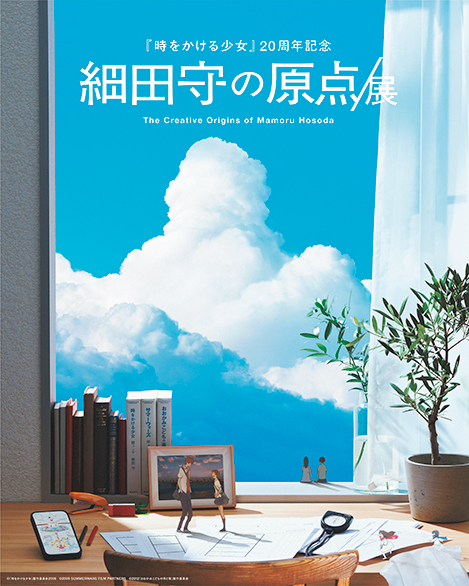
Exhibition, The Creative Origins of Mamoru Hosoda
On view at CREATIVE MUSEUM TOKYO through 31 August 2026, this exhibition traces the origins of Mamoru Hosoda’s creative practice. More than 300 rare items are on display, ranging from storyboards, director’s revisions and original drawings from his early major works to animated films he made while still in middle school.
Film, ‘The Girl Who Leapt Through Time’
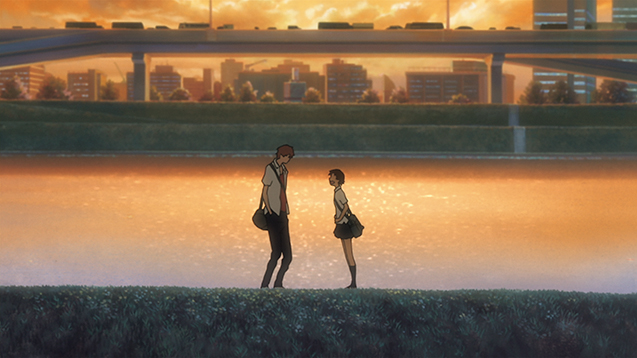
© ‘The Girl Who Leapt Through Time’ Production Committee 2006
Adapted from Yasutaka Tsutsui’s celebrated science-fiction novel, this 2006 feature was the first project Hosoda developed from the ground up as an independent director. It marked the true starting point of a career in which he would go on to create a succession of acclaimed works, eventually establishing himself as one of Japan’s leading animation directors.
Film, ‘Summer Wars’
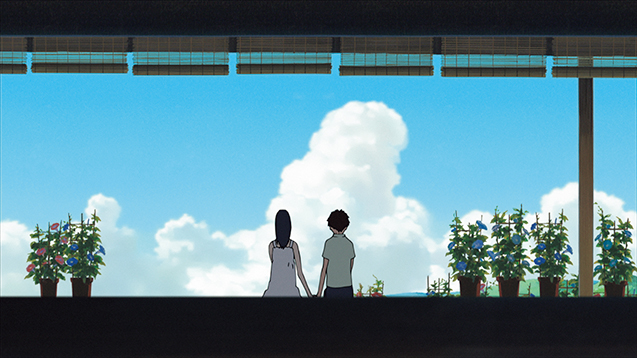
© 2009 SUMMER WARS FILM PARTNERS
This science-fiction film follows Kenji, a high-school student with a talent for mathematics, as he joins Natsuki’s extended family in confronting a crisis that erupts within the virtual world of OZ. An original work conceived and written by Hosoda himself, ‘Summer Wars’ became a major hit upon its release in 2009, cementing his popularity and reputation as a director.