Off the Japanese Coast, a Surf Shelter Inspired by a Swell
Architect Yuji Tanabe designed the mock-up for a shelter where surfers could study the ocean before heading back out into the water.
©Yuji Tanabe
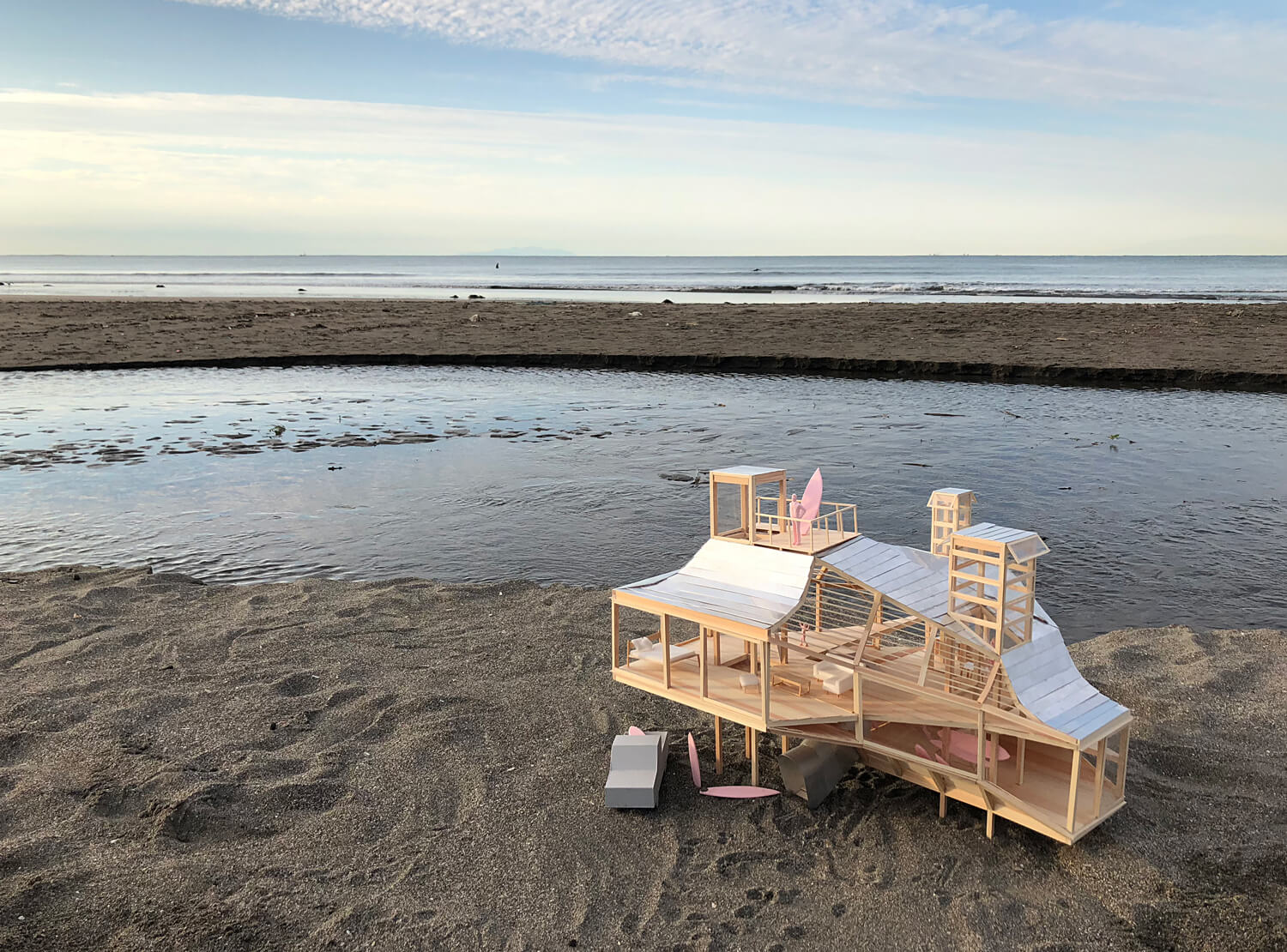
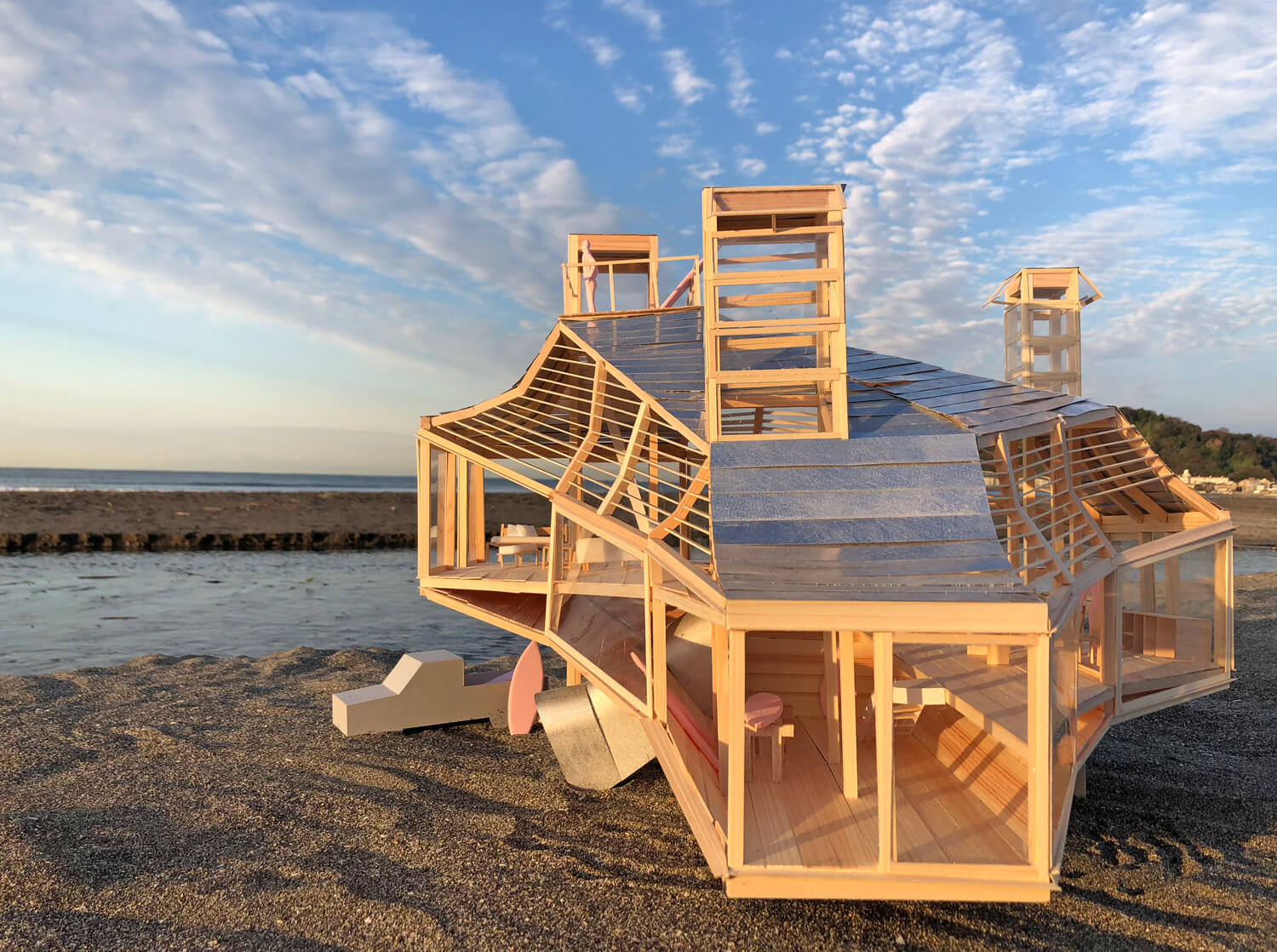
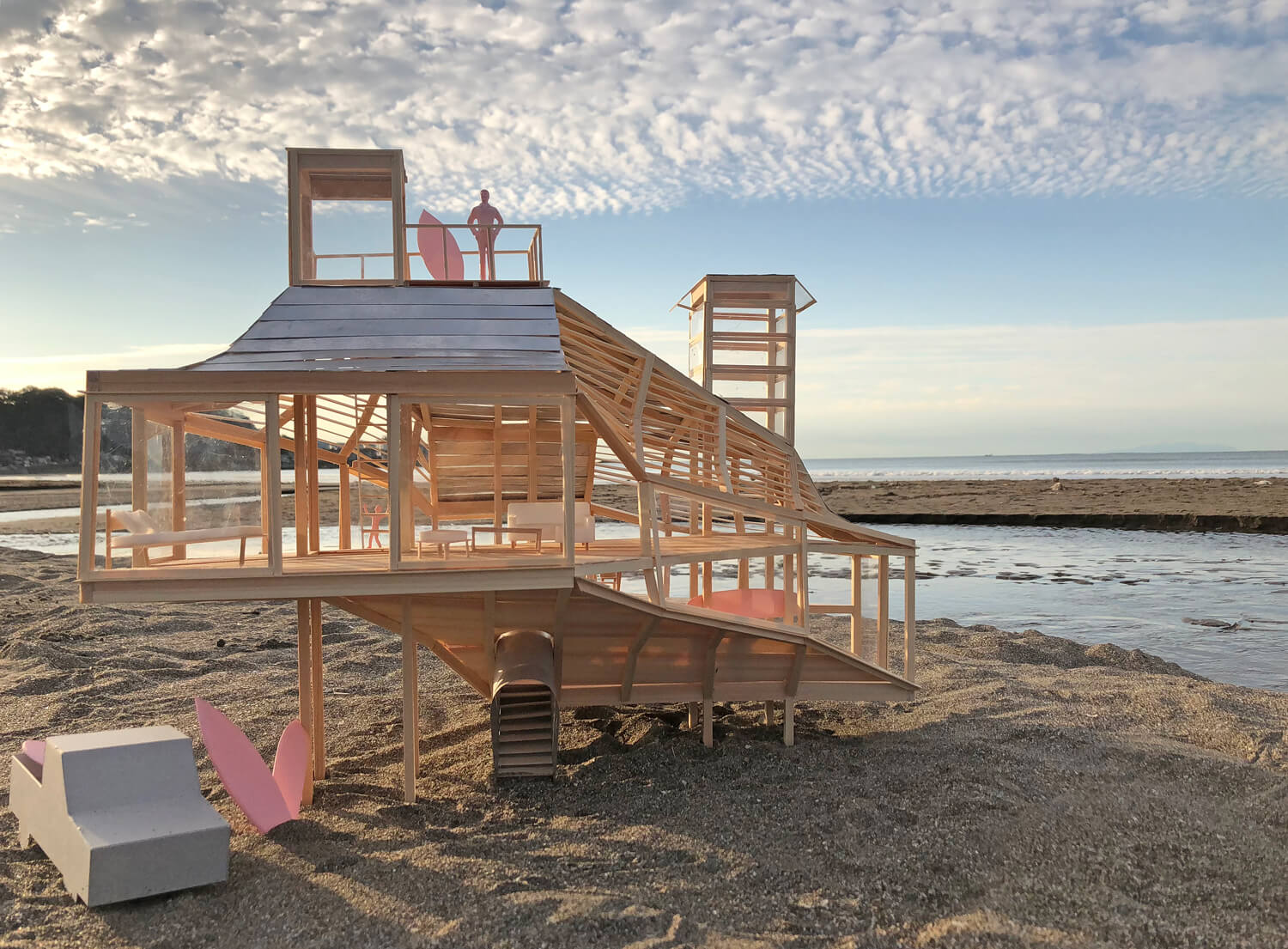
Yuji Tanabe studied the flow of water characteristic to a swell—a kind of rotation that gives the impression of movement from top to bottom—to design a space in its image that would unfold, like the swell, across several levels, in the coastal town of Kamakura in Kanagawa Prefecture, where the architect is based.
Observation and relaxation
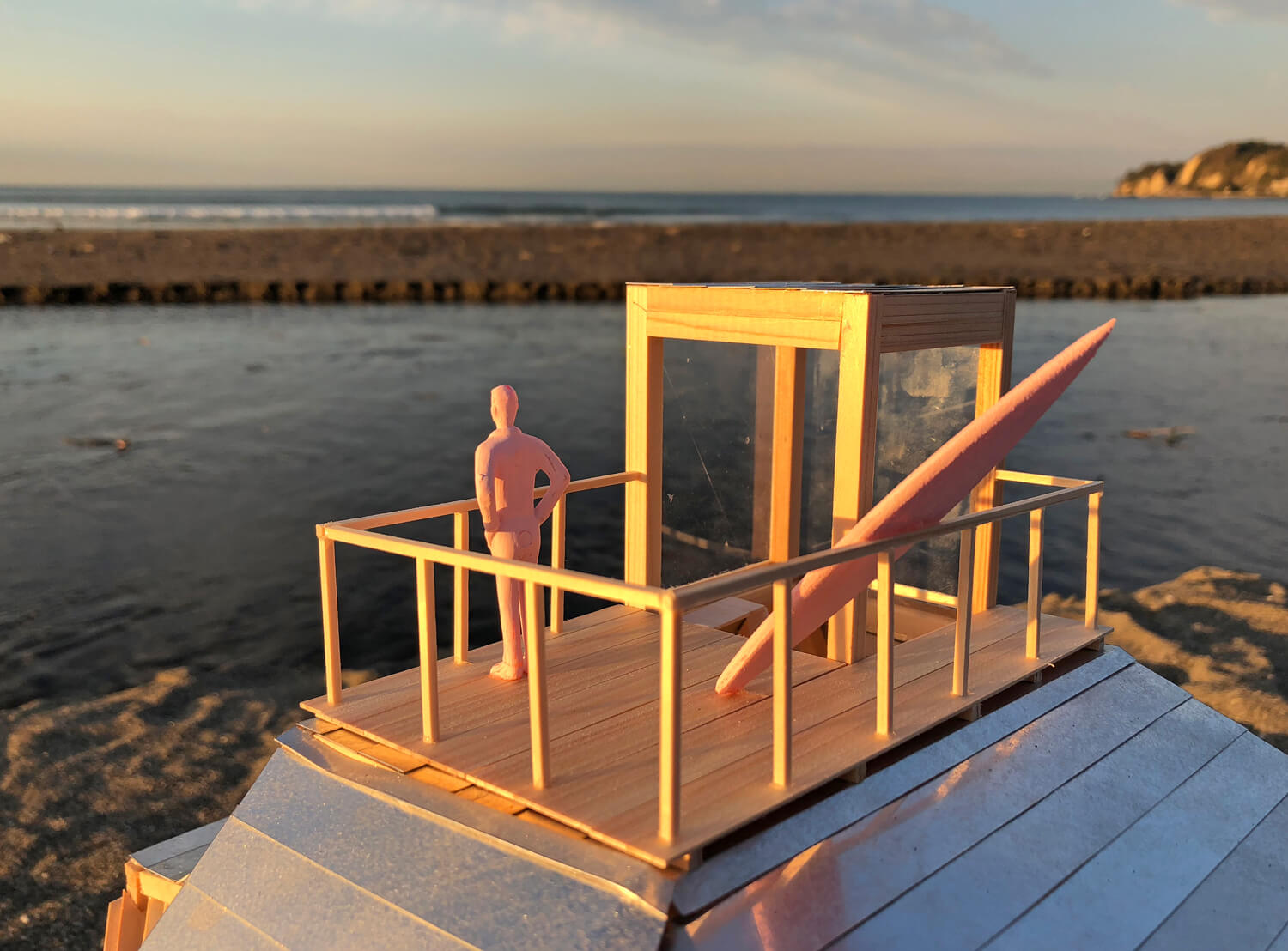
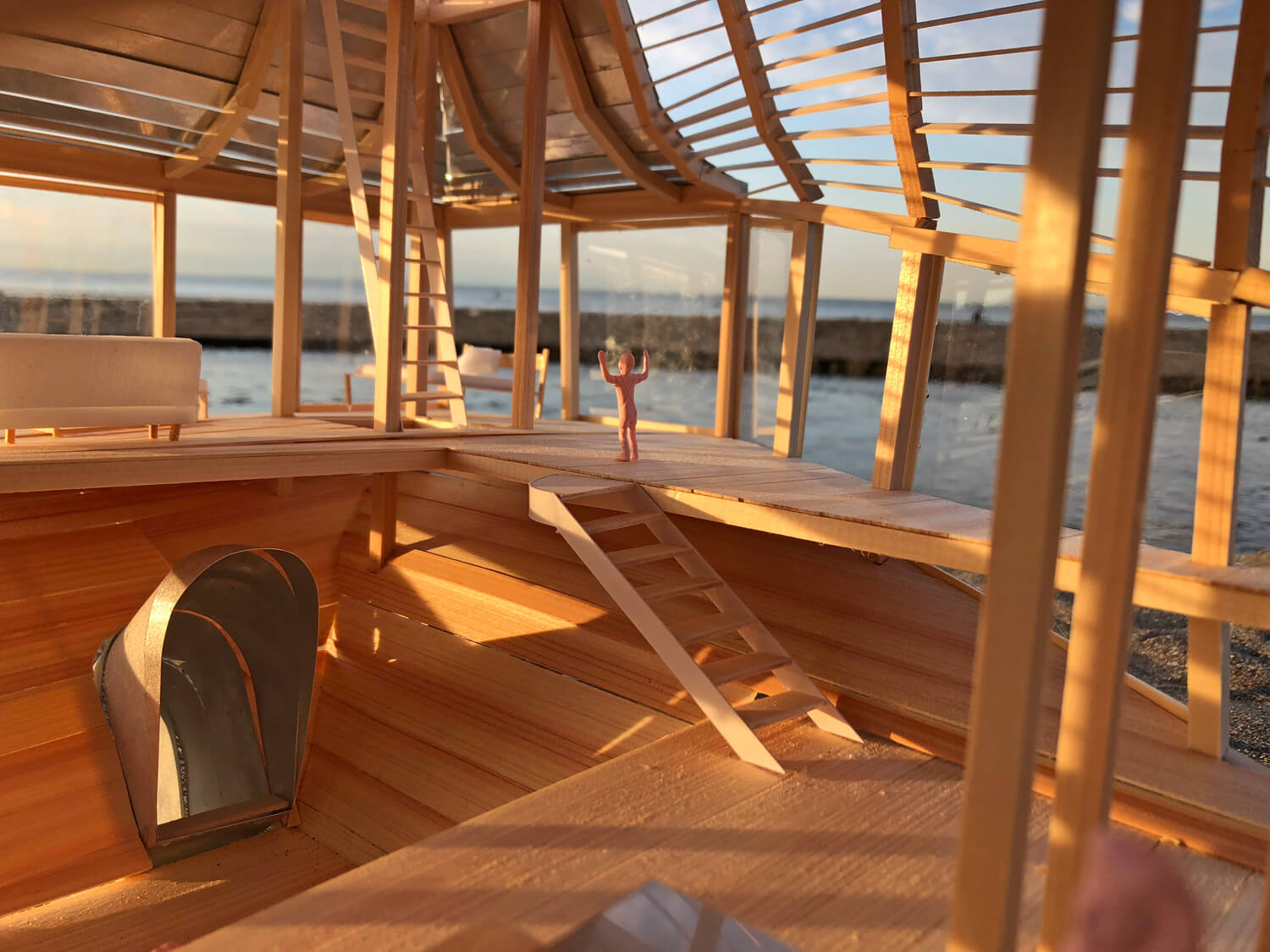
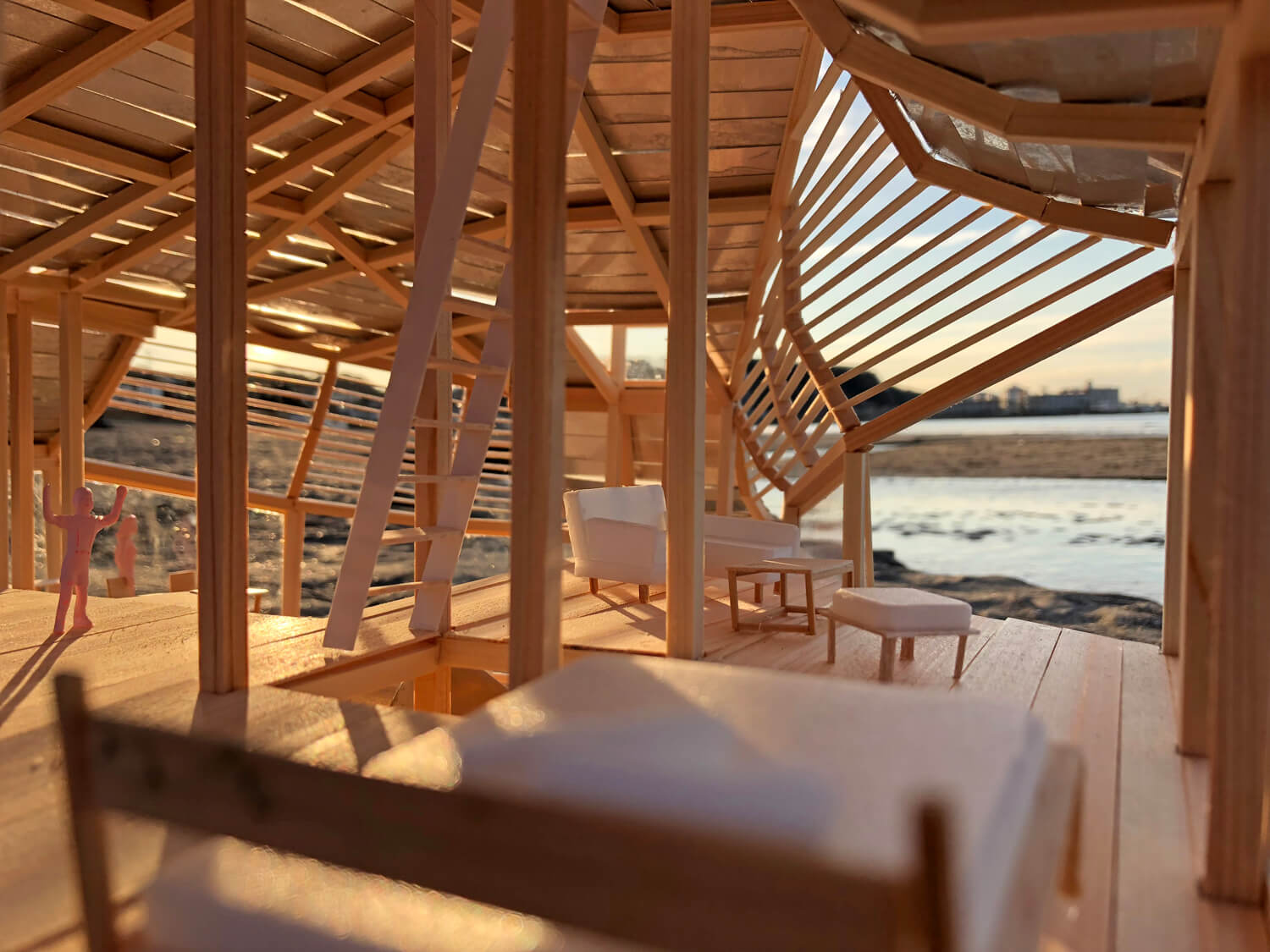
The maquette for Surfer’s House by Swell reveals a wooden construction on stilts. It is made up of three distinct parts all optimised for the observation of the ocean, including several relaxation areas, as well as a fully equipped living room, a car park, and a bedroom (the full-size shelter should measure 180 square metres). The orientation of its ‘summer tower’ and ‘winter tower’ will measure the offshore wind and daylight, while the ‘observation tower’ will be designed so that surfers can observe the movements of the ocean and the swell from their shelter.
Surfer’s House by Swell (2018), a project by Yuji Tanabe, is available on his website.
©Yuji Tanabe
©Yuji Tanabe
©Yuji Tanabe
©Yuji Tanabe
©Yuji Tanabe