A Department Store That Sells Just 100 Objects
After his one-book bookstore in Tokyo, Yoshiyuki Morioka turns to Sagae, his hometown, to revitalize its city center.
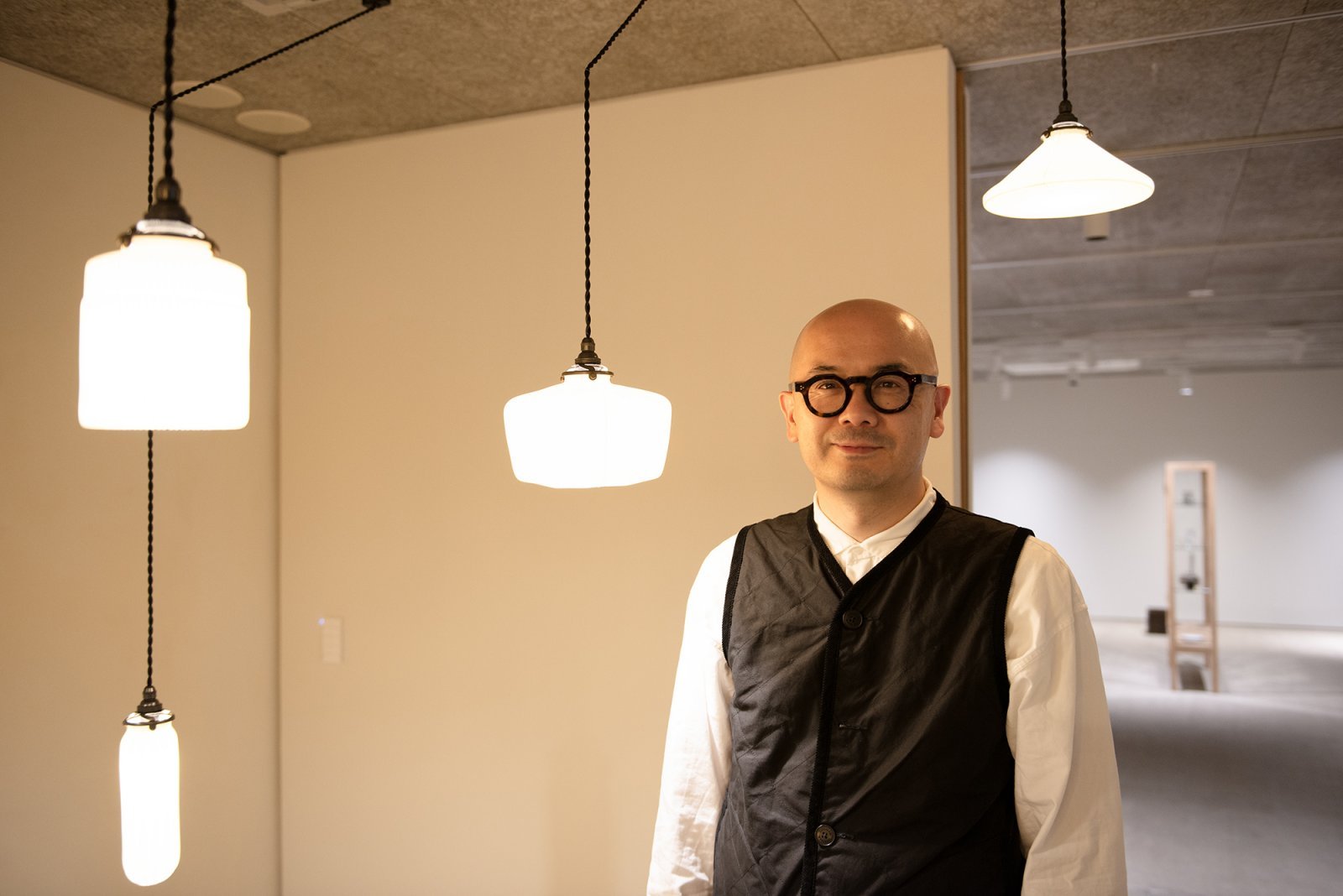
Yoshiuki Morioka is a bookseller, writer and visiting professor at Tohoku University of Art and Design. Born in Sagae, Yamagata Prefecture, in 1974, he began his career at a second-hand bookstore in Tokyo’s Jinbōchō district before founding Morioka Shoten in Kayabachō in 2006. In 2015, he relocated the bookstore to Ginza and adopted its current format: presenting a single book each week alongside an exhibition inspired by it. In addition to running the bookstore, he also curates exhibitions. His publications include ‘800 Nichikan Ginza Isshū’ (Bungei Shunjū) and ‘Shortcake o Yurusu’ (Raichōsha). He is also the host of the GINZA SIX podcast ‘Ginza wa Yoru no 6-ji’.
A new space called Sagae Department Store has opened on the second floor of Flora SAGAE, a commercial complex in Sagae, Yamagata Prefecture. Behind the unusual project is Yoshiuki Morioka, a Sagae native and the owner of Ginza Morioka Shoten in Tokyo, the bookstore renowned for its distinctive concept of selling only a single title at a time. We met Morioka on site to learn more about the origins of this unconventional department store and the ambitions behind it.
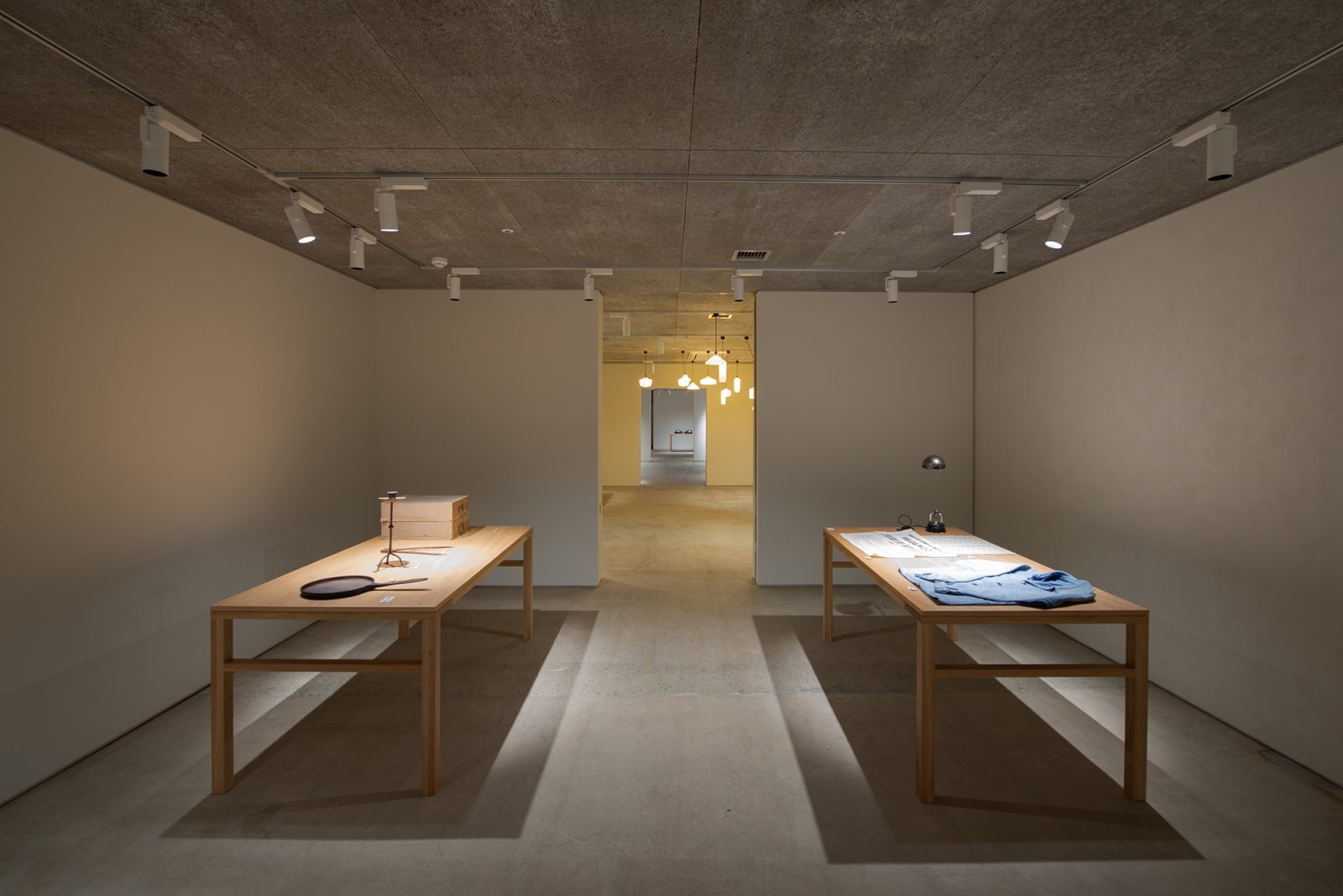
Yoshiyuki Morioka spoke in detail about the selection of the 100 objects on display and for sale, as well as the ideas behind a spatial design composed of a succession of rooms organised around a square structure.
Reviving a Former Department Store with One Hundred Objects
‘When I was a child in the 1980s, this building was still the Jūjiya department store. I remember it as a place filled with dreams and possibilities. I bought magazines, Gundam model kits, Famicom cartridges and jigsaw puzzles here. But, like many regional cities across Japan, Sagae’s town centre gradually declined. For the past thirty years or so, it has been difficult to say that this former department store has continued to fulfil its original role.’
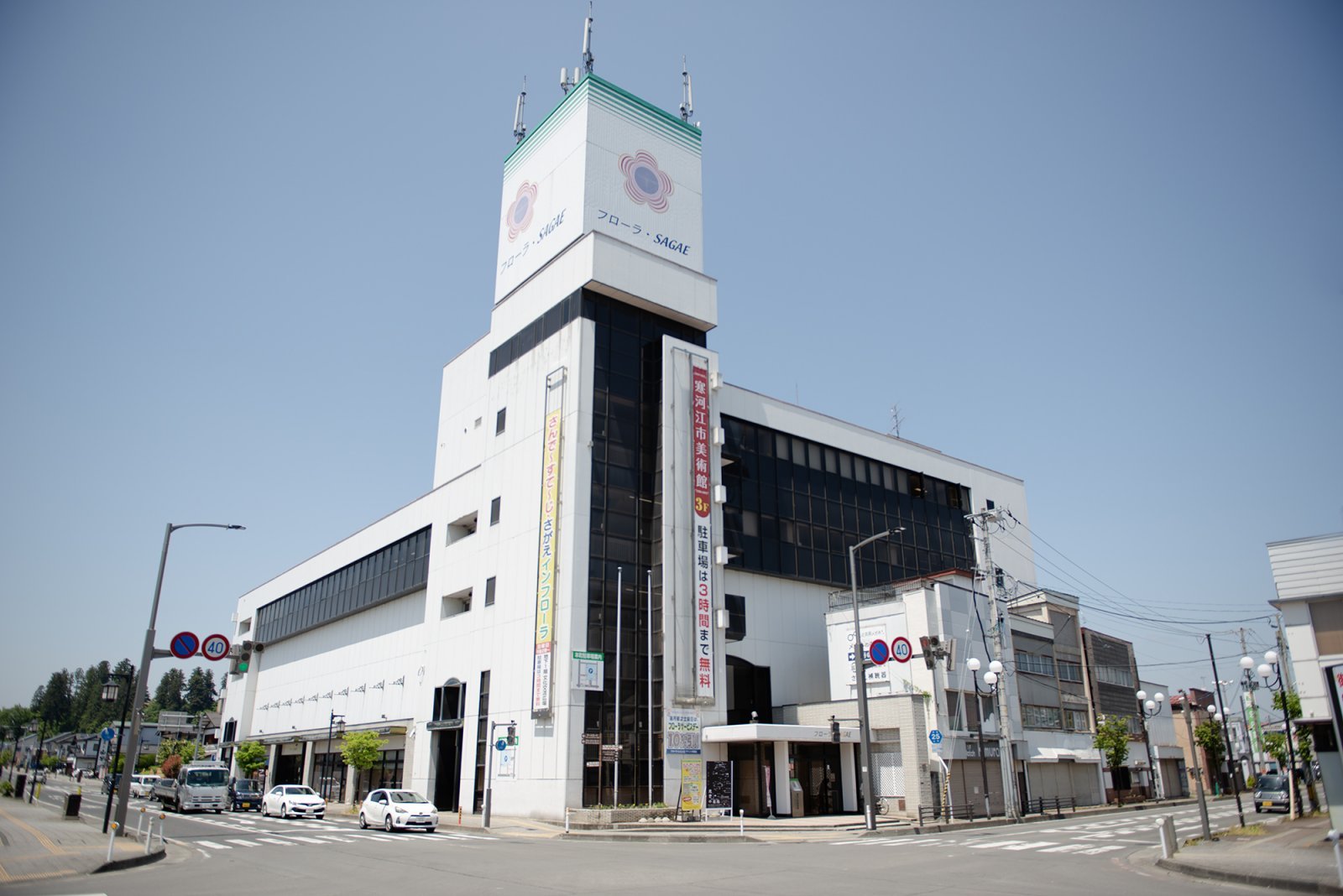
Exterior view of Flora SAGAE. No changes were made to the building’s facade for the opening of Sagae Department Store. The contrast between the familiar appearance of the former department store and the radically contemporary space created on the second floor leaves a lasting impression.
Located about five minutes on foot from Sagae Station, at the intersection of Honchō Street, Jūjiya Department Store opened in 1982. Struggling financially, it was converted into a general supermarket in 1986, but the change failed to reverse its fortunes. In 2000, the City of Sagae acquired both the building and the site, transforming it into Flora SAGAE, a complex that houses, among other tenants, a grocery store, a bookstore and the Sagae Art Museum. The facility has remained in operation ever since, likely sustained by a delicate economic balance. It was in this context that the Nagaokayama Kaigi Association, a group of local business owners, approached Morioka to consider new ways of revitalising the space.
‘The building was originally a hyakkaten—the Japanese word for department store, which literally means ‘a store of one hundred goods’. I wondered whether gathering around one hundred objects might be enough to reclaim that name. I proposed the idea to the city. From there, it became possible to imagine exhibitions, talks and other events centred around those objects, turning the space into a place where local residents could come together. I felt many people might find enjoyment in that. The proposal was accepted, and the project gradually took shape.’
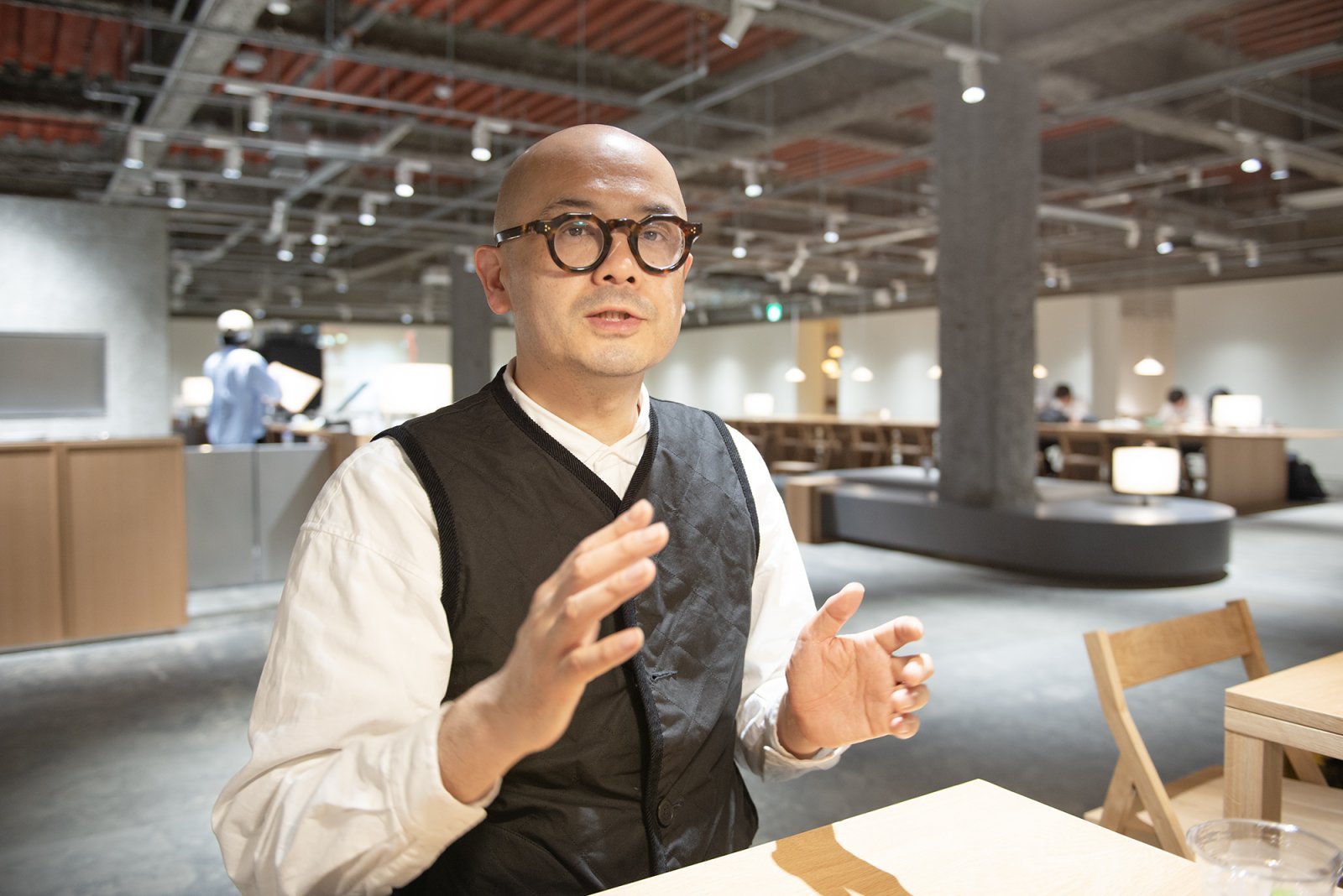
‘Sagae Department Store came to life thanks to the support of the artists and craftspeople I have had the privilege of working with through Morioka Shoten,’ says Yoshiuki Morioka.
A Space Inspired by the Architecture of Kisho Kurokawa
The selection of the one hundred objects and the design of the space were developed simultaneously. Two concepts guided the project throughout: repetition and simplicity. The renovation, led by architect Daisuke Satō of the architecture studio kafta, drew significant inspiration from Sagae City Hall, a building partially designed by Kisho Kurokawa. One of the founders of the Metabolist movement, Kurokawa envisioned architecture capable of growing and evolving like a living organism. Sagae City Hall is characterised in particular by a modular corridor system that can be divided or connected according to changing needs.
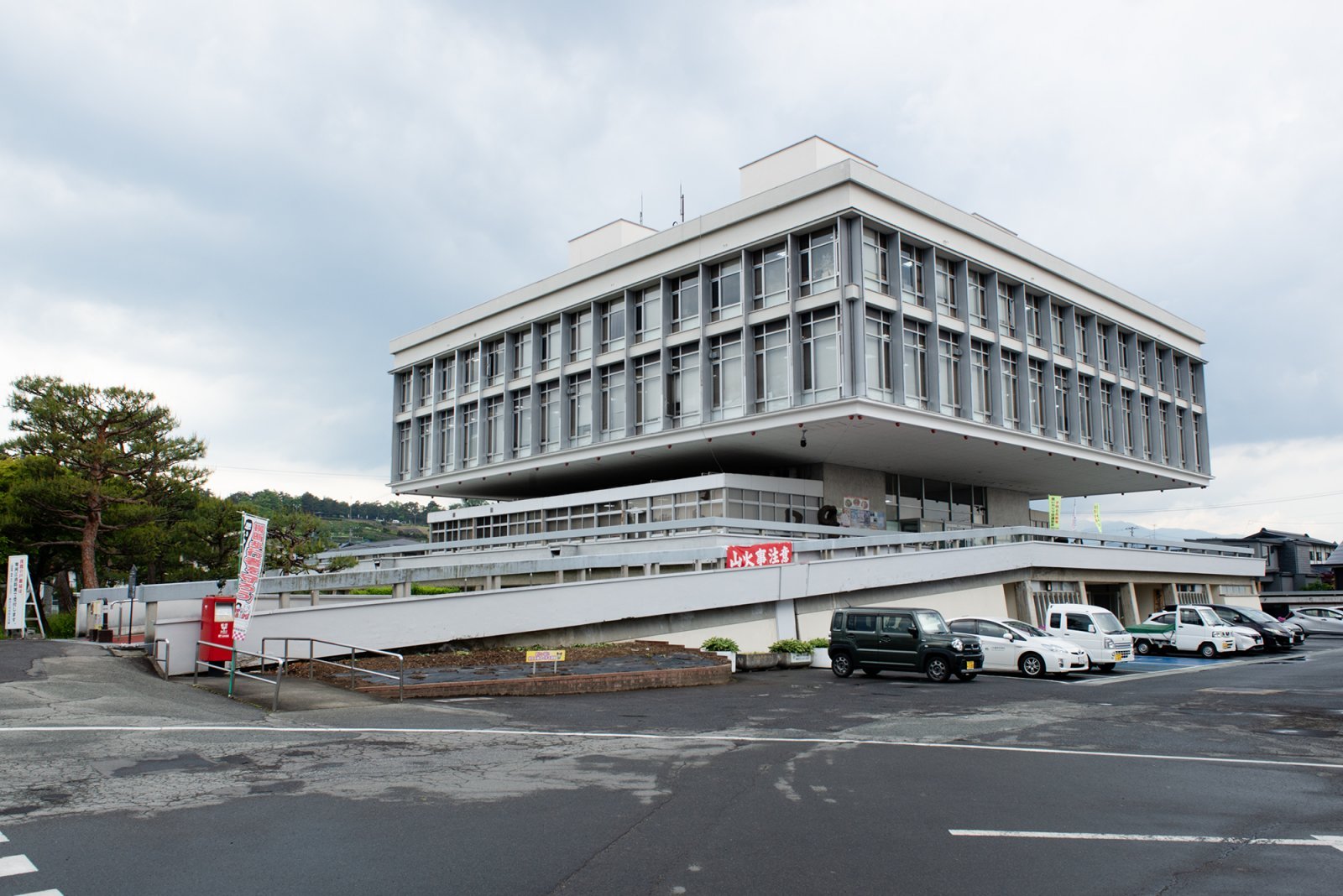
Sagae City Hall was completed in 1967 and is regarded as one of Kisho Kurokawa’s earliest major works.
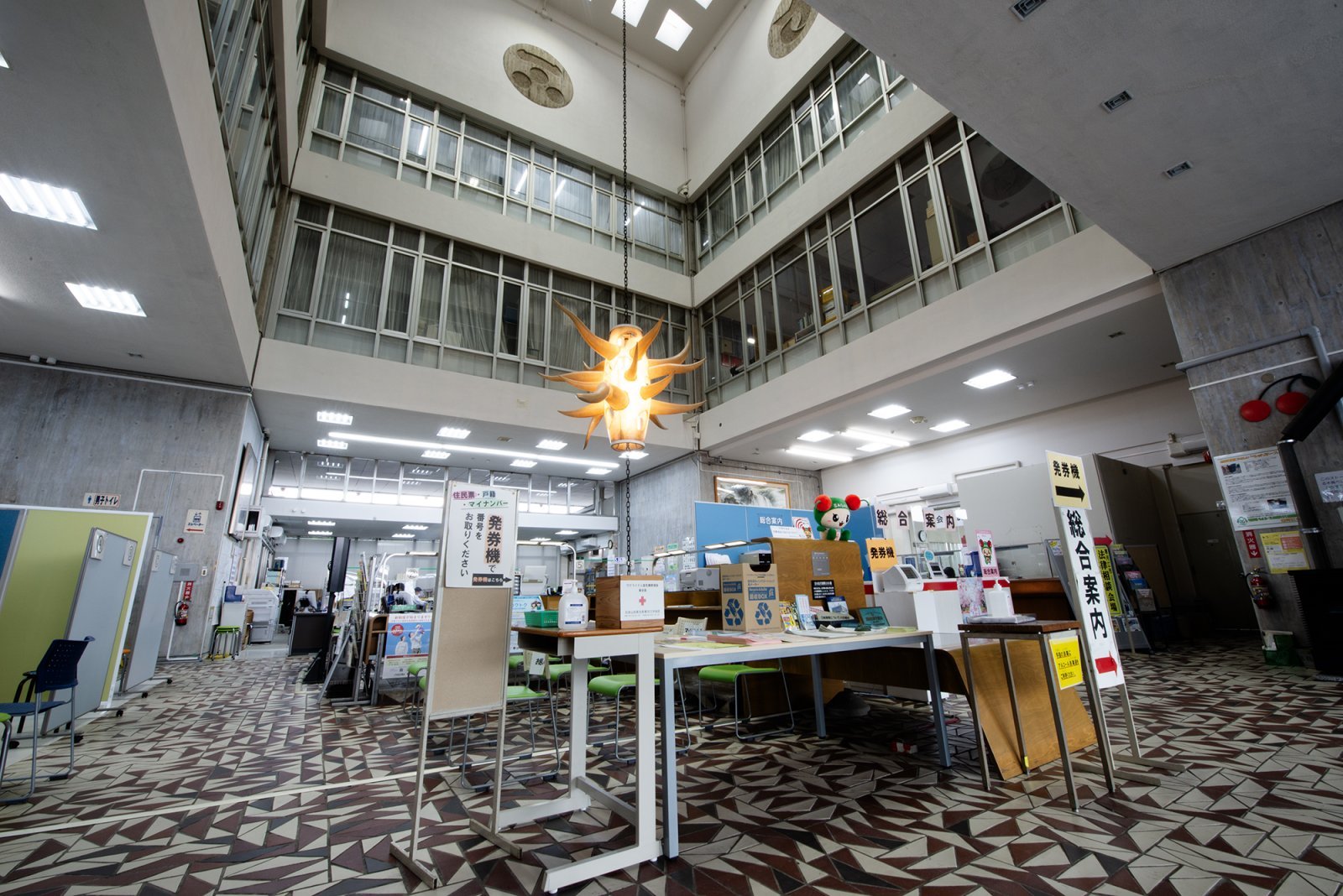
The second floor of City Hall houses the main lobby. Suspended above the central atrium is ‘Birth’, a chandelier created by Tarō Okamoto.
‘Following this Metabolist logic, I came up with the idea of reproducing the internal structure of Sagae City Hall inside the department store. We created a succession of interconnected square modules. Because the space has no windows, I later realised that the openings in these structures function almost like windows themselves, which made me grow even more attached to the design. Thanks to the sensitivity and experience of architect Daisuke Satō, a plan I had sketched in the middle of the night at Coffee Kizoku Edinburgh in Shinjuku was ultimately brought to life.’
At the centre of the floor is a café serving buckwheat galettes, a nod to Sagae’s reputation as a soba-producing region. Around this central area, a ring-shaped gallery houses the retail space displaying the one hundred objects, as well as offices and rental facilities. But how were the objects themselves selected? Here again, the answer lies in the overarching principle of ‘simplicity and repetition’.
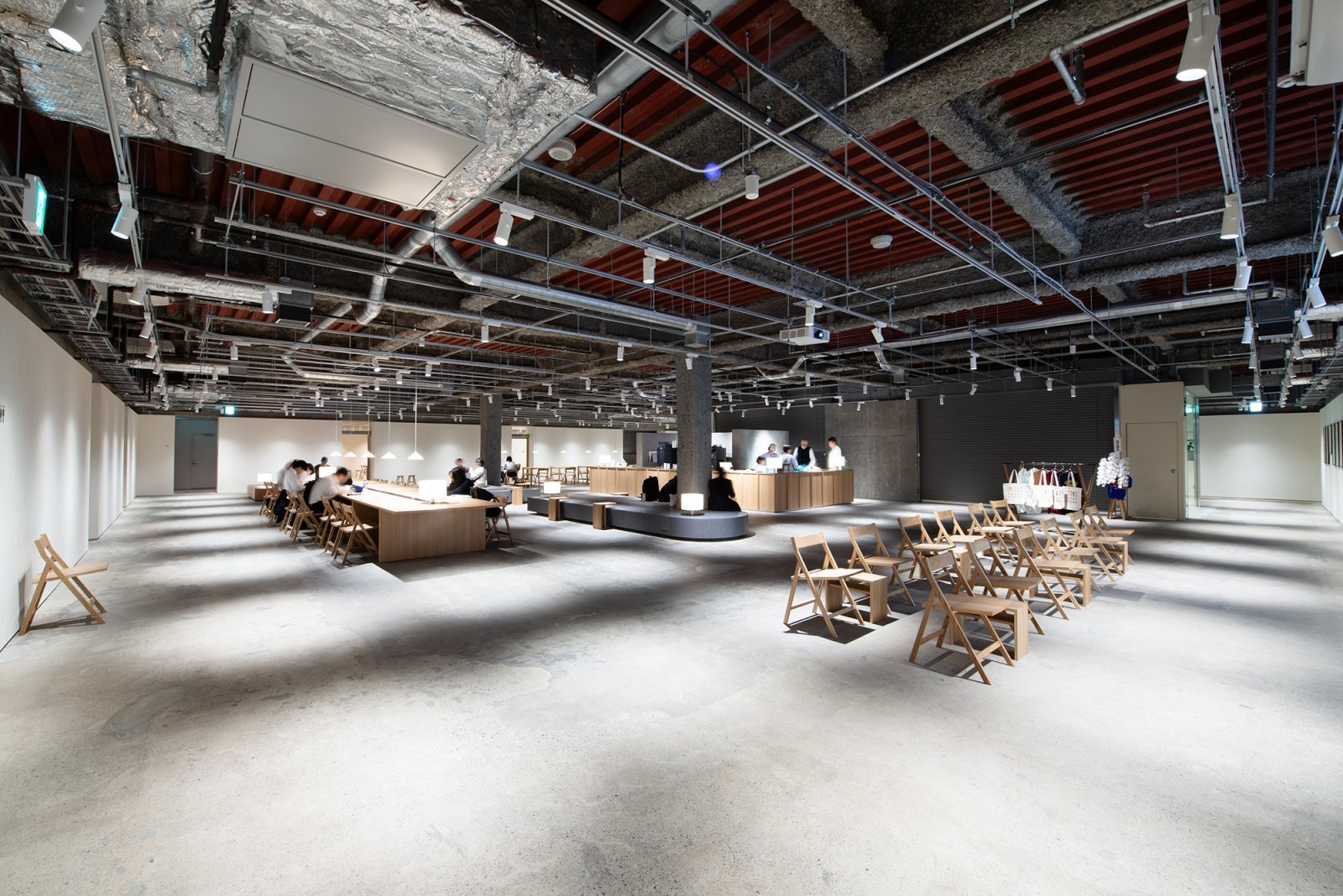
In the late afternoon, local high school students gather at the café to study.
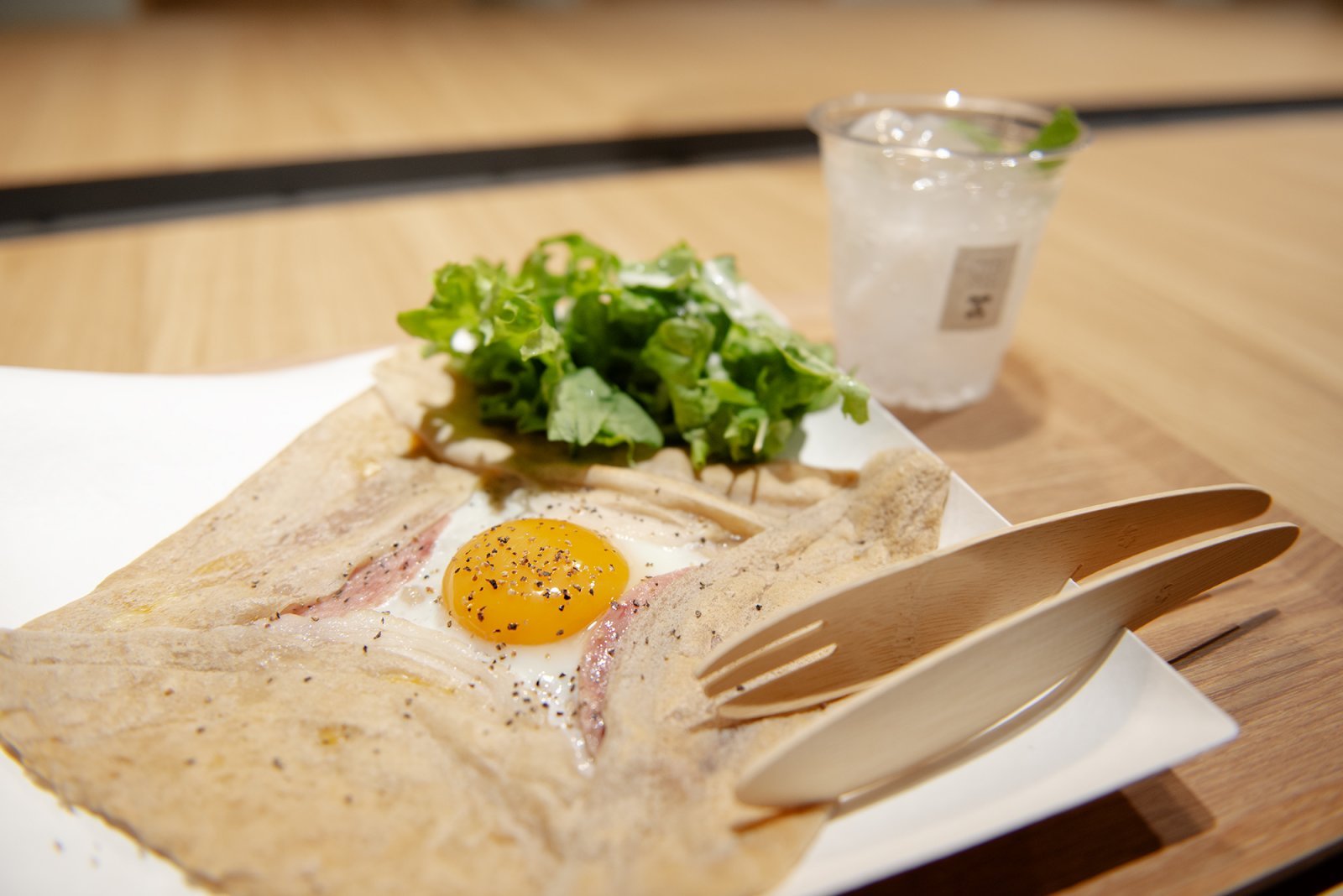
A galette served at the café. The complete plate, topped with a fried egg, ham, cheese and fresh vegetables (¥1,400), is limited to 20 servings per day. The aroma of buckwheat combines with the richness of the cheese in a generous dish whose flavours linger long after the last bite.
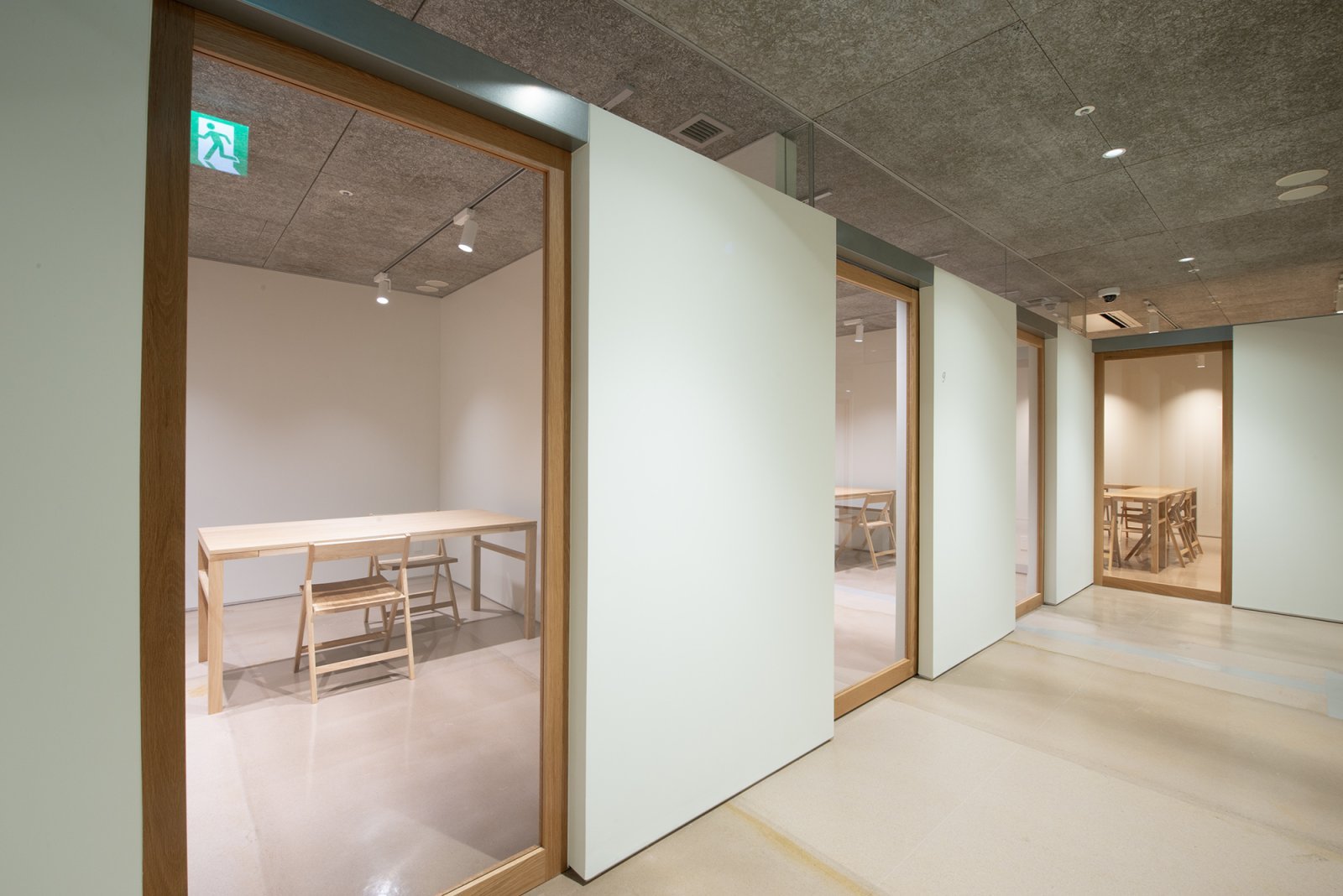
The facility also includes rental spaces that can be used as offices or meeting rooms, as well as a shared kitchen.
From Vintage Clothing to Antiques, A Selection Guided by Japanese Aesthetics
‘I thought about what Japanese aesthetics mean to me. One of their defining characteristics is the ability to reveal the essence of something through subtraction. You gradually remove everything unnecessary in order to highlight what remains. Then you repeat the process, introducing subtle variations. That idea guided the selection of the objects.’
The space known as the ‘Room’ presents visitors with a particularly eclectic collection.
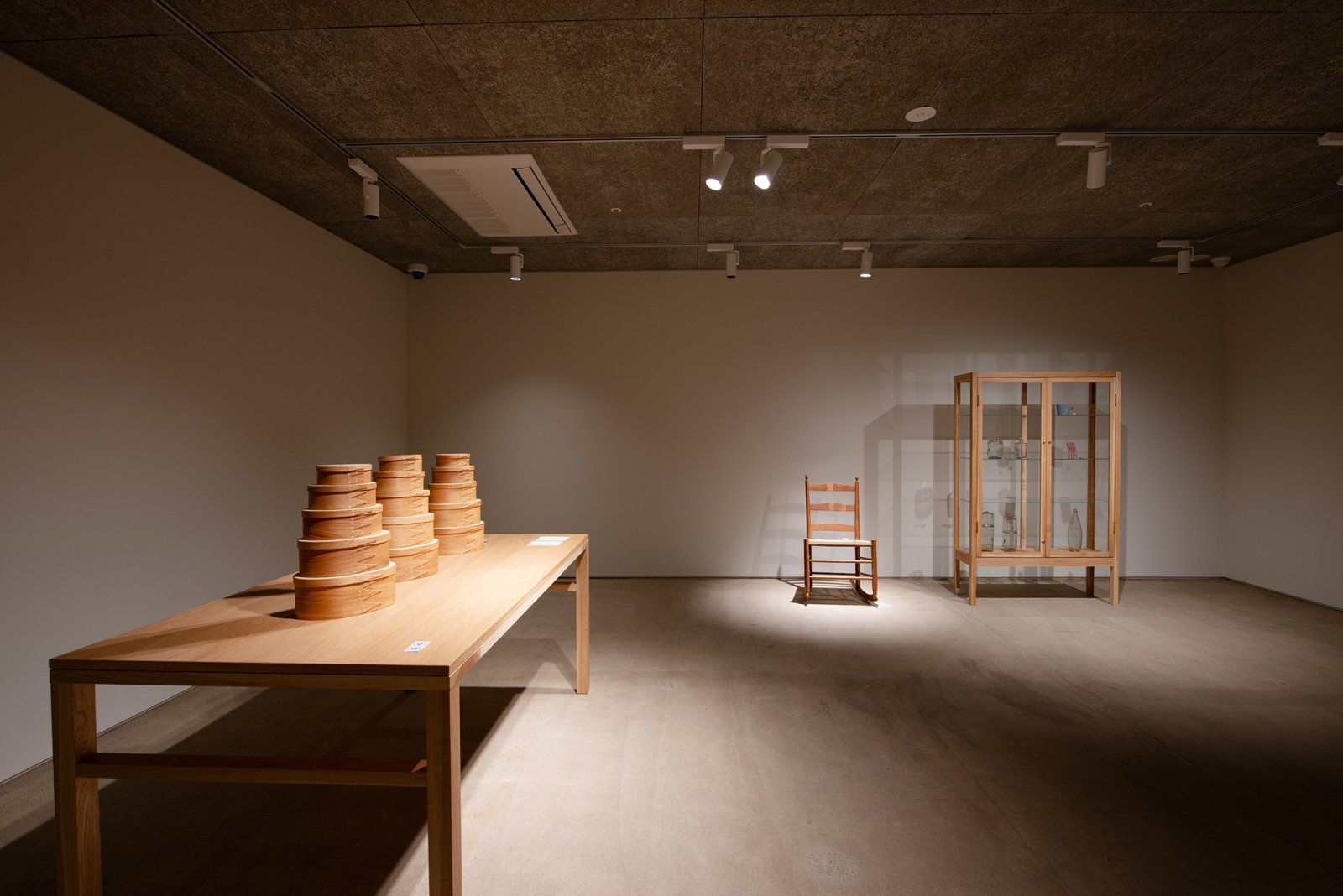
Within the minimalist interior, objects are displayed on carefully selected furnishings, including tables produced by Sugikōjō, a furniture maker based in Fukuoka Prefecture. On the table to the left is a set of five nesting oval boxes inspired by the Shaker tradition. ¥66,000 per set.
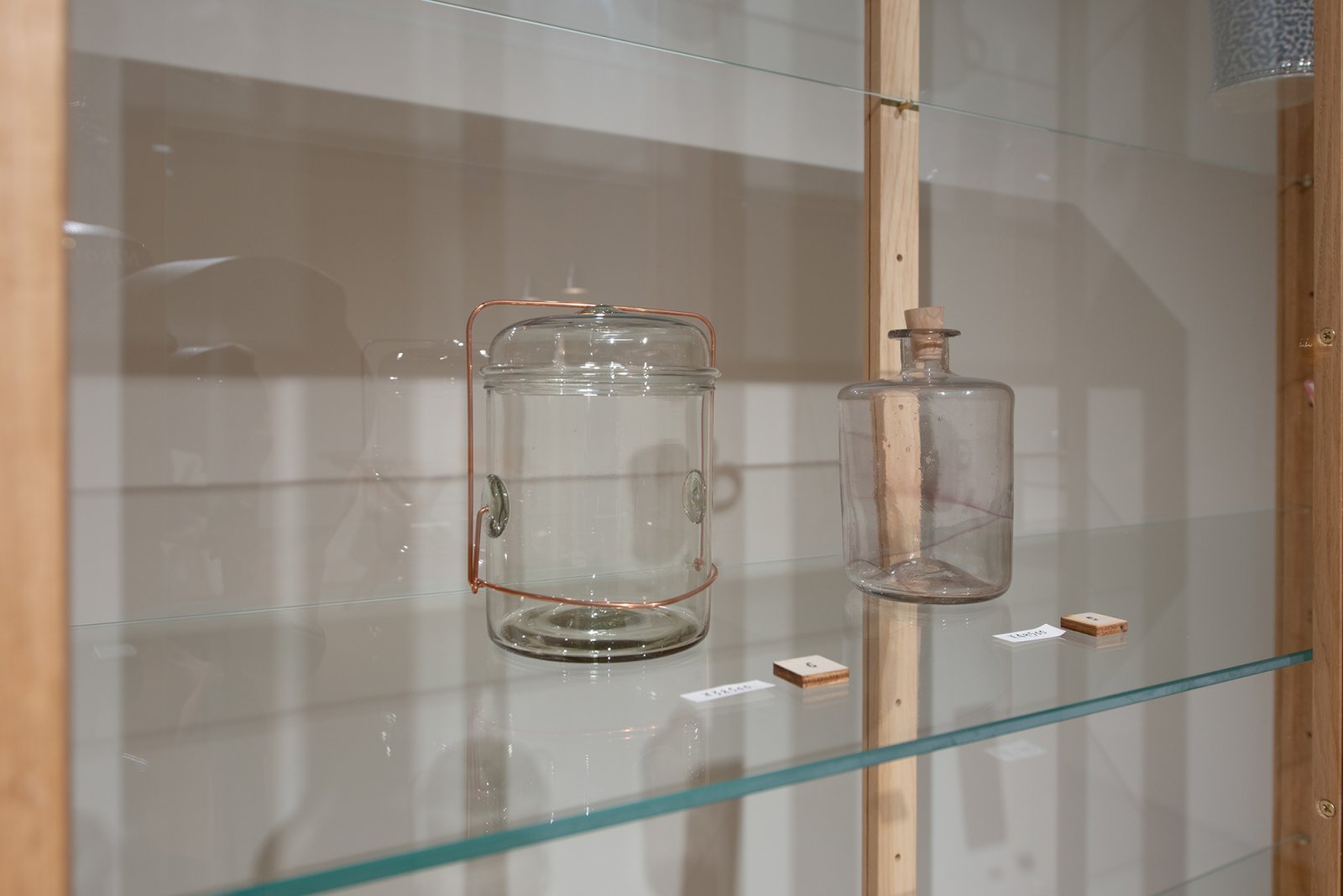
Left: a glass jar by Peter Ivy, a glass artist based in Toyama Prefecture. ¥33,500. Right: an early nineteenth-century French glass bottle. ¥49,500.
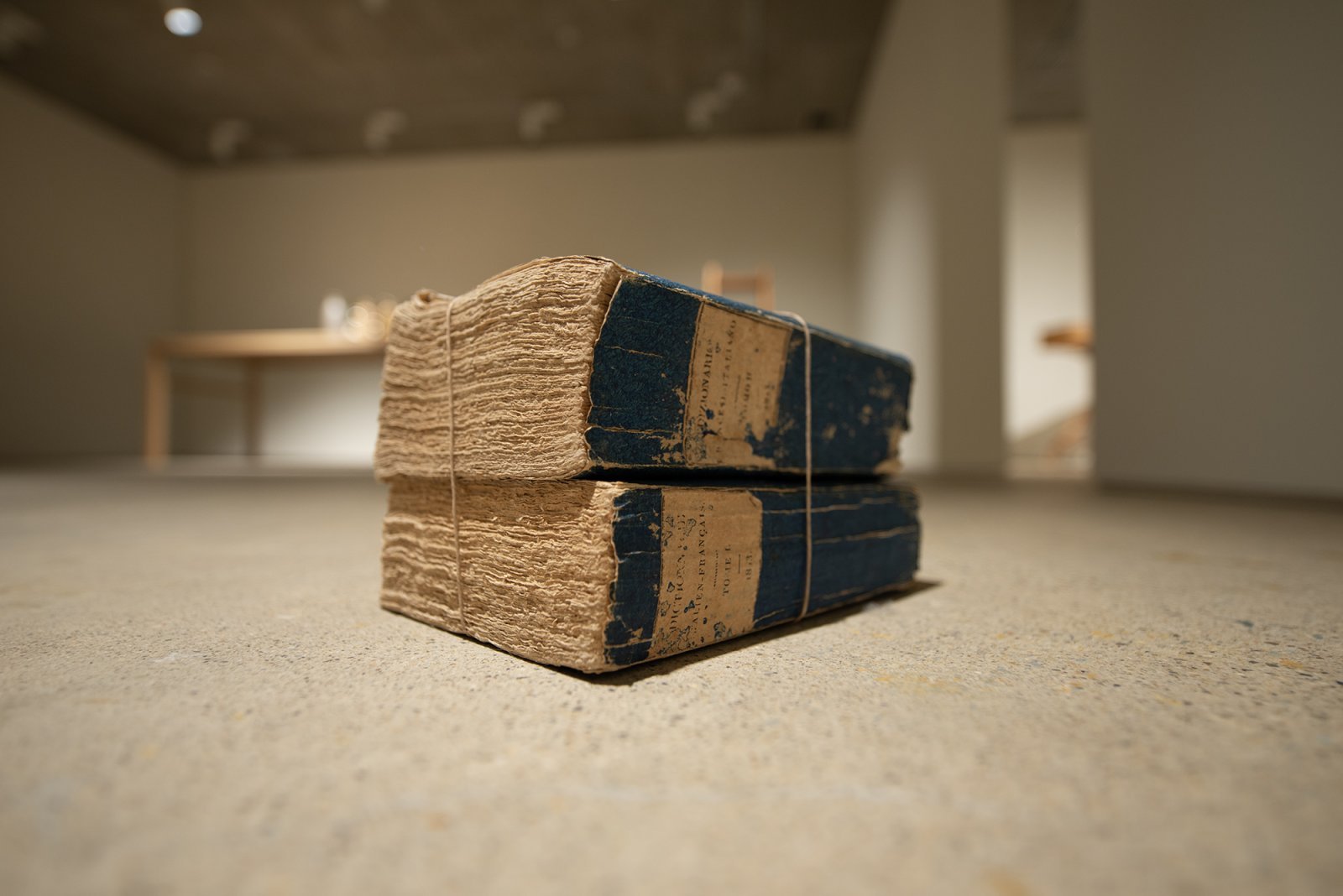
A French–Italian dictionary whose quiet presence possesses a charm that defies description.
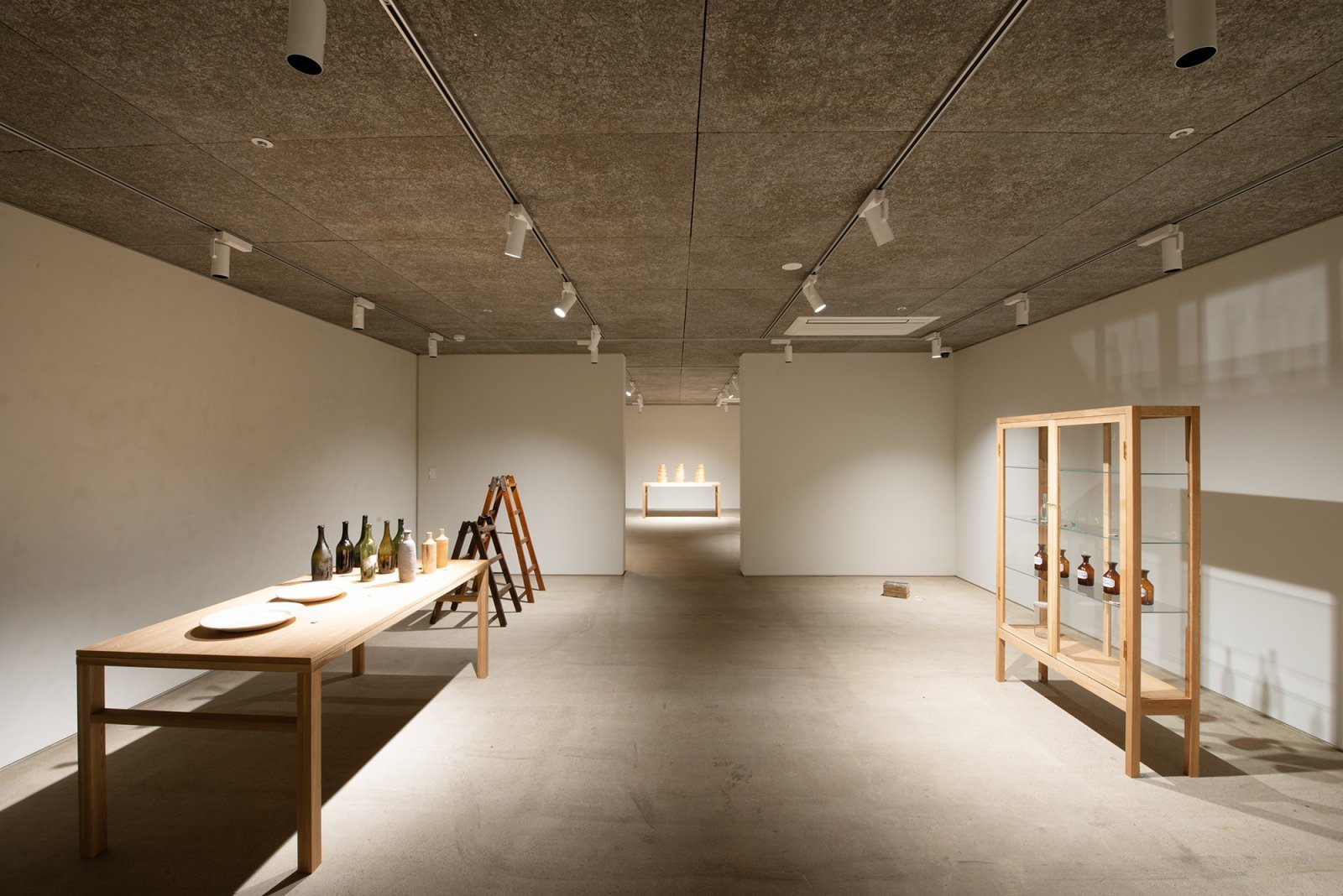
The openings within the square structure are conceived as windows. The visual connection they create with the adjoining spaces perfectly embodies the principle of ‘simplicity and repetition’.
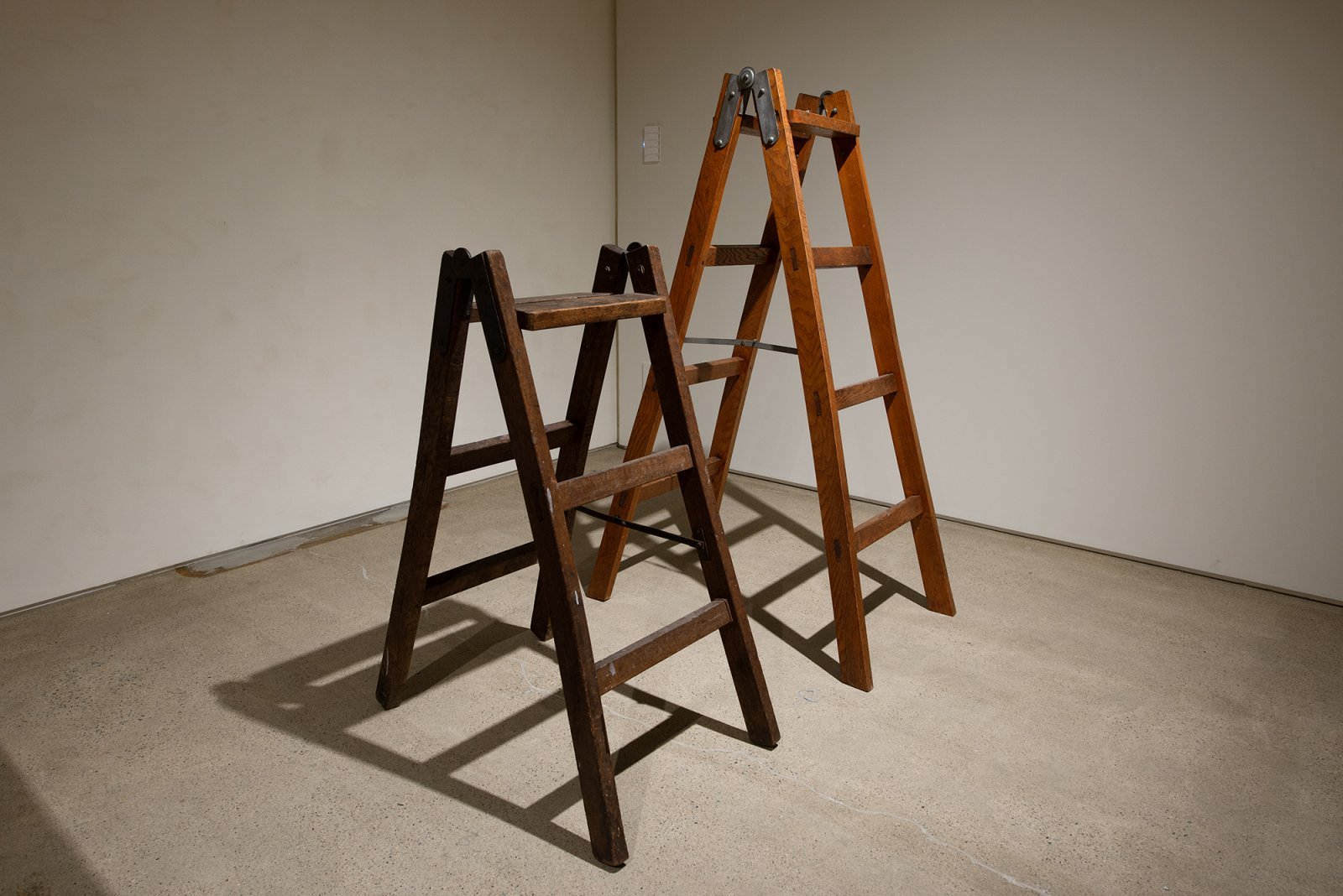
An old wooden stepladder. An object whose essential form expresses its purpose with complete clarity: enabling someone to work at height.
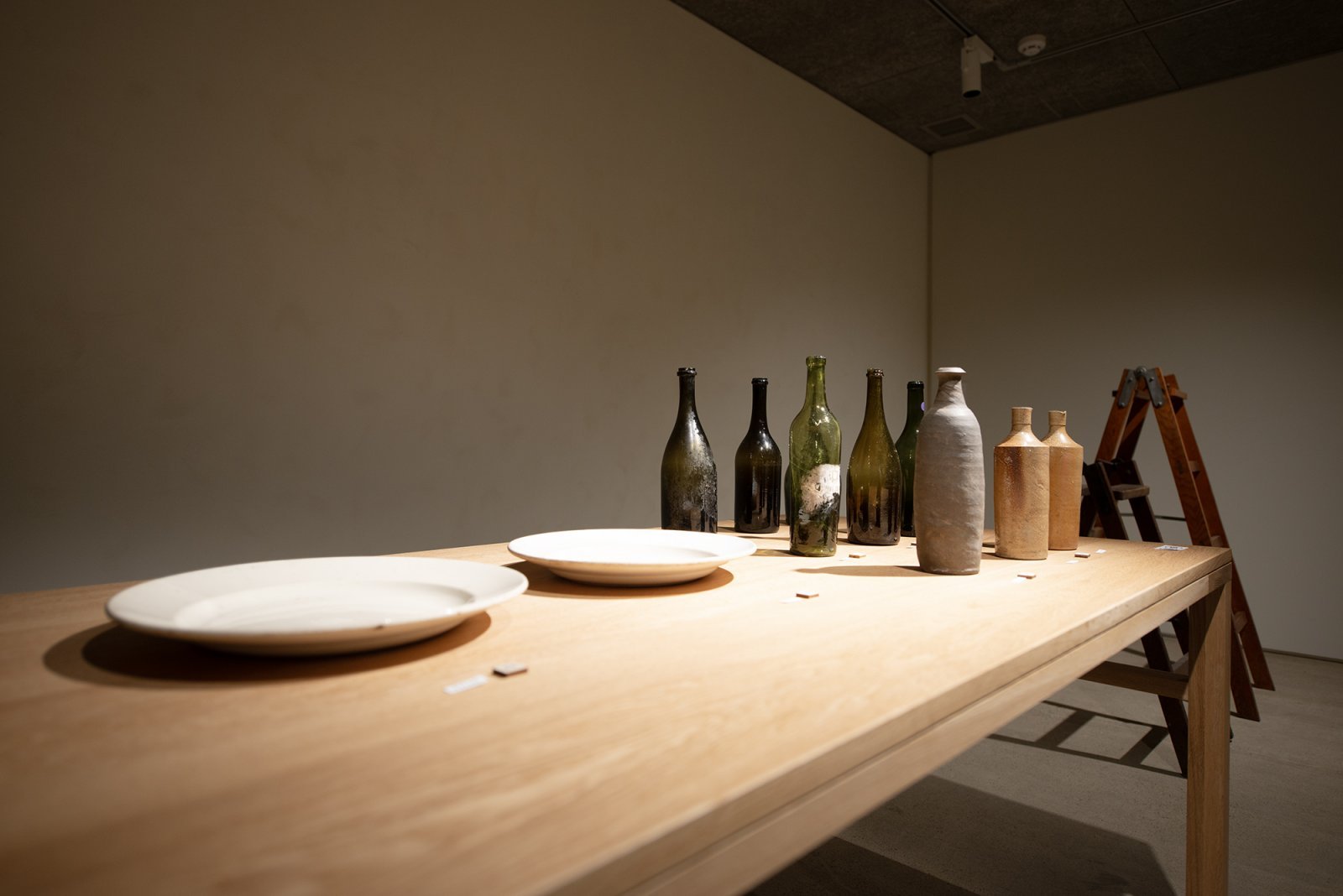
Among the objects on display are nineteenth-century Greek ink bottles and other vessels selected because they seemed as though they ‘had emerged from a Giorgio Morandi still life’. Paired with an antique French plate in the foreground or the stepladder visible in the background, they invite visitors to imagine new narratives through their juxtaposition.
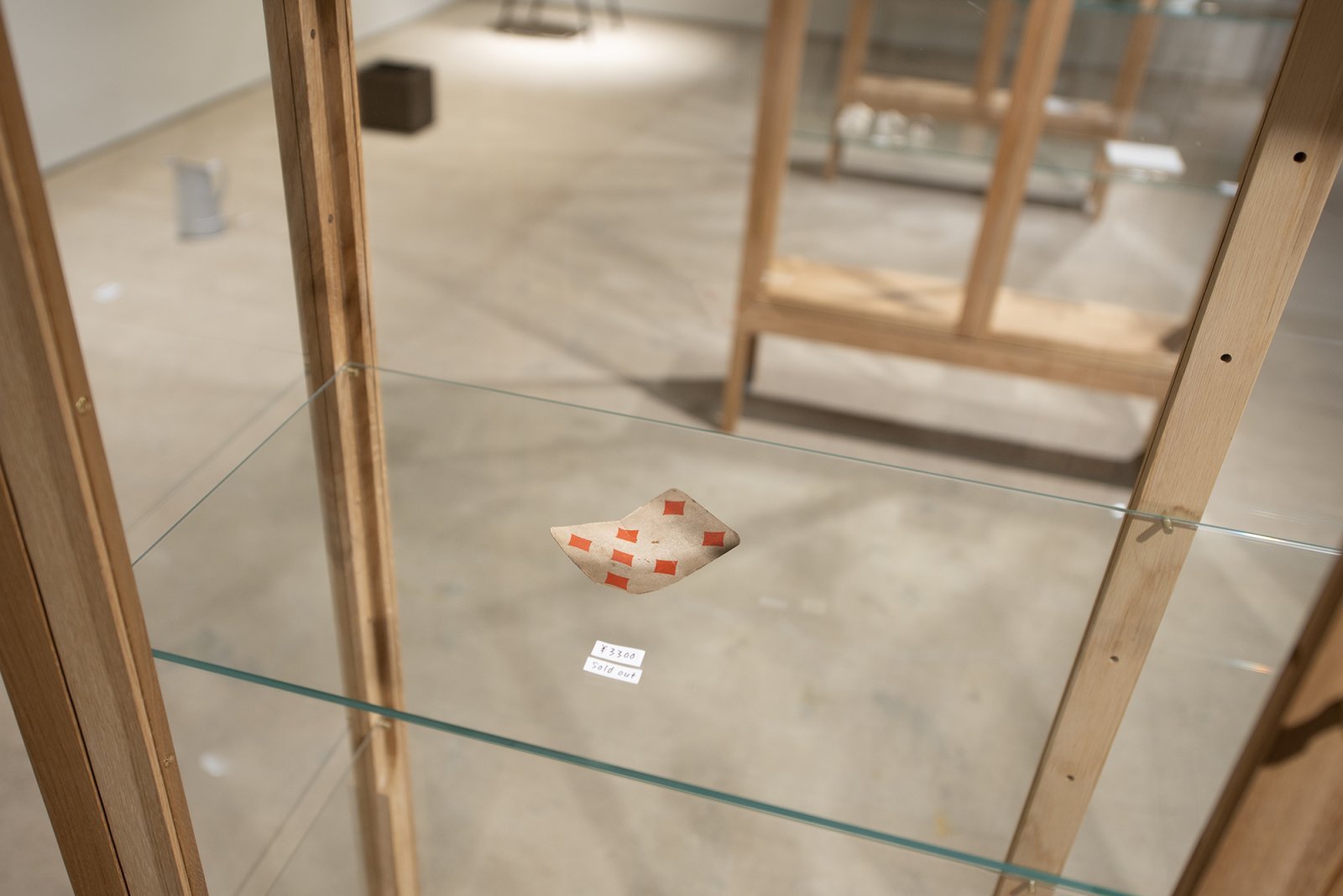
A single playing card. ‘I feel its presence somehow encapsulates the spirit of Flora SAGAE as a whole,’ says Morioka. The piece has already been sold.
A Charlotte Perriand Chair as a Symbol
Asked to choose a single object from the display, Morioka immediately points to Charlotte Perriand’s ‘Les Arcs’ chair.
‘Charlotte Perriand came to Japan in 1941 with the aim of helping elevate Japanese craftsmanship. During that visit, she also travelled to Yamagata with Sōetsu Yanagi. It is said that she advised local artisans on how objects produced in farming villages during the winter months could achieve a level of design that would be recognised internationally. That historical context is important. In a sense, it was already an attempt to use design to address regional challenges. I feel it resonates with the work currently being carried out by Tohoku University of Art and Design. That is why I chose Perriand’s chair.’
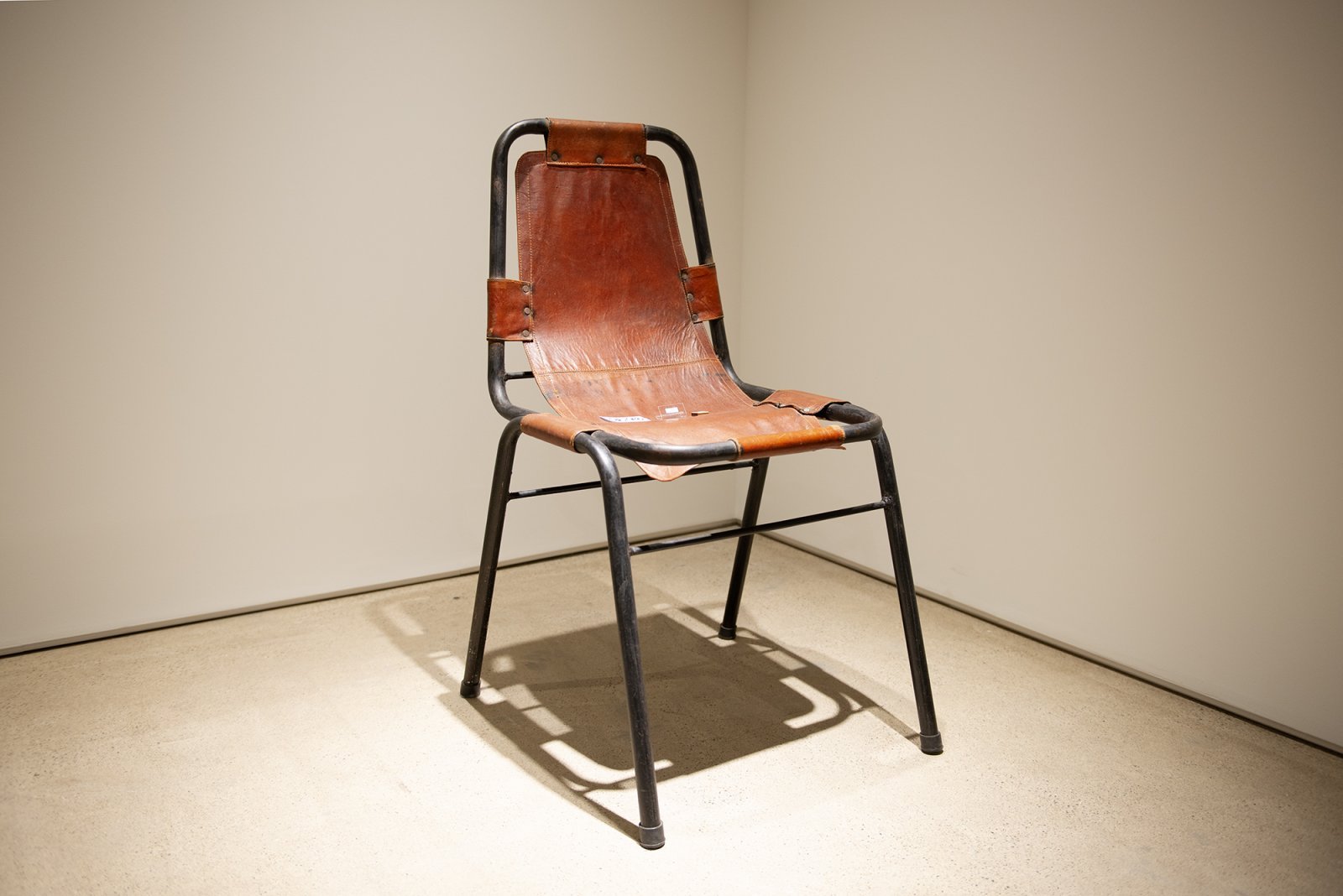
Charlotte Perriand’s ‘Les Arcs’ chair. Designed for the Les Arcs ski resort in France, this example is not a reissue but an original vintage piece that still retains its original leather.
The store also carries a selection of vintage clothing, an initiative that emerged in response to requests from younger local residents. According to Morioka, the garments have proven particularly popular.
‘When I lived in Sagae, it was impossible to buy vintage clothing locally. I had to travel to Sendai. Once I had put together an outfit from pieces I found there, the next destination was Shibuya. Today, I’m delighted to see that young people in Sagae can discover that world without leaving their hometown.’
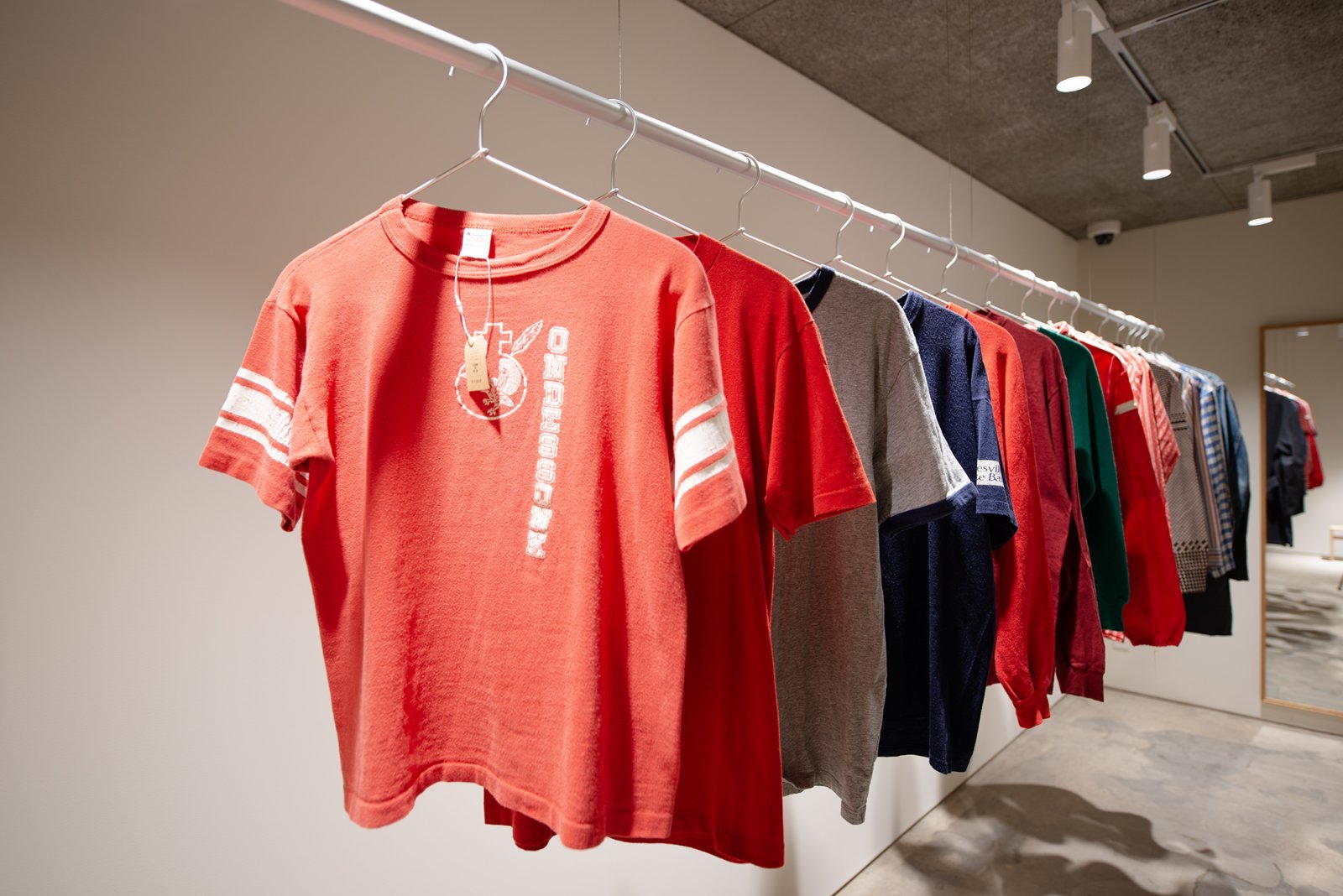
The vintage clothing is priced close to cost, reflecting Morioka’s desire to make it accessible to younger visitors.
A Gathering Place for the Community
The one hundred objects presented at the opening will remain on display and available for purchase until July. As items are sold, they will gradually be replaced. From mid-June, an exhibition and sales presentation of ceramics by Naotsugu Yoshida is also scheduled to take place. Alongside the permanent selection, several pop-up projects and temporary exhibitions are already in preparation. Describing a space containing one hundred objects as a department store may sound like a conceptual exercise, yet the shift in perspective opens up unexpected possibilities.
‘For years, people have assumed that bookstores and department stores no longer have much of a future, particularly in regional towns. Yet I would like to believe that this is precisely where their potential lies. I hope local residents will come here to take a break, buy something, study if they are students, or simply make the place their own. If people want to organise something, I believe we can respond with flexibility. I would be delighted if the space could host exhibitions and talks featuring artists appreciated by the local community, while generating its own economic activity.’
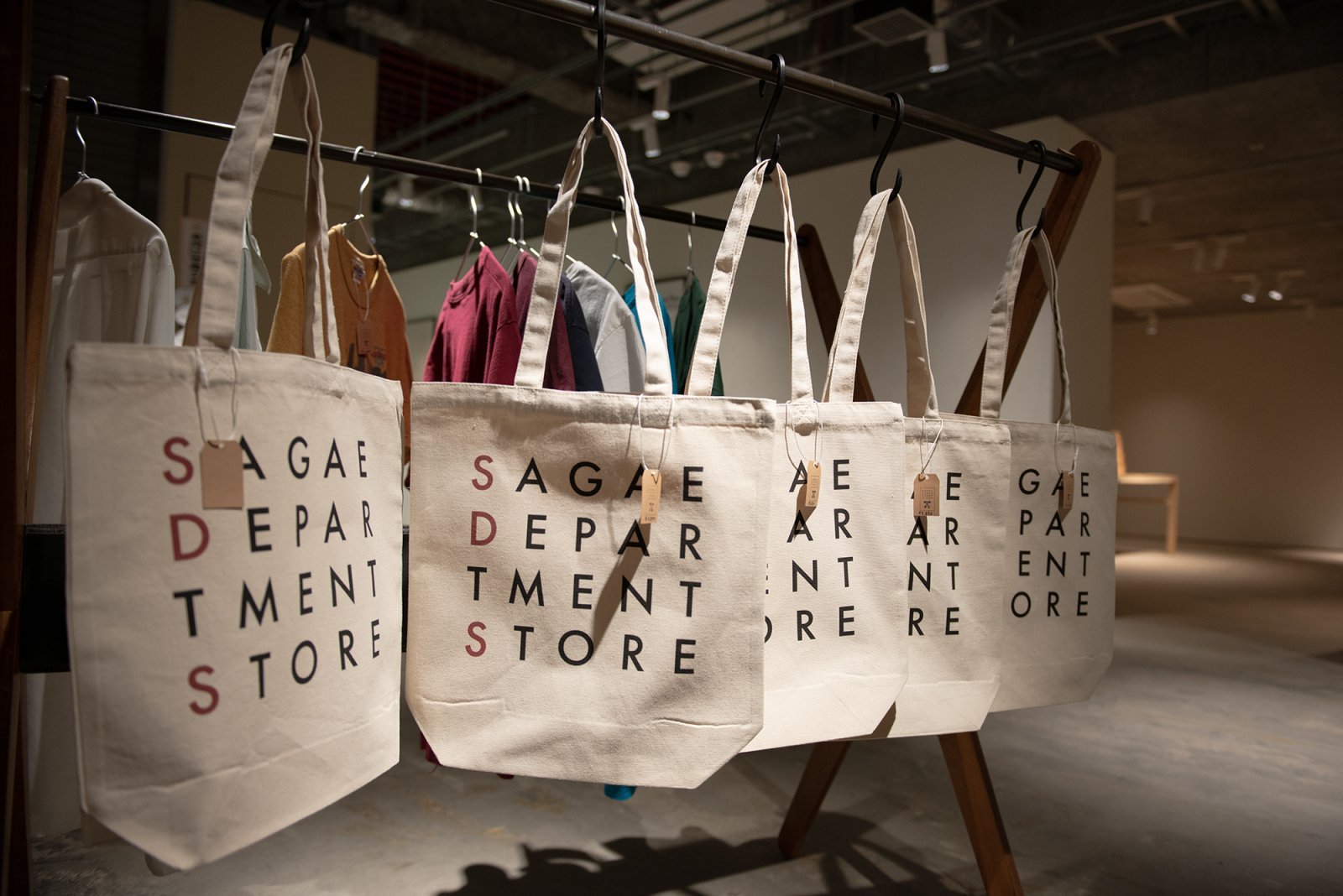
It is easy to imagine a future in which residents casually carry Sagae Department Store tote bags through the streets of the city. A vision that already feels within reach.
The owner of a bookstore famous for selling only one book at a time has now imagined a department store offering one hundred objects, some of which are not even for sale. By dismantling conventional assumptions about what a department store should be, the project has created a new kind of space capable of stimulating both the desire to acquire objects and a curiosity for diverse forms of culture. Morioka says preparations for future projects are already underway, making Sagae Department Store a space worth following in the months ahead. One can also imagine its example inspiring other communities to develop their own inventive approaches to revitalising town centres.
Sagae Department Store
Address: Flora SAGAE 2F, 2-8-3 Honchō, Sagae, Yamagata Prefecture, Japan
Phone: +81 237 84 0022
Studio / Office: 10:00–19:00. Room / Café: 11:00–17:00.
Closed Wednesdays.
sagae100.jp/about