Shi-An, the Origami Teahouse
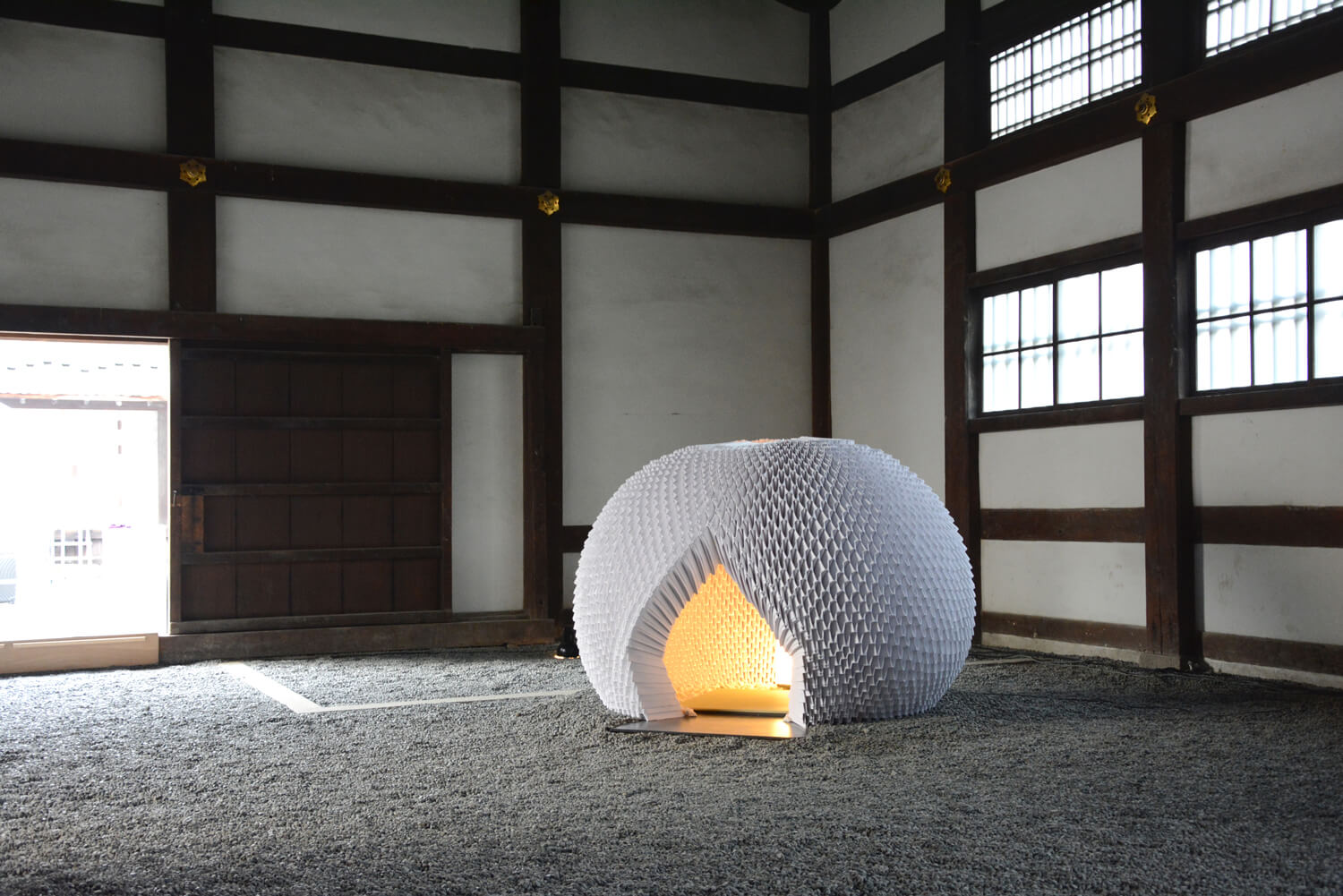
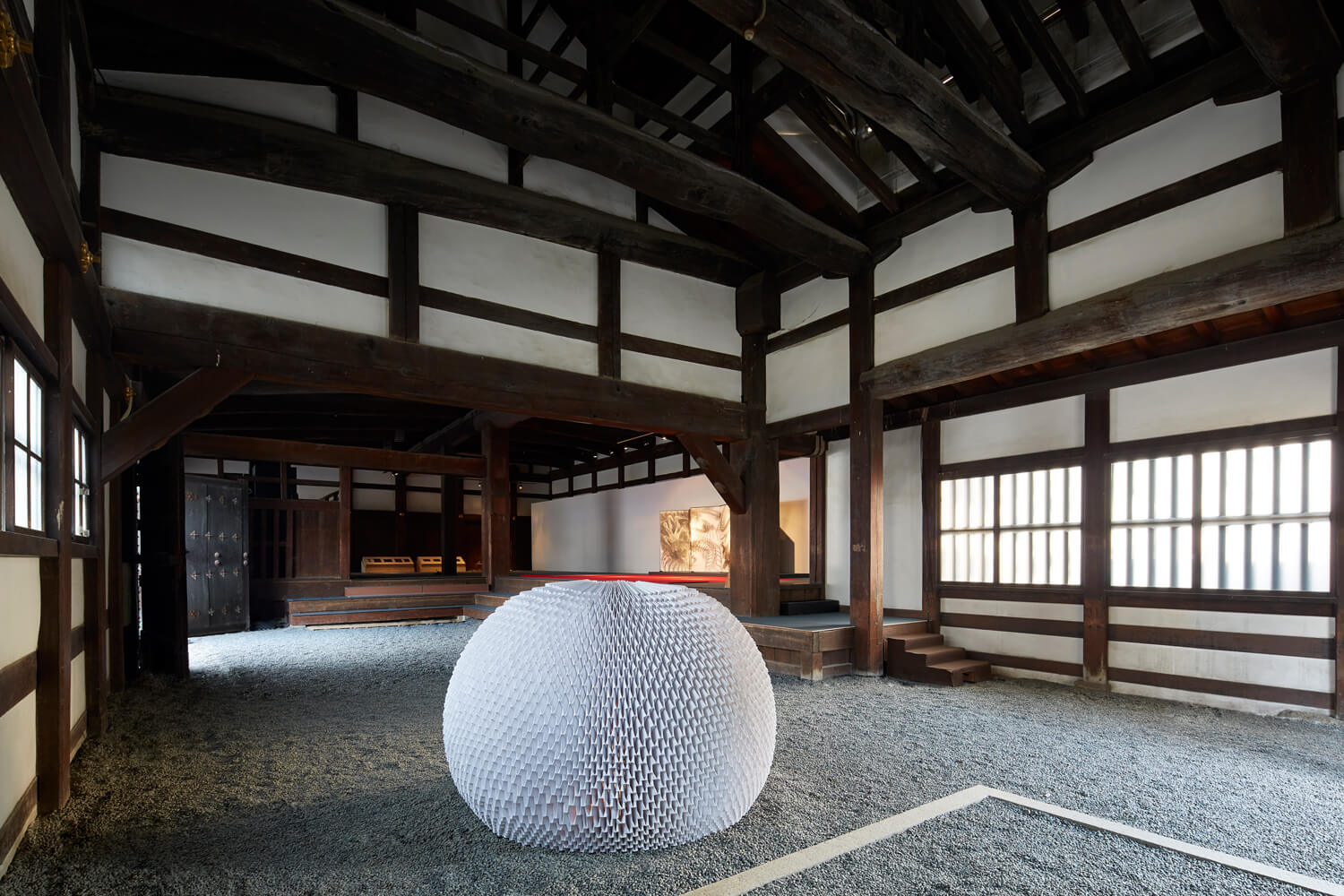
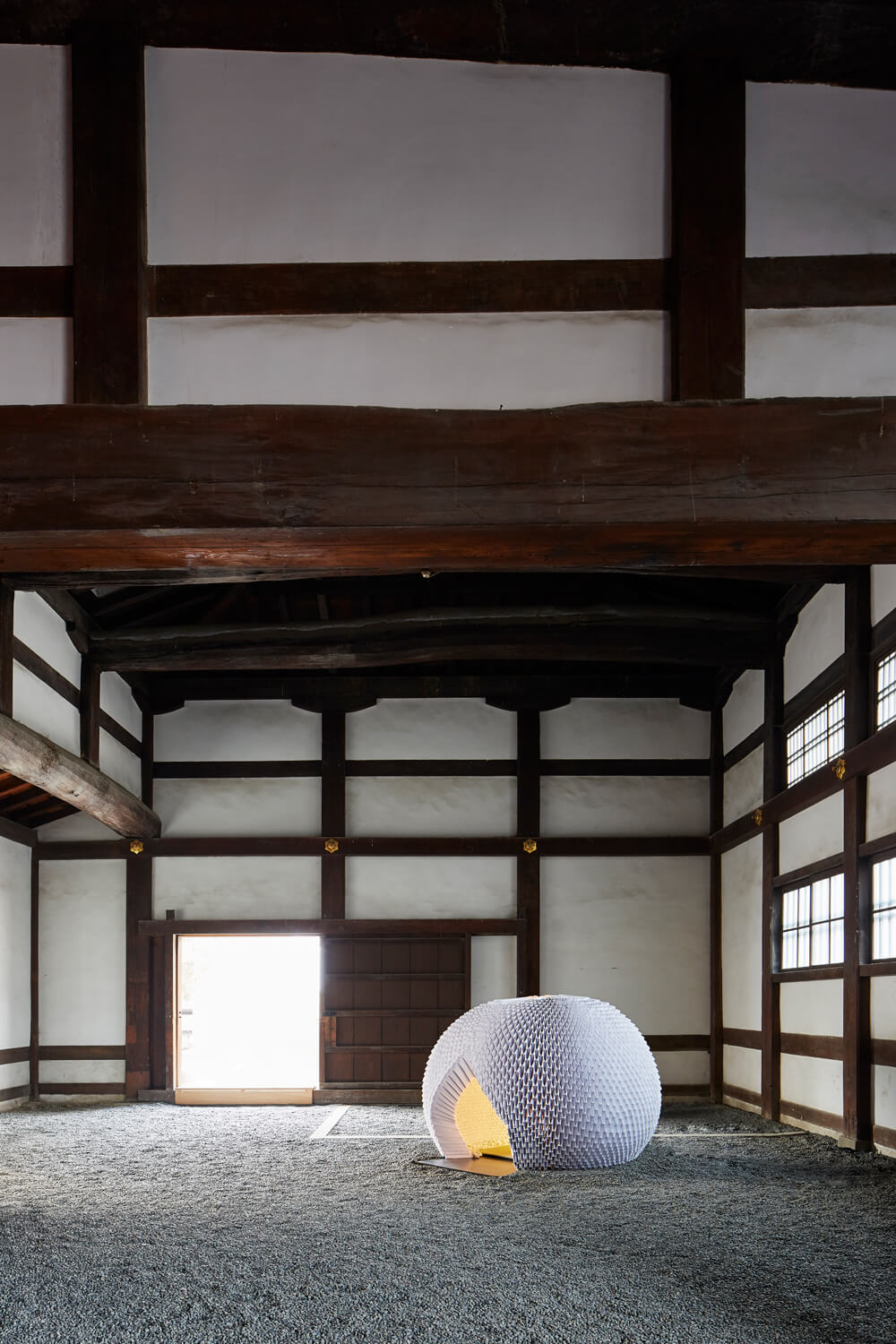
This mobile and modular structure is made entirely from 'washi' paper which makes it both light and durable.
Courtesy of Katagiri Architecture + Design
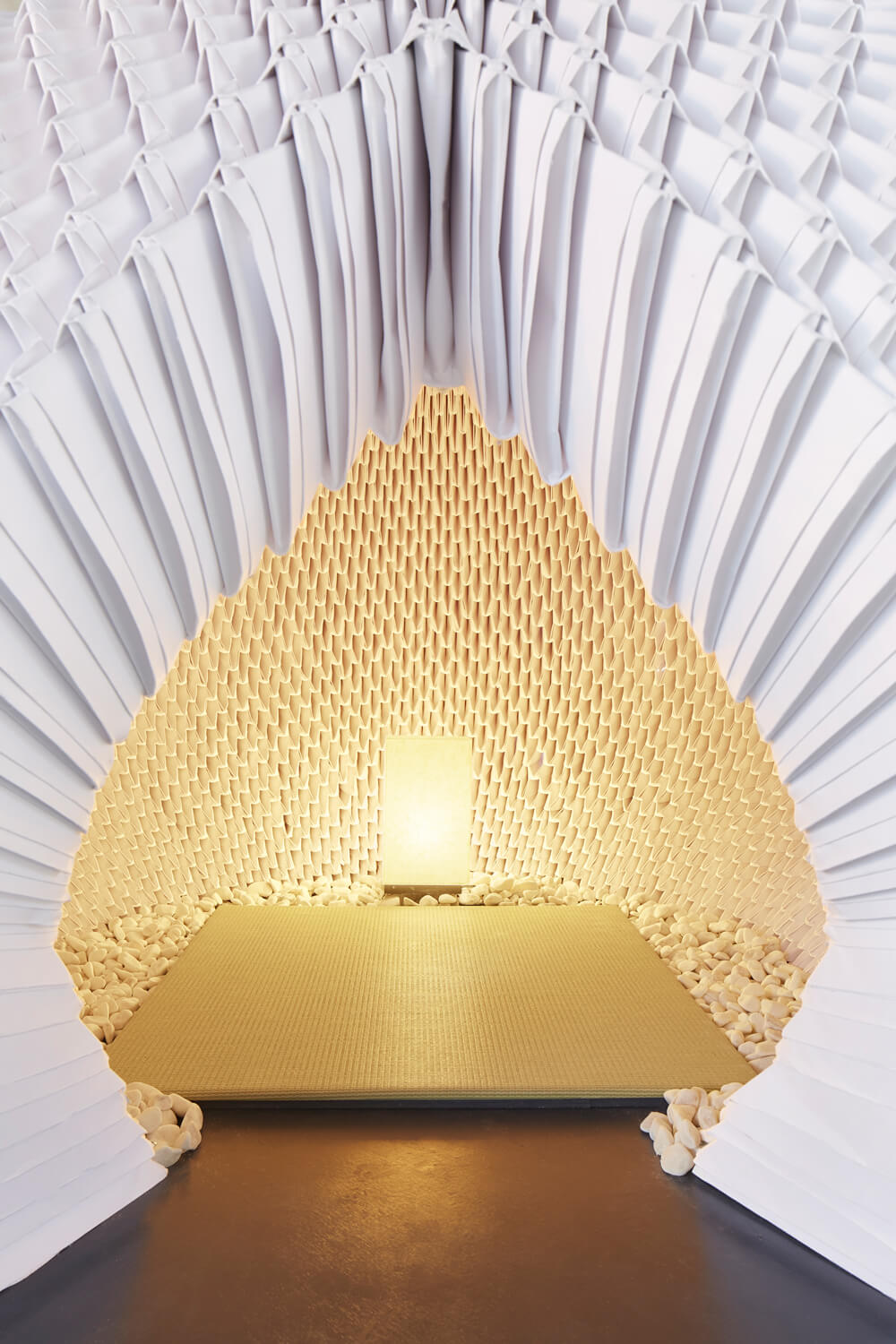
At Shi-An, visitors will find two traditional Japanese arts under one roof. Kazuya Katagiri of the architectural firm Katagiri Architecture+Design marries the finesse of the Japanese tea ceremony with the delicateness of origami in a washi paper tea house, made from hundreds of sheets of paper for guests to admire.
‘This tea house is inspired by the refined, minimalist character of Japanese beauty’, explains Kazuya Katagiri.
Showcasing Japanese craftsmanship
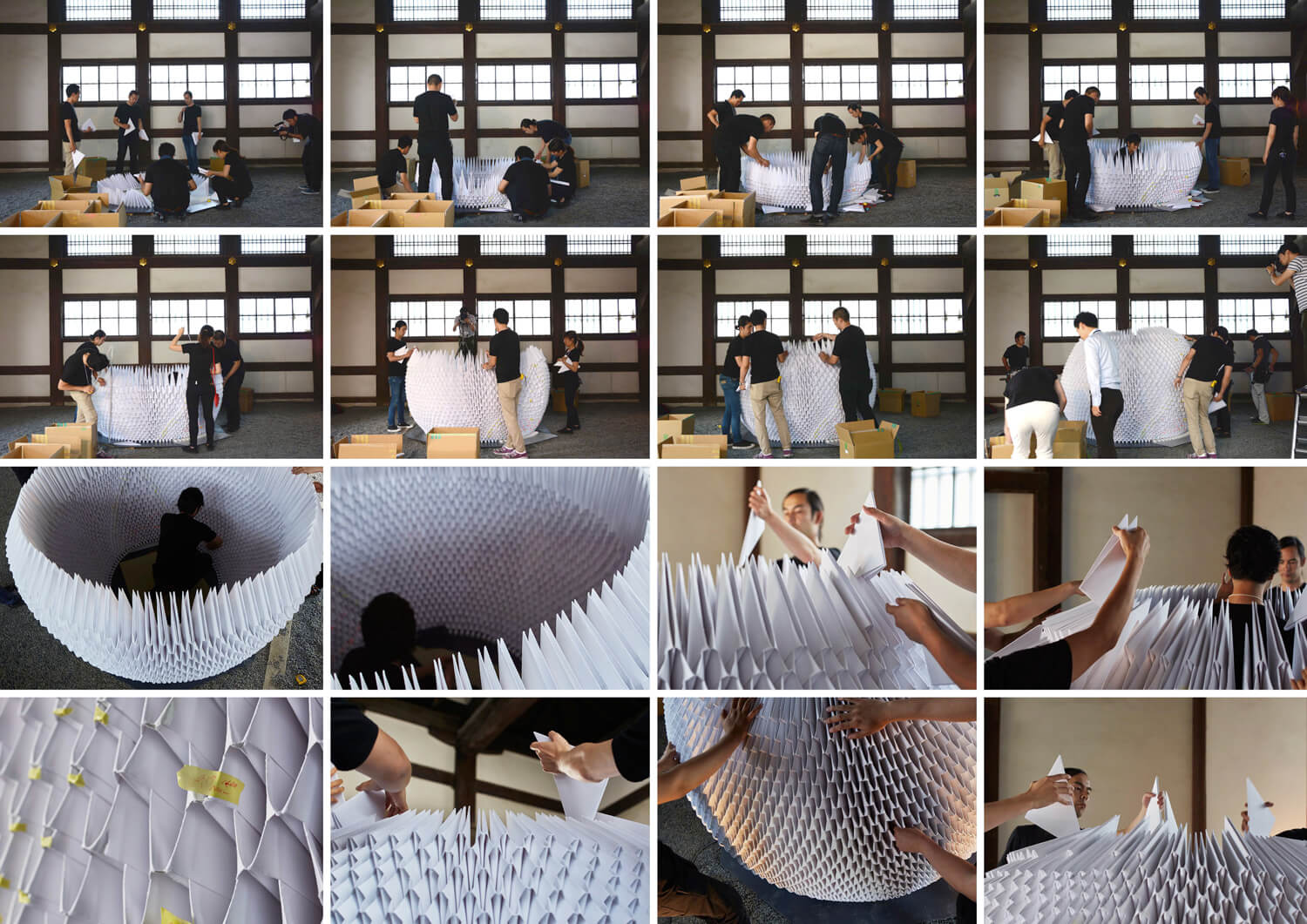
To construct the space, the designer opted to use washi paper, made by craftsmen for over 1300 years using natural fibres. Each sheet measures 500 mm by 1000 mm and was folded eight times to create triangular blocks, which were then interlocked without the need for glue or any other adhesives. This is how Shi-An came to be.
The tea house is accessed through a small entrance that requires visitors to duck their heads, and there is a small opening in the ceiling allowing for natural light to illuminate the space.
A modular space
‘The cellular structure of the house could be compared to a person. Like a living body, it continually adapts to its environment’, explains Kazuya Katagiri.
Indeed, this mobile tea house, which stands at 2.1 metres tall and 1.85 metres wide, is completely modular. The origami technique used allows this small pavilion to be put up and taken down quickly and easily, and it requires no specific foundations in order to be stable.
Artistic success
Shi-An was recognised at the 2017 RTFA Awards, having been exhibited for the first time in 2016 in the Daidokoro at Nijo-jo castle in Kyoto, one of the most prestigious flatland castles built in the early 17th century and a UNESCO world heritage site. Following the success of Kazuya Katagiri’s creation, Shi-An then went on a tour across Japan.
More recently, the designer created a small structure called the Paper Cloud in Montpellier, France. While it differs from Shi-An slightly in that it is not created from origami, there are similarities in its construction, as it was also made without using glue or adhesive. The artist gathered 2000 cylinders of laminated paper and inserted them inside one another to create a roofless cubic structure that allows daylight to reflect off its walls, giving it an infinitely light appearance.
Shi-An (2016), a project by architectural firm Katagiri Architecture+Design, can be viewed on their website.
Courtesy of Katagiri Architecture+Design
Courtesy of Katagiri Architecture+Design

Courtesy of Katagiri Architecture+Design
Courtesy of Katagiri Architecture+Design
Courtesy of Katagiri Architecture+Design