Hiroshi Sugimoto on Light, Time and the ‘Extinction’ of Photography
The exhibition ‘HIROSHI SUGIMOTO: EXTINCTION’ presents 60 silver gelatin photographs from his major series, alongside newly unveiled works.
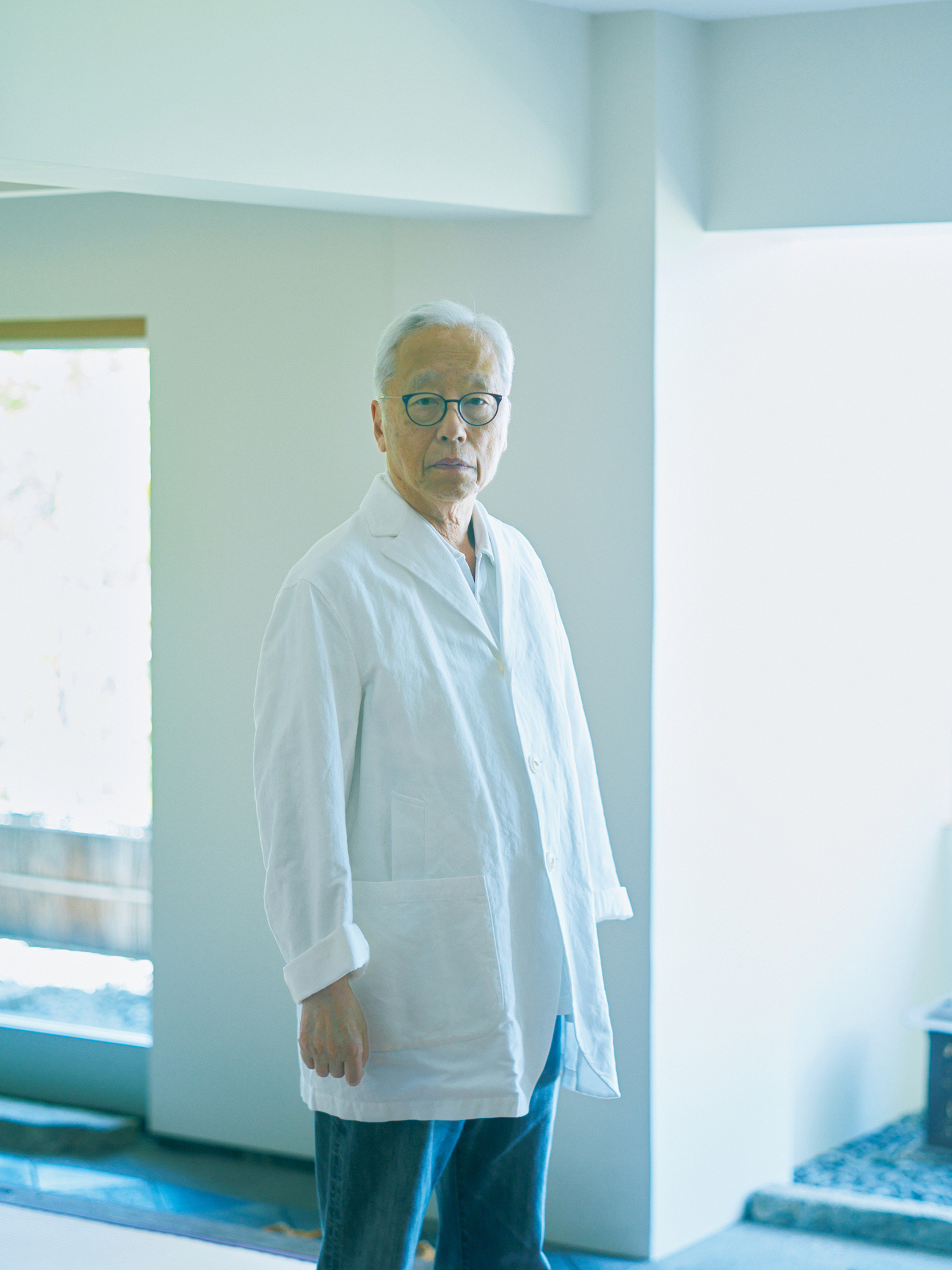
Hiroshi Sugimoto, contemporary artist. Born in Tokyo in 1948, Hiroshi Sugimoto moved to the United States after graduating from Rikkyō University and began working from New York in 1974. While photography lies at the heart of his practice, his work also spans architecture, antique art and the performing arts. In 2017, he founded the Enoura Observatory. He is the recipient of numerous awards, including the Hasselblad Award and the Praemium Imperiale, presented by the Japan Art Association under the honorary patronage of the Imperial Family.
Through meticulously developed concepts and an extraordinary mastery of technique, particularly his use of large-format cameras, Hiroshi Sugimoto has elevated photography beyond its traditional role as a medium of documentation, positioning it firmly within the realm of contemporary art. On the occasion of the exhibition HIROSHI SUGIMOTO: EXTINCTION, the artist reflects on his career and shares his thoughts on the essence of his practice.
Silver gelatin photography, which records traces of light onto photographic film, possesses a unique power: by preserving the ‘reality captured through light’ itself, it carries both documentary value and an extraordinary sense of authenticity. For decades, this technique—capable of enclosing a fleeting instant, or even time itself—has remained the foundation of Hiroshi Sugimoto’s artistic practice.
Dioramas that appear more real than reality itself
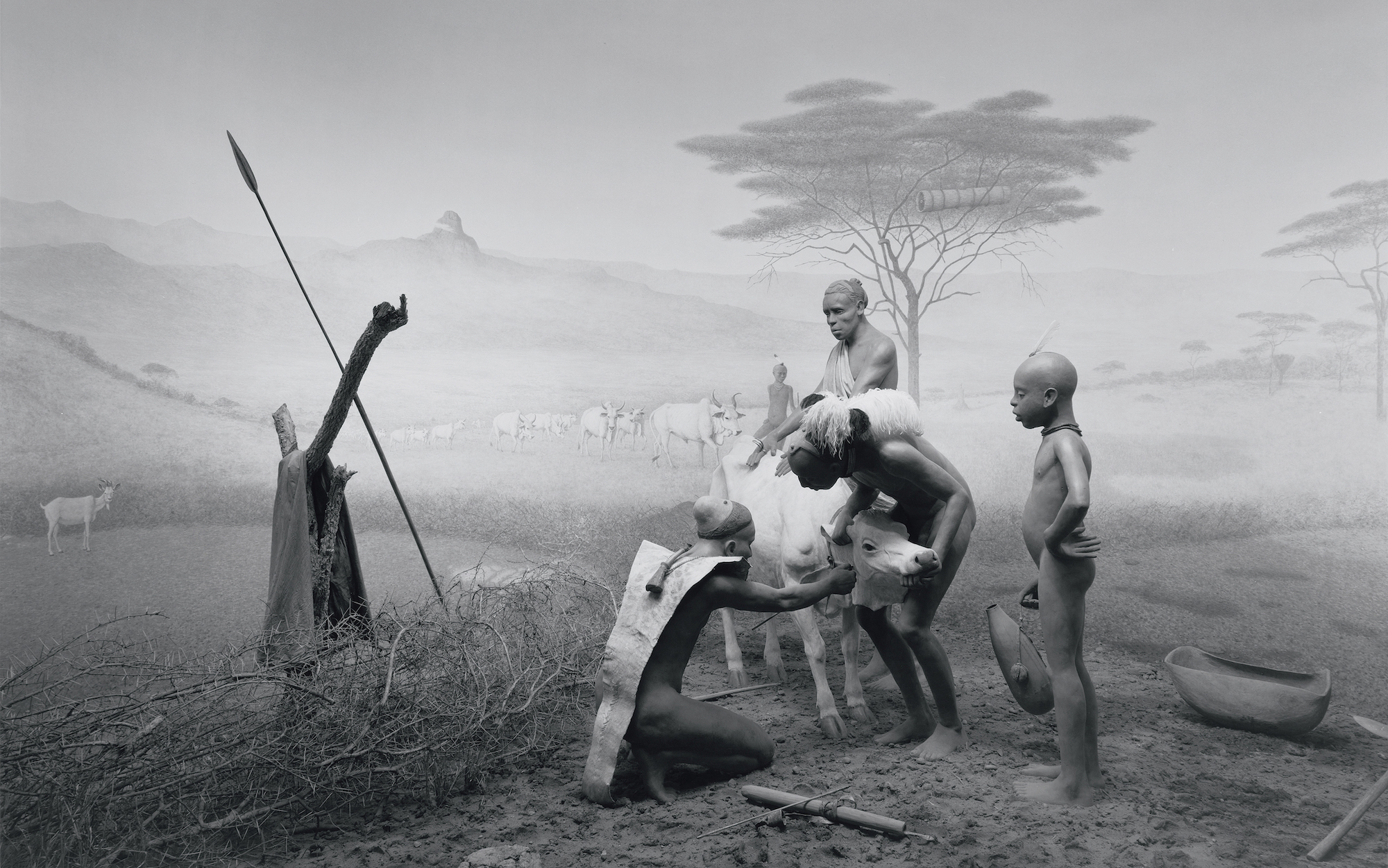
‘Pokot’, 2025. A new work from the ‘Dioramas’ series, which explores the relationship between humanity and nature. Conceived from the earliest days of the series, this photograph, together with two other new works, brings to a close Sugimoto’s monumental exploration of human history, developed over nearly half a century. © Hiroshi Sugimoto
Having moved to New York in his mid-twenties, Sugimoto entered the contemporary art world using photography, the field in which he had developed particular expertise, as his primary means of expression. Looking back, his decision to begin with the Dioramas series may not have been a coincidence, but rather an inevitable choice.
‘In 1975, I photographed a polar bear at the American Museum of Natural History. Behind this image lies a formative experience related to what is now known as ‘depersonalisation’. It is a psychological condition in which one feels as though their soul has separated from their body, creating the sensation of being almost dead. Since childhood, I had difficulty interacting with other people. I became what would today be called a ‘hikikomori’, and I immersed myself entirely in making models. My parents created a small space for me beneath the staircase, about the size of a tatami mat, where I would spend my time building all kinds of miniature structures.’
The dioramas displayed at the American Museum of Natural History combine taxidermied animals and three-dimensional sculptures with panoramic painted backgrounds to create immersive scenes. Yet Sugimoto’s photographs of these dioramas do not appear to depict artificial objects. Instead, they possess such presence and persuasive power that they seem almost more ‘real’ than reality itself.
‘Dioramas and wax figures are fake, yet many people look at them and believe they are real. This is because human vision is ambiguous and has no absolute foundation: we see things in the way we want to see them. An inner filter is at work—in other words, a filter shaped by consciousness.’
Sugimoto also explains that miniature models can sometimes appear more realistic than reality itself.
‘For example, when a model railway is built at the H0 scale of 1:80, there are moments when the miniature can appear more realistic than the actual train. By transforming something into a model, its presence in reality becomes more intense. I have always questioned what ‘reality’ truly means, and whether the world around us actually exists. When I saw that polar bear, I was fascinated by the fact that it appeared ‘alive despite being dead’. I realised that this connected directly with the existential anxiety I had always felt when contemplating the question of existence.’
The current exhibition HIROSHI SUGIMOTO: EXTINCTION presents several new works. Among them are three new pieces from the Dioramas series exploring the origins of humanity: ‘Mbuti Pygmy,’ ‘Pokot’ and ‘Homo Ergaster’. These works were inspired by Friedrich Engels’ essay The Part Played by Labour in the Transition from Ape to Man (1876), which Sugimoto discovered as a high school student and which had a profound influence on him.
‘This was a diorama I had wanted to photograph for a long time, but I had never been able to obtain permission. Finally, I received approval last year. With these works, the Dioramas series has reached its completion. I photographed one diorama depicting the hunter-gatherer lifestyle in Africa, as well as another showing the period when humans began domesticating animals, also in Africa. I wanted to capture the process through which humanity became civilised, as analysed by Engels, who highlighted the significance of labour in human evolution.’
‘Photography is made not with a tool, but with a machine, an extension of human consciousness’
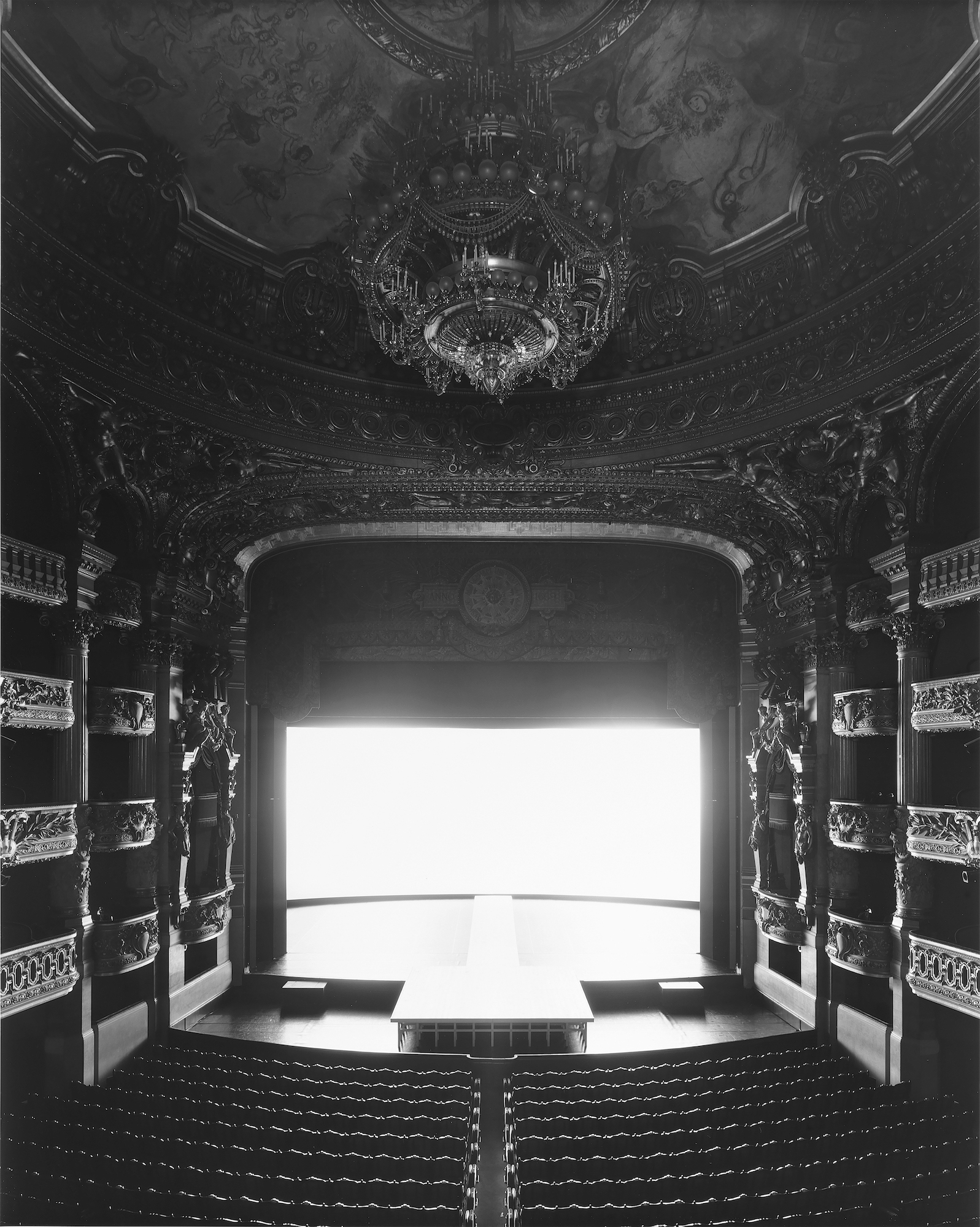
‘Palais Garnier, Paris’, 2019. From the ‘Theaters’ series, this work depicts the Opéra Garnier in Paris. Built during the reign of Napoleon III, its auditorium is crowned by Marc Chagall’s ceiling fresco, while a monumental seven-ton chandelier hangs at its centre. © Hiroshi Sugimoto
By the late 1970s, while he was still working on the Dioramas series, Hiroshi Sugimoto had already embarked on what would become another cornerstone of his career: Theaters. Together with Dioramas and Seascapes, it formed the first trilogy of works that established his practice, each underpinned by rigorous concepts and exceptional technical precision. At the time, Sugimoto was still exploring whether photography could stand alongside painting and sculpture as a legitimate medium for contemporary art. To answer that question, he travelled to cinemas across New York and throughout the United States, opening the shutter of his camera for the entire duration of a film and producing photographs through extremely long exposures.
The result was unprecedented: a single photograph containing the totality of the light projected during a feature-length film, condensed into what he describes as a ‘mass of light’. In the catalogue accompanying HIROSHI SUGIMOTO: EXTINCTION, the artist recalls how he thought about the relationship between painting and photography at the time:
‘The difference between painting and photography is that a paintbrush is a tool extending the artist’s hand, whereas a camera is a machine. I came to think of it less as a tool than as an extension of human consciousness. Photography fixes memory; it freezes time. A camera is a device that stops time. So I began to wonder: what would happen if, instead of stopping time, I simply allowed it to unfold?’
In photography, the longer the exposure, the brighter the image becomes. In Theaters, Sugimoto photographs the dark interiors of cinemas, with the screen placed at the centre of the composition. Yet nothing appears on it. Instead, it becomes a luminous white rectangle suspended in darkness. Through these prolonged exposures, the empty seats and deserted interiors are transformed into hauntingly ethereal spaces, as though detached from time itself.
‘An image came to mind: a blinding white light swallowing the entire world. It was the white light evoked in creation myths across cultures, like the words in Genesis: ‘Let there be light’.’ (HIROSHI SUGIMOTO: EXTINCTION, exhibition catalogue)
Photography, by its very nature, usually isolates only a fleeting fragment of the world and struggles to record the passage of time. Yet by simultaneously capturing the architecture of the cinema and the light emitted by the film, Sugimoto succeeded in containing the flow of time itself within a single image.
‘I am simply continuing the life plan I conceived in my twenties’
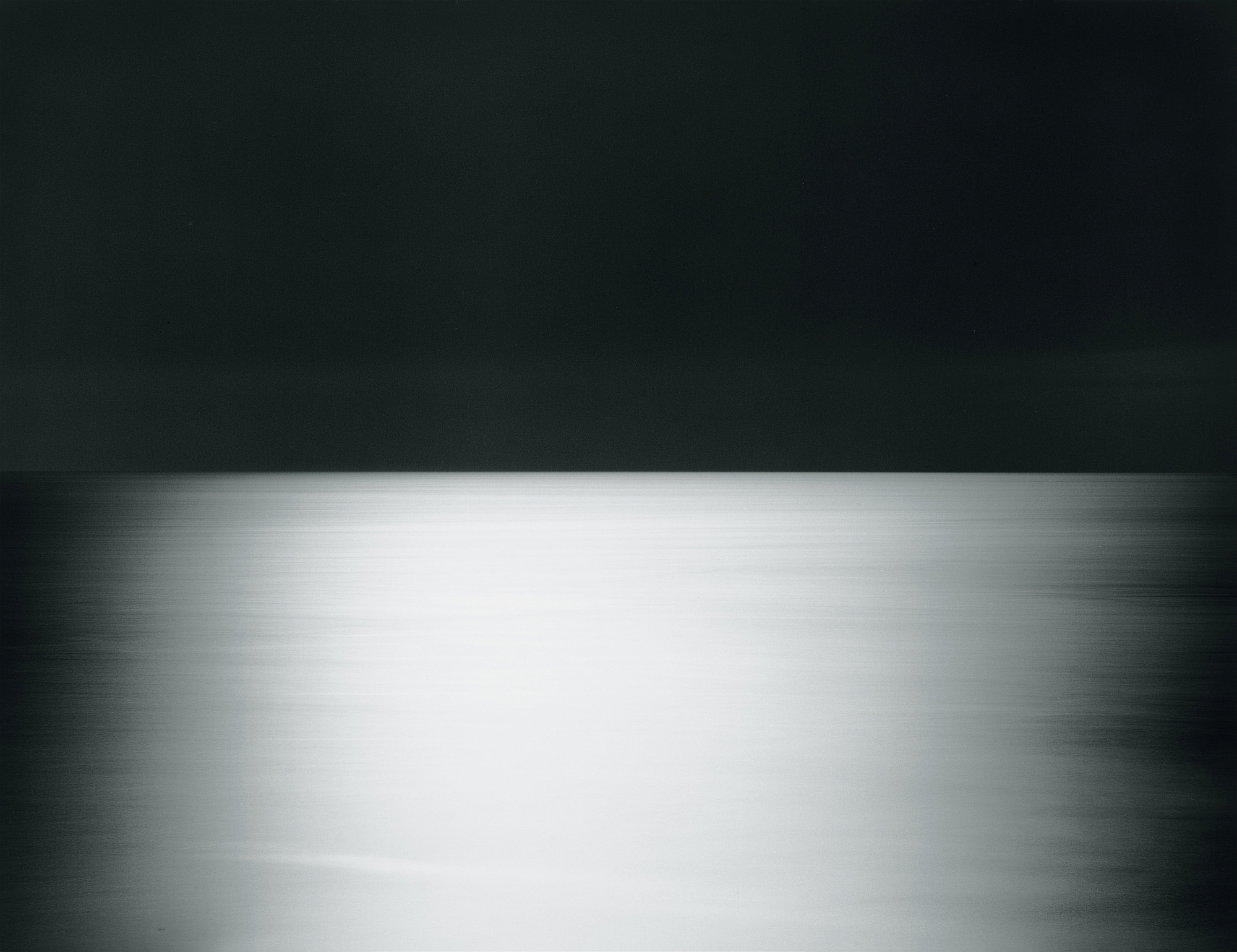
‘Bay of Sagami, Enoura’, 2025. The latest work in the ‘Seascapes’ series, begun in the 1980s and photographed across the world in an attempt to recreate the first landscape ever seen by humankind. In recent years, Sugimoto has photographed the horizon of Sagami Bay every New Year's Day—the same view he gazed upon from a train window as a child. © Hiroshi Sugimoto
It was also while producing Theaters that Sugimoto photographed ‘Caribbean Sea, Jamaica,’ the very first work in what would become his celebrated Seascapes series. Since then, he has spent decades photographing coastlines devoid of any human presence—free from buildings, animals or vegetation—seeking to preserve both the memory of Sagami Bay, as seen through the train window between Atami and Nebukawa during his childhood, and what he describes as ‘the point at which the earliest humans first became conscious of the world’. Today, the series comprises more than 300 works.
Asked how he has maintained such consistency and exacting standards for almost half a century, while preserving the same intensity that characterised his earliest work, Sugimoto answers without hesitation:
‘Whether it is Dioramas or Seascapes, I am simply continuing the life plan I conceived in my twenties. I have never grown tired of it. Besides, this is also how I make a living. (laughs) An artist should prioritise maintaining the status quo above all else. It is essential to preserve the quality of the work and ensure that neither its concept nor its integrity is compromised.’
In Seascapes, the horizon always occupies the exact centre of the frame, dividing sea and sky into a perfect fifty-fifty composition. This unwavering structure offers viewers an almost meditative experience, transporting them somewhere beyond the visible world. Sugimoto once imagined that this lifelong project would continue indefinitely. Yet when asked about the future of the series, his answer comes as a surprise.
‘Since 9/11, airport security has become extremely strict, making it much more difficult to travel abroad for photography. The oceans are now crowded with pleasure boats and container ships. Pollution has also increased, and the water has lost much of its clarity. For the past four years, I have photographed Sagami Bay only on New Year’s Day. It is the only day when fishing boats remain in harbour, and the weather is often favourable.’
Works that question the nature of memory and time
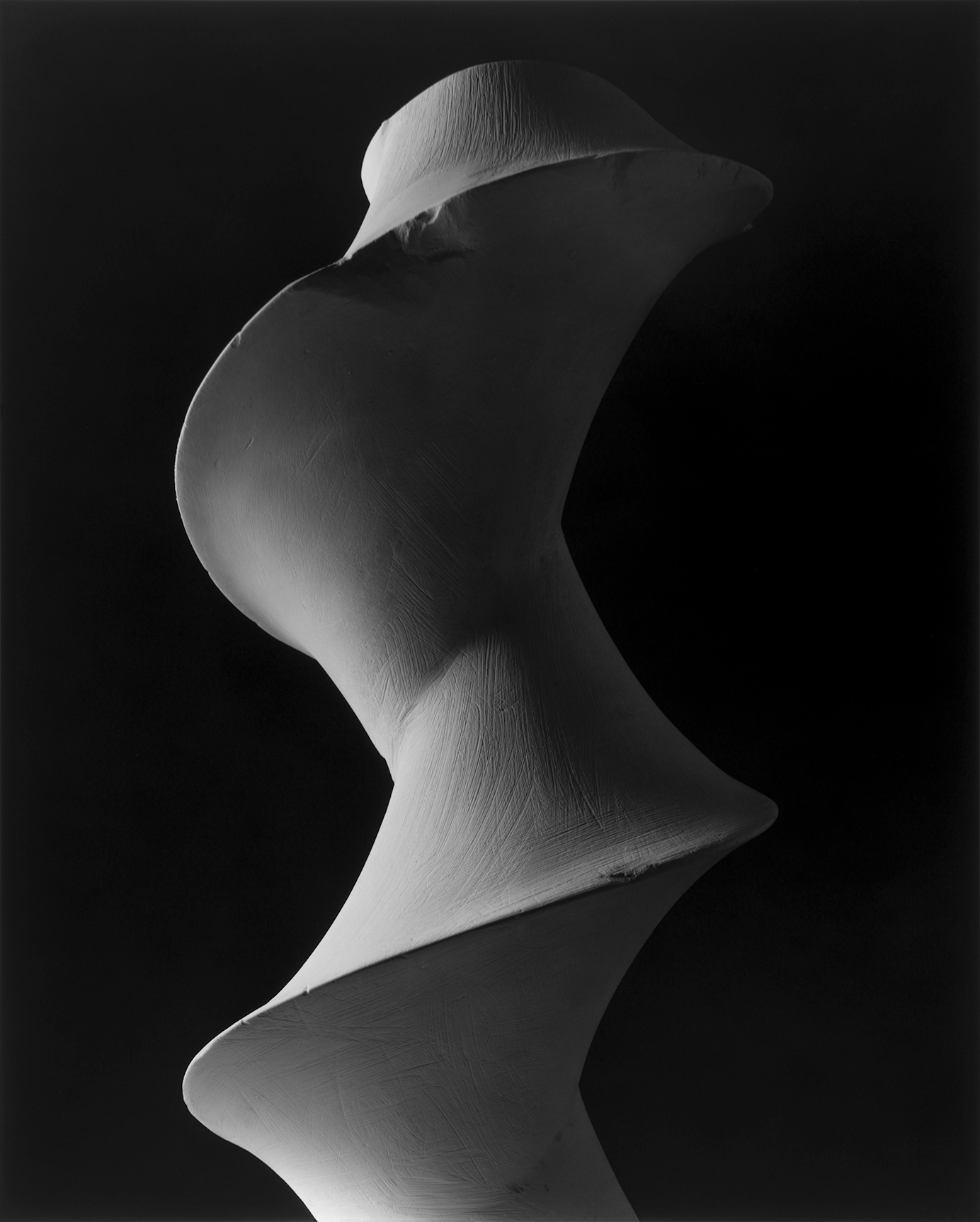
‘Conceptual Forms 0003 Dini’s surface: a surface of constant negative curvature obtained by twisting a pseudosphere’, 2004. In this series, mathematical equations are transformed into three-dimensional forms. Sugimoto photographs meticulously reconstructed models with a large-format camera and extraordinary precision. Conceived as if they were historical sculptures, the works also pay homage to Man Ray. © Hiroshi Sugimoto
Sugimoto has often spoken of the profound influence Marcel Duchamp—frequently described as the father of contemporary art—has had on his thinking. Yet his artistic dialogue with Man Ray, Duchamp’s close collaborator and one of the defining figures of twentieth-century art, is especially evident in Conceptual Forms, a series that transforms mathematical equations into three-dimensional objects.
‘When I was shown a collection of German plaster models at the Graduate School of Mathematical Sciences at the University of Tokyo, I realised they were identical to those photographed by Man Ray at the Institut Henri Poincaré in Paris. Looking at his photographs, I thought to myself, ‘I could photograph these even better.’ But the models were in very poor condition, so I decided to reconstruct them using Japanese machine tools with an accuracy of one hundredth of a millimetre.’
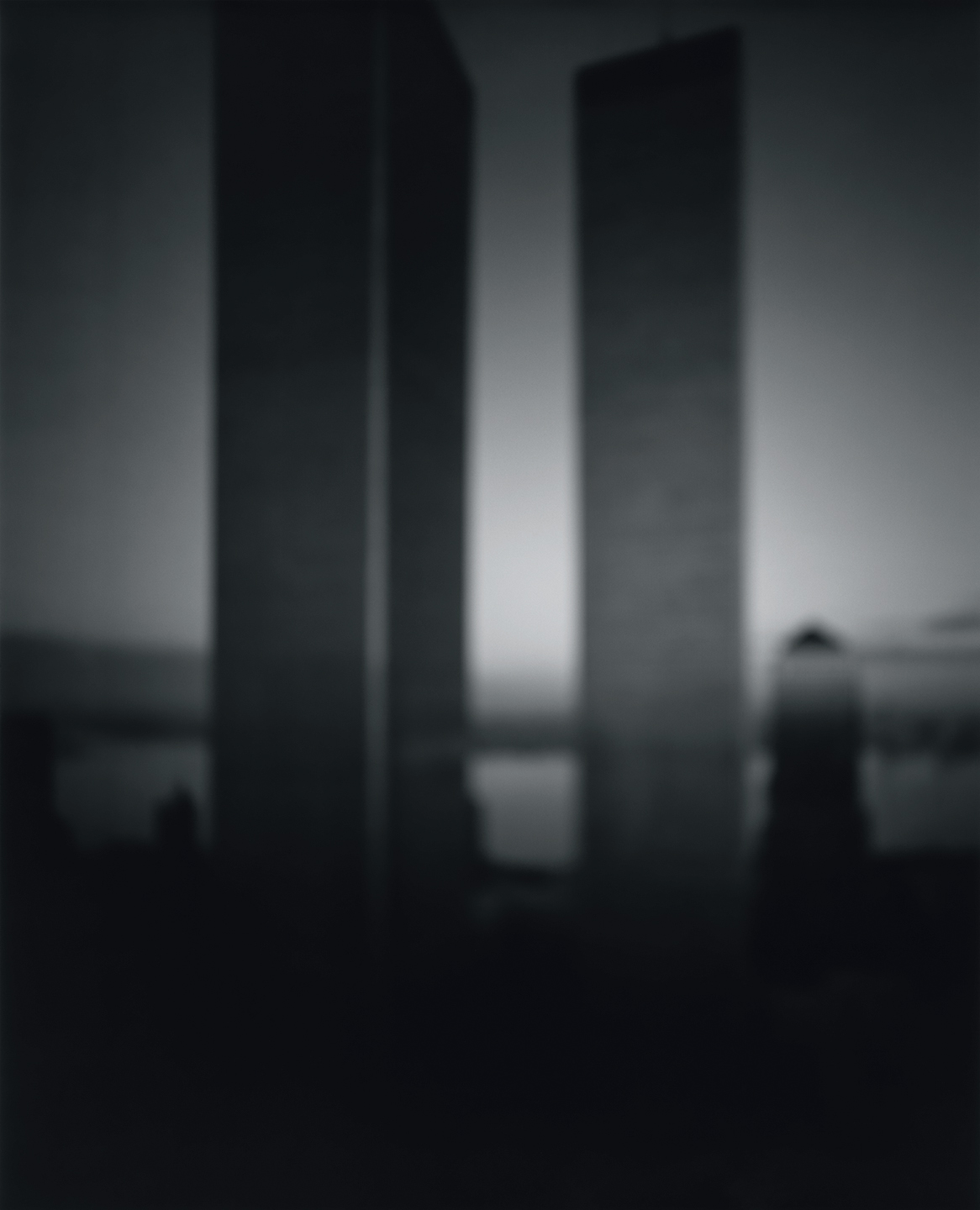
‘World Trade Center’, 1997. Part of the ‘Architecture’ series, in which Sugimoto deliberately sets the focus to what he describes as ‘twice infinity’, dissolving architectural detail into soft abstraction. Four years after this photograph was taken, the towers collapsed in the September 11 attacks, lending the image an almost prophetic quality. © Hiroshi Sugimoto
Another of Hiroshi Sugimoto’s best-known bodies of work is Architecture, in which he deliberately photographs iconic Modernist buildings around the world out of focus. By setting the focal distance to what he describes as ‘twice infinity’, he seeks to reveal what existed before the buildings themselves: ‘the architect’s vision before construction’, or what he describes as ‘a conceptual form that transcends time’.
These photographs profoundly question the nature of memory and time. Solid, tangible structures dissolve into abstract geometries of light and shadow, becoming signs rather than buildings, as though they were fragments preserved within human consciousness.
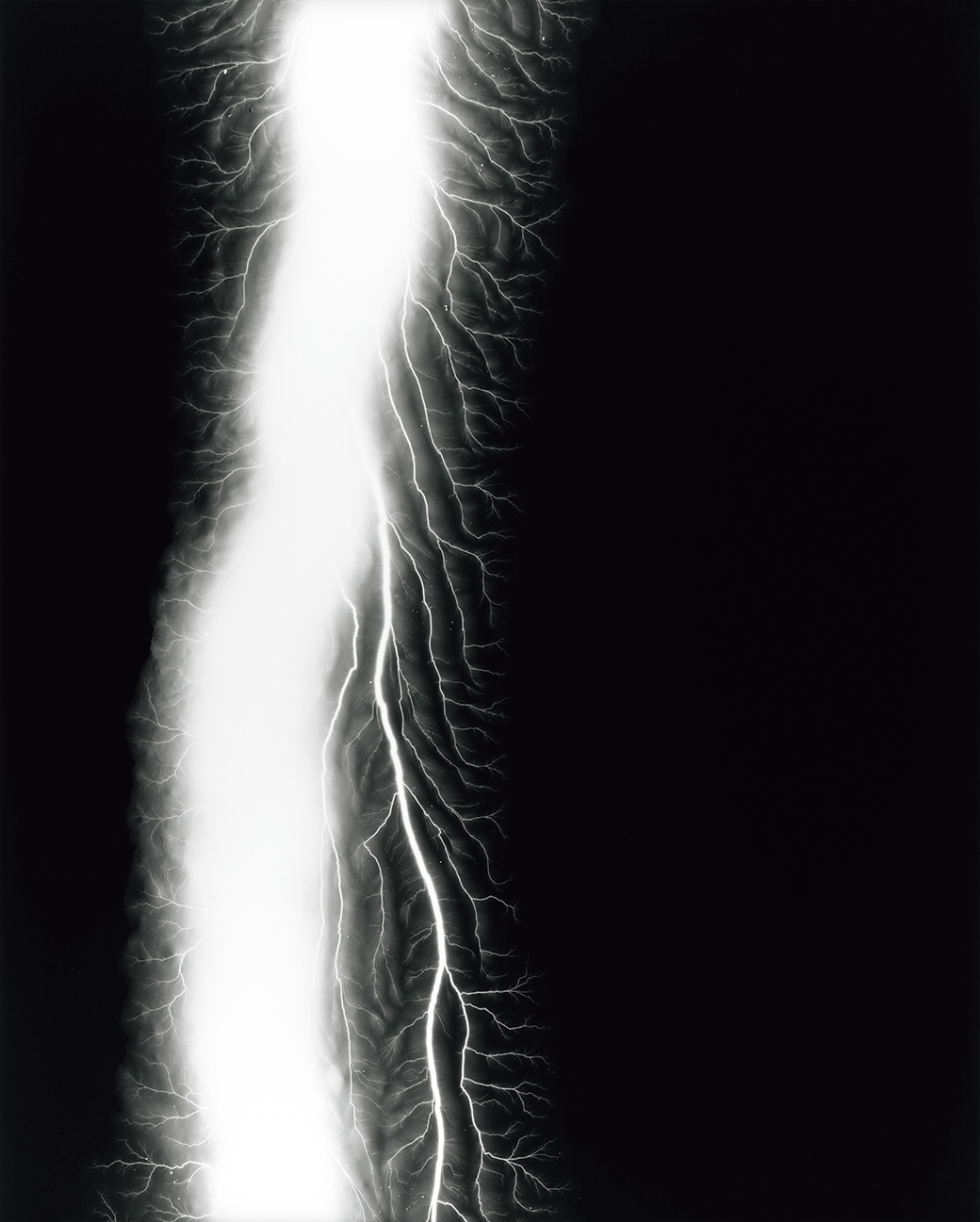
‘Lightning Fields 163’, 2009. From the ‘Lightning Fields’ series. Inside a darkroom equipped with an electrostatic generator, Sugimoto personally controls high-voltage currents of up to 400,000 volts, exposing photographic film directly to what he describes as ‘the living form of electricity’. © Hiroshi Sugimoto
Sugimoto’s recent series Opticks marks another first in his career: it is his very first body of work in colour. On winter mornings, from the window of his home in Tokyo, the artist uses a prism of his own making to disperse incoming light, capturing the spectrum projected onto his plaster walls. At first glance, the resulting images resemble abstract paintings. Yet they remain rooted in a deeply photographic approach. As Sugimoto himself explains, he ‘used light as paint’, extending his long-standing exploration of light as a physical material rather than merely a means of recording reality.
The digitisation of the medium has severed its connection with truth
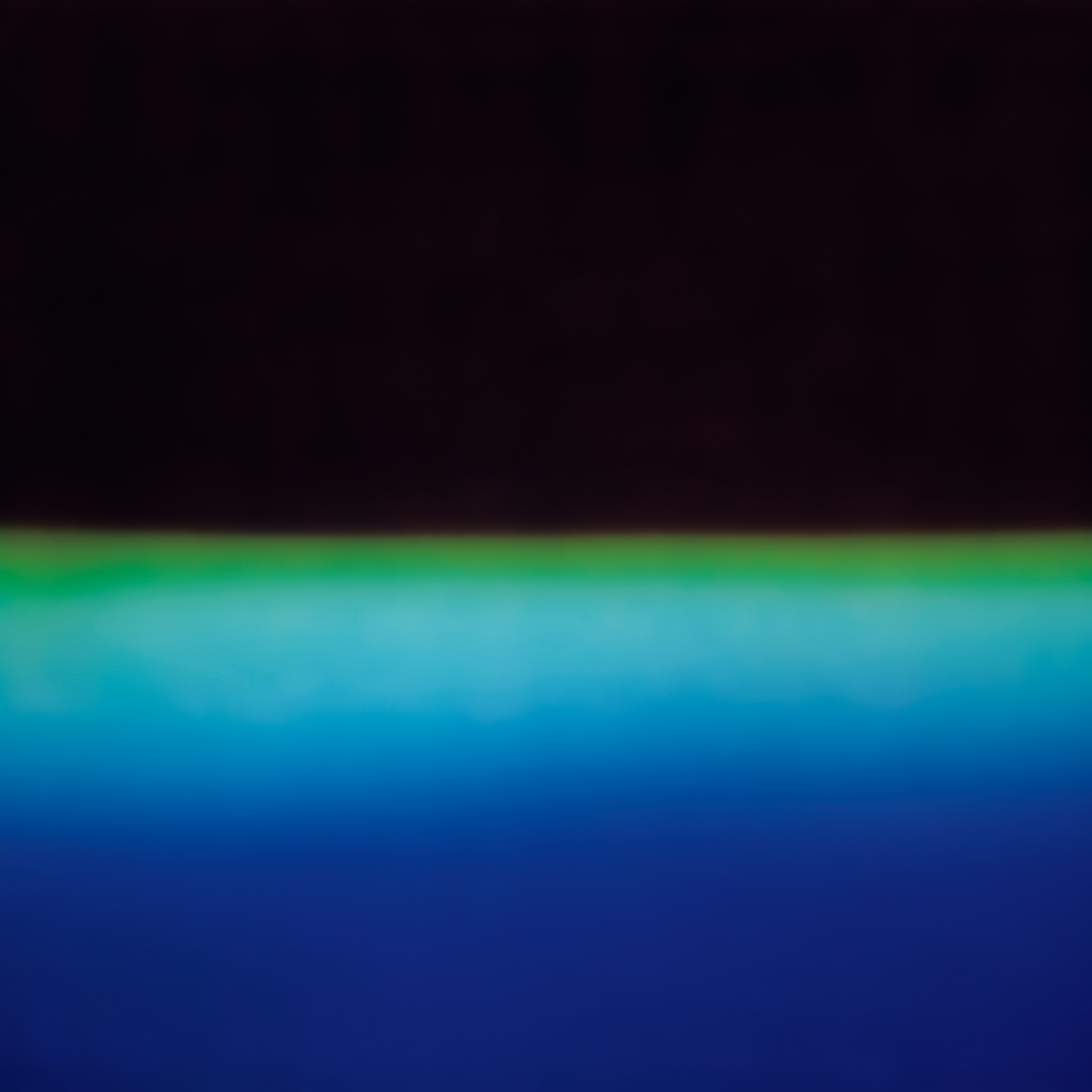
‘Opticks 087’, 2025. Recreating Isaac Newton's prism experiment with a custom-built optical device, Sugimoto dispersed light into its spectrum and photographed it on Polaroid film. The subtle gradations between colours were then digitally reproduced in a large-format print, resulting in the artist's first body of work in colour. © Hiroshi Sugimoto
The artist says he finds happiness in the fact that ‘the lifespan of silver gelatin photography resonates with my own.’ By contrast, he believes that digital photography, reduced to a succession of zeros and ones, has stripped the photographic image of its evidential power because of how easily it can be manipulated. In his view, silver gelatin photography is itself becoming an endangered medium.
While Sugimoto continues to regard analogue photography as ‘a device for recording truth’, the growing scarcity of photographic paper and film means that the medium itself is gradually disappearing.
HIROSHI SUGIMOTO: EXTINCTION therefore conveys far more than a message about the decline of silver gelatin photography. It also speaks to broader concerns: the destruction of the natural world and, ultimately, the possible extinction of humanity itself. Yet even in the face of this reality, Sugimoto continues along his own path with unwavering consistency. As he continues to question the origins of history, human consciousness and our relationship with the world, he incorporates disappearing techniques and material qualities into his practice, quietly pursuing his own course.
HIROSHI SUGIMOTO: EXTINCTION (2026), an exhibition until 13 September 2026 at the National Museum of Modern Art, Tokyo.
Featuring nearly 60 silver gelatin photographs spanning the late 1970s to the present day, the exhibition is organised into three chapters and brings together 13 major series, including Dioramas, Theaters and Seascapes, alongside several works unveiled for the first time.
A satellite display also presents the previously unpublished Sugimoto Note, offering a rare glimpse into the artist’s creative process.
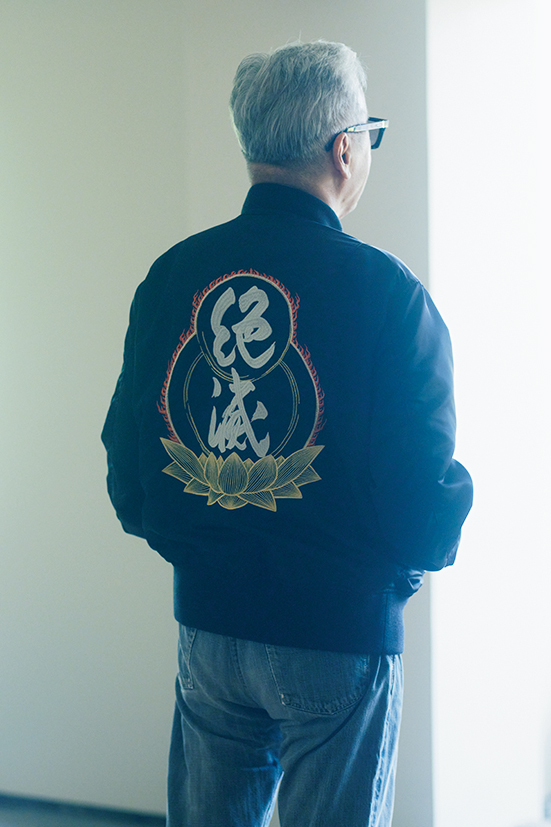
The flight jacket available exclusively at the exhibition shop. Embroidered across the back are the two Japanese characters 絶滅 (‘Extinction’).
‘HIROSHI SUGIMOTO: EXTINCTION’ - National Museum of Modern Art, Tokyo
Phone: +81-505-541-8600
10:00–17:00. Fridays and Saturdays until 20:00. Last admission 30 minutes before closing.
Closed Mondays.
Admission: ¥2,300.
art.nikkei.com/sugimoto/en/